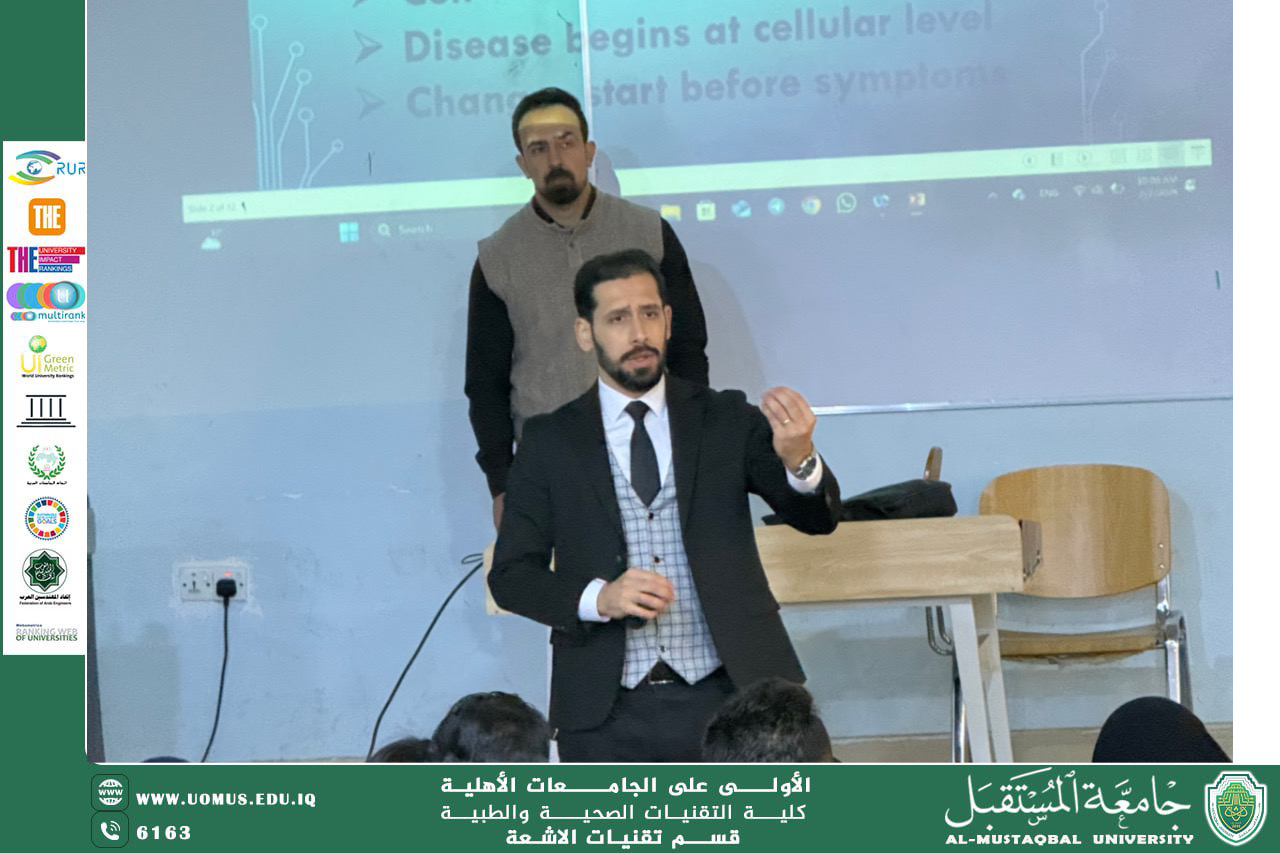
Scientific Activity Entitled “Smart Radiology: From Cell to Algorithm” at the College of Health and Medical Technologies – University of Al-Mustaqbal
As part of the scientific activities aimed at enhancing interdisciplinary integration between medical and technological fields, a joint scientific activity entitled:
“Smart Radiology: From Cell to Algorithm
(Smart Radiology: From Cell to Code)”
was held at the Department of Radiology Techniques, College of Health and Medical Technologies, University of Al-Mustaqbal, under the supervision of:
• Asst. Lecturer Ali Hussein Shakir Hussein
• Asst. Lecturer Ali Fadhil Hashim Faza
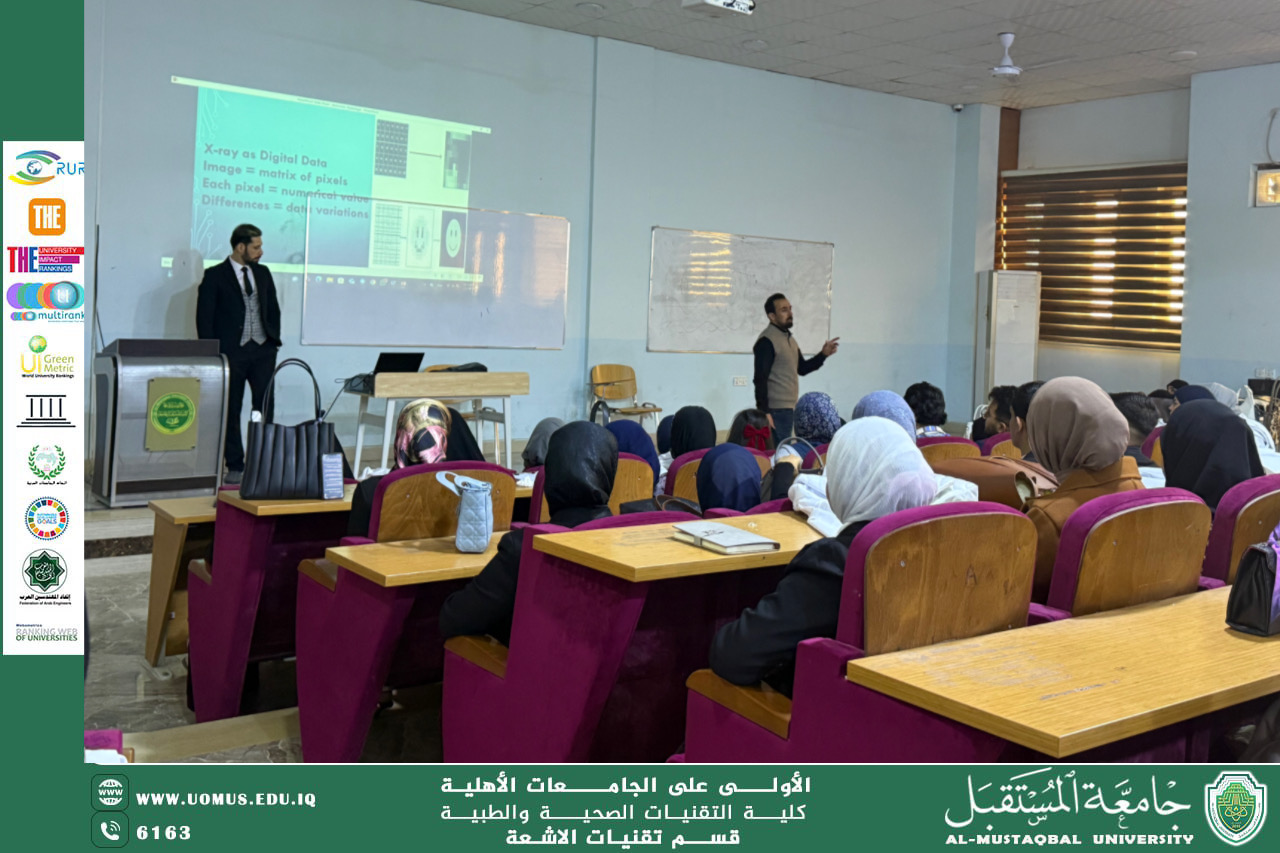
“with the participation of first-year students from the Department of Radiology Techniques.”
The activity aimed to highlight the relationship between the biological basis of cellular and tissue changes in pathological conditions, such as inflammation, tumors, and necrosis, and how these changes are reflected in radiological images, in addition to explaining the role of computer systems and artificial intelligence in medical image analysis and diagnostic support.
The activity addressed two main axes. The first axis, focused on explaining how diseases begin at the cellular level before their effects appear in tissues and are detected using radiological techniques. The second axis, reviewed the digital fundamentals of how computers interpret radiological images, including a simplified introduction to medical image processing and the applications of artificial intelligence and machine learning in radiology.
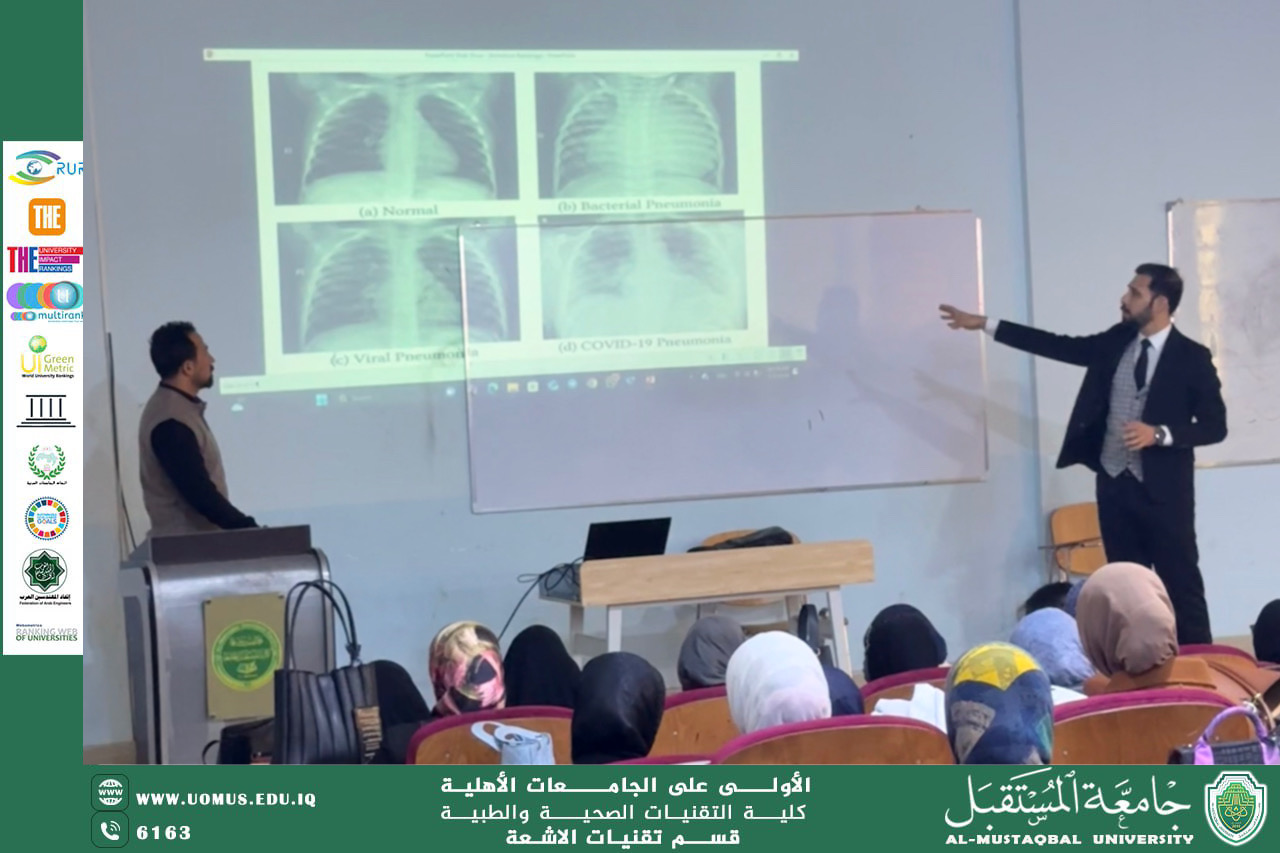
The activity also included an interactive segment, during which real educational radiological images were presented. Students were divided into groups to analyze the visual differences in the images, relate them to possible biological changes within the body, and propose digital analysis mechanisms that could be used by computer systems for early abnormality detection.
This activity comes within the framework of the University of Al-Mustaqbal’s commitment to supporting interactive scientific activities that enhance students’ analytical and integrative thinking, keep pace with recent developments in medical imaging and intelligent technologies, and contribute to preparing scientifically and technically qualified graduates to meet labor market requirements.