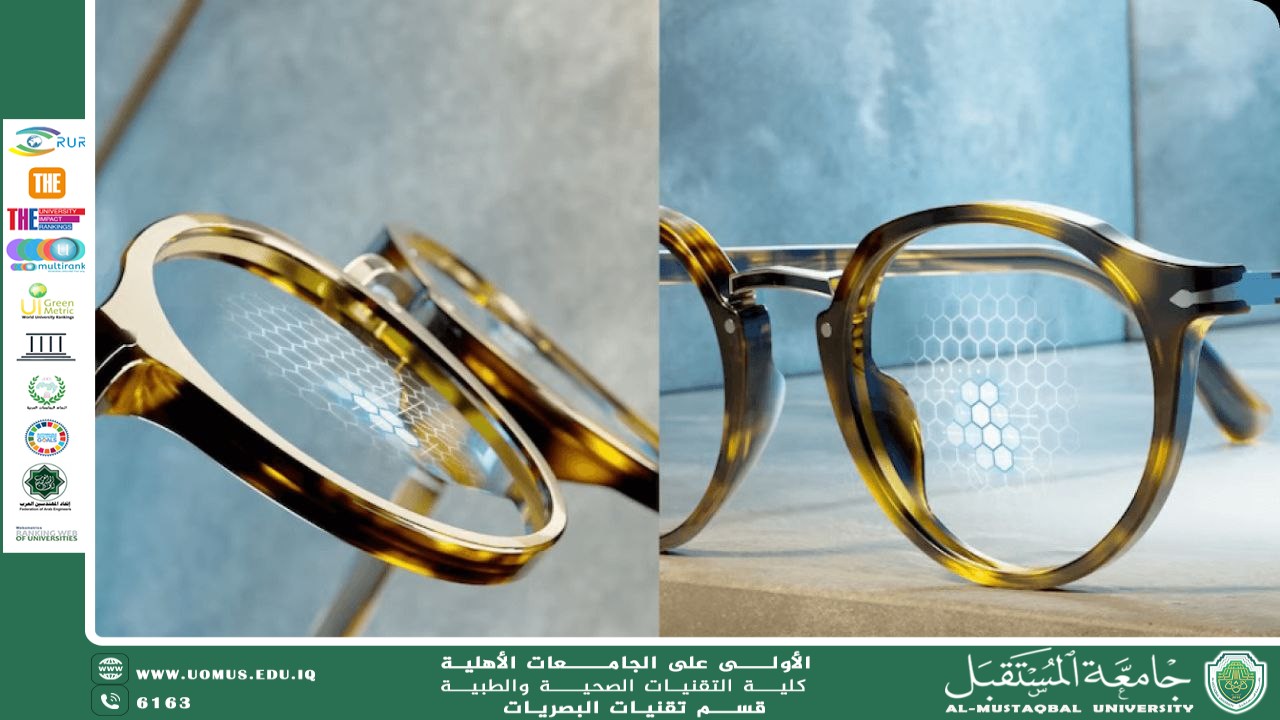
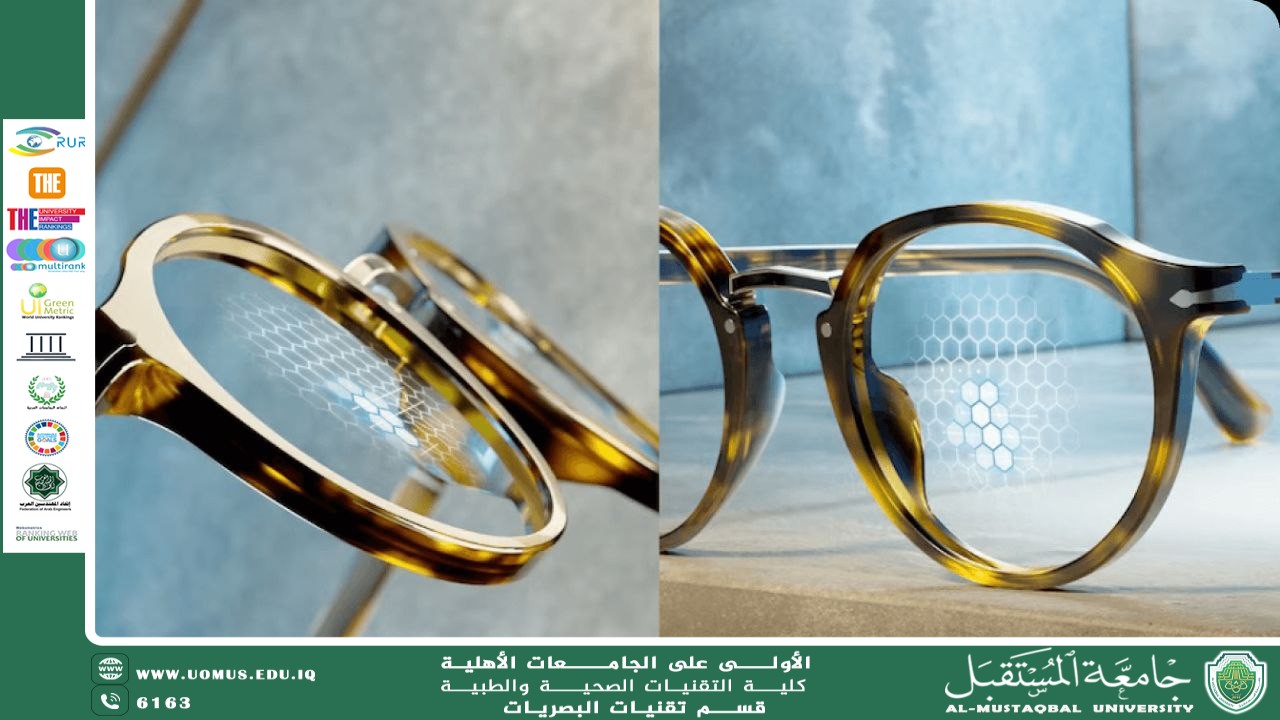
A scientific article by Professor Hassan Fayez entitled "Optical Technologies"
Optical techniques are among the medical fields that have benefited the most from the digital revolution. The integration of artificial intelligence (AI) has brought a qualitative leap in the diagnosis of eye diseases, lens design, and the improvement of healthcare quality.
In this article, we review how artificial intelligence is reshaping this vital specialty:
The Artificial Intelligence Revolution in the Optics Technology Department
1. Automated and Accurate Diagnosis of Retinal Diseases
Optometrists now rely on deep learning algorithms to analyze fundus images and Optical Coherence Tomography (OCT) scans. Intelligent systems can detect early signs of diseases such as:
• Diabetic retinopathy: where AI accuracy sometimes surpasses human examination in identifying subtle microvascular changes.
• Glaucoma: through precise analysis of optic nerve cupping and accurate measurement of the retinal nerve fiber layer thickness.
2. Design and Customization of Medical Lenses
Artificial intelligence has become integral to manufacturing processes within optical laboratories:
• Progressive lenses: Algorithms analyze the patient’s lifestyle and eye movement patterns to design lenses that provide smooth vision at all distances.
• Contact lenses: AI helps simulate lens stability on the corneal surface based on complex topographic maps, reducing trial-and-error periods.
3. Prediction of Myopia Progression (Myopia Control)
One of the major challenges in optical technologies is the increasing prevalence of myopia among children. AI-powered statistical models are now used to predict future progression based on environmental and genetic patient data, enabling specialists to implement early preventive measures.
4. Enhancement of Smart Optical Devices
Modern eye examination devices now include smart enhancement features, allowing automatic noise reduction in captured eye images and compensation for involuntary patient movements during examinations. This ensures accurate results from the first attempt.
The Impact of Artificial Intelligence on the Role of the Optical Technician
Rather than replacing the optical examiner or technician, artificial intelligence functions as augmented intelligence. This enables technicians to:
• Reduce the time spent analyzing routine data.
• Focus more on consultation and patient interaction.
• Minimize human error in complex measurements.
Conclusion
Integrating artificial intelligence into the field of optical technologies is not merely a technological luxury but a necessity to address the growing number of eye patients worldwide. The future is moving toward fully digital optical clinics, where technicians and machines work side by side to ensure better vision for everyone.
University of Al-Mustaqbal – The First and Leading Private University