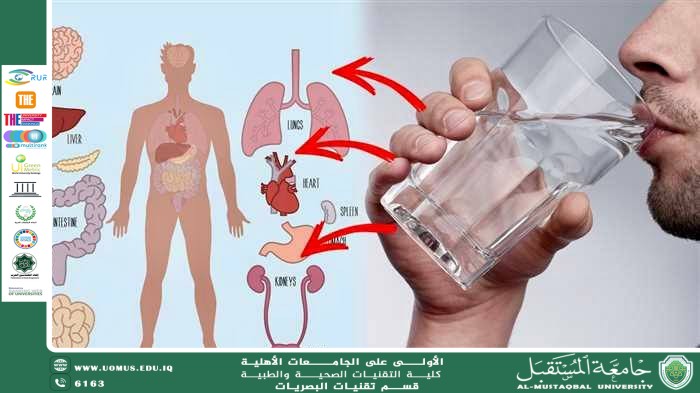
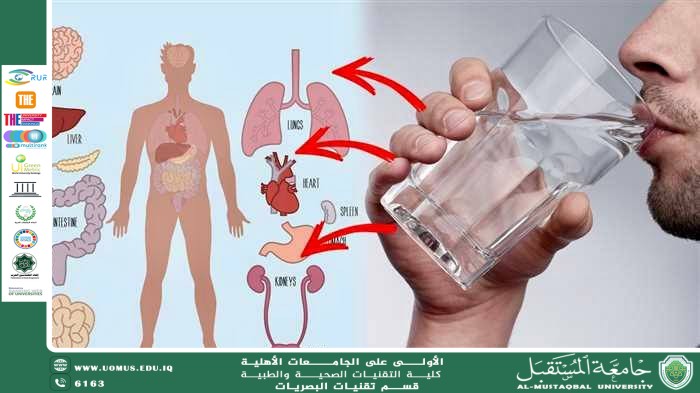
A scientific article by lecturer Islam Fadel Moussa entitled "Water and its vital importance to bodily functions"
Water is an essential element of life, making up about 60% of the human body weight. No system in the body can function properly without adequate water, as every cell, tissue, and organ depends on it to perform vital processes.
The Role of Water in the Human Body
• Regulating body temperature: Sweating and the evaporation of water help cool the body and maintain a stable temperature.
• Transporting nutrients and oxygen: Water is a major component of blood, enabling the delivery of nutrients and oxygen to cells.
• Eliminating toxins: It supports kidney function by removing waste and toxins through urine and sweat.
• Improving digestion: Water aids in breaking down food, absorbing nutrients, and preventing constipation.
• Protecting joints and tissues: It acts as a lubricant for joints, reducing friction and pain.
• Supporting brain function: Even mild dehydration can affect concentration, memory, and mood.
Effects of Water Deficiency (Dehydration)
• Headaches and fatigue
• Dry skin and lips
• Dizziness and poor concentration
• Digestive problems
• Increased risk of kidney stones
How Much Water Does the Body Need?
Water requirements vary depending on age, body weight, physical activity, and climate. However, the general recommendation is:
• 2 to 3 liters per day for adults
• Increased intake during exercise or in hot weather
Tips for Staying Hydrated
• Drink water regularly without waiting to feel thirsty
• Carry a water bottle throughout the day
• Eat fruits and vegetables rich in water
• Reduce consumption of diuretics such as caffeinated and sugary drinks
Conclusion
Water is not just a beverage—it is a vital component for maintaining health and proper body function. Ensuring adequate daily hydration positively impacts energy levels, concentration, and overall organ health.
University of Al-Mustaqbal – The First and Leading Private University