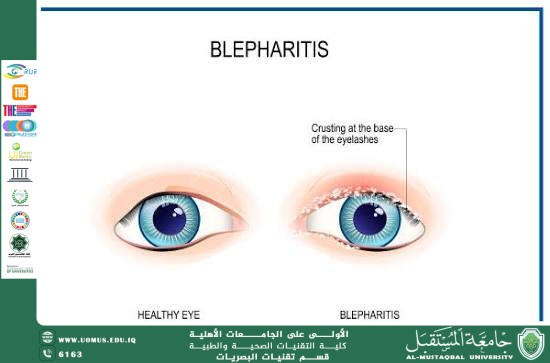
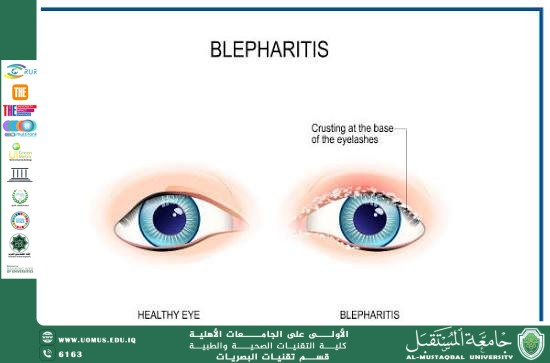
A scientific article by lecturer Ghaith Ali Mahmoud entitled "Blepharitis"
1. What Is Blepharitis?
Blepharitis is a common eye condition that occurs when the edges of the eyelids become inflamed or irritated.
The eyelid margin refers to the area where the eyelid meets the eye, and inflammation usually affects the part where the eyelashes grow.
This condition is generally not serious, but it can cause persistent discomfort and may sometimes affect vision and tear quality.
2. What Are the Causes of Blepharitis?
The exact cause is not always known, but several factors are known to contribute to its development:
Excessive Bacterial Growth on the Skin Surface
Certain bacteria normally live around the eyes; when they multiply excessively, they can cause inflammation.
Blocked Meibomian Glands
These glands secrete oils that are essential for the oily layer of the tear film. When they become blocked, oil can accumulate and lead to inflammation.
Allergies and Skin Irritation
Allergic reactions to substances such as airborne dust, makeup, or cosmetic products can trigger eyelid inflammation.
Other Skin Conditions
Skin disorders such as eczema or psoriasis can increase the risk of developing blepharitis.
3. What Are the Symptoms of Blepharitis?
Symptoms may be chronic (long-lasting) or recurrent and include:
✔ Itching or mild pain in the eyelids
✔ Redness along the eyelid margins
✔ Dryness or a gritty, sandy sensation in the eyes
✔ Flaking or crusting around the eyelashes
✔ Watery or sticky eyes, especially in the morning
✔ Eyelashes that fall out or grow abnormally
✔ Sensitivity to light in some cases
4. How Is Blepharitis Diagnosed?
Diagnosis is usually made by an ophthalmologist or optometrist and is based on:
• Examination of the eyelids and the external appearance of the eye
• Assessment of the oil content of the tear film
• Checking for crusts or blockage at the gland openings
• In some cases, a slit-lamp microscope is used to evaluate the severity of inflammation
5. What Are the Treatment Options?
There is no instant cure, but several steps can significantly improve the condition and reduce symptoms:
A. Eyelid Hygiene
Daily cleaning of the eyelid margins can greatly reduce inflammation. This may include:
• Warm water
• A clean towel
• Cotton pads or specially designed eyelid wipes
Gentle cleaning helps remove crusts and accumulated oils.
B. Warm Compresses
Applying warm compresses to the eyelids for several minutes helps to:
• Soften hardened oils in the glands
• Improve oil flow into the tear film
Warm compresses are recommended 1–2 times daily.
C. Medications (Depending on the Case)
Your doctor may prescribe:
• Topical antibiotics (eye ointments or drops)
• Mild anti-inflammatory medications
• In severe cases of gland blockage, medications to improve oil secretion may be used
Medication should always be taken under medical supervision.
6. Can Blepharitis Be Prevented?
Blepharitis cannot always be completely prevented, but maintaining good eyelid hygiene and avoiding irritants (such as cigarette smoke or old makeup) can significantly reduce symptom recurrence.
Important Summary
• Blepharitis is a common but usually non-serious condition.
• Symptoms include itching, redness, crusting, and light sensitivity.
• The main treatment involves daily eyelid hygiene and warm compresses to regulate oil secretion.
• Medications are prescribed by a specialist when necessary.
University of Al-Mustaqbal – The First and Leading Private University