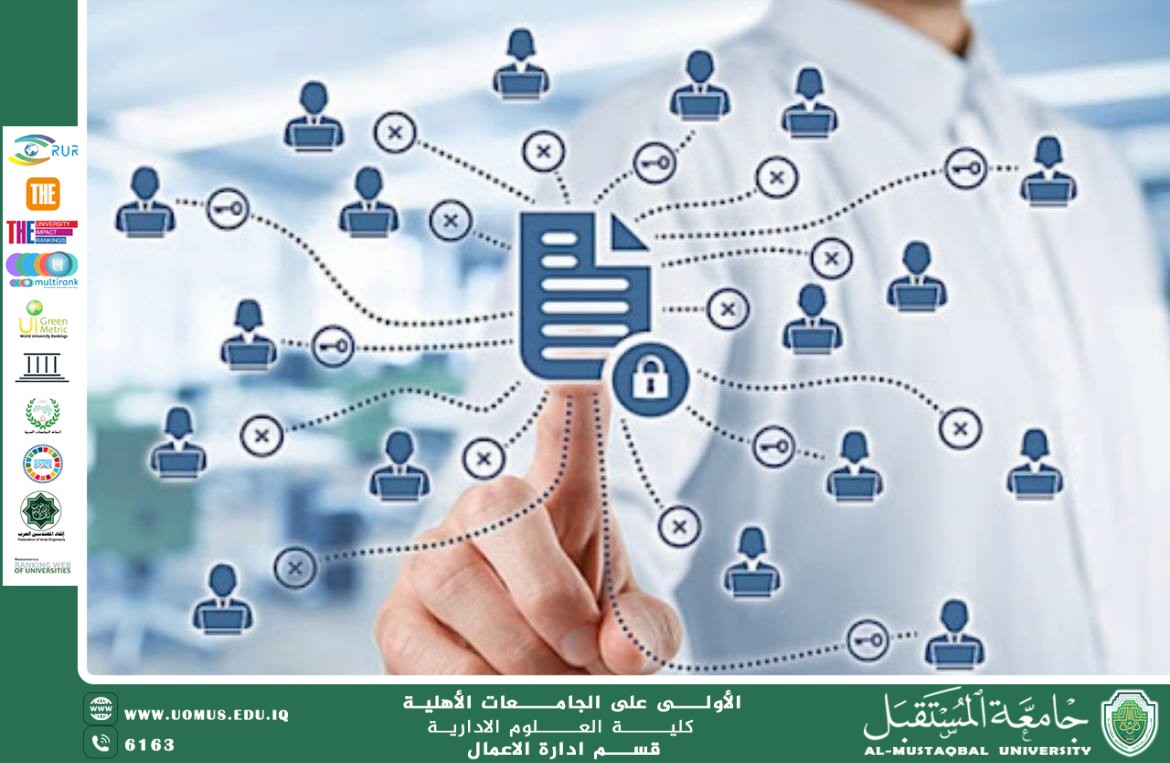

The Role of Management Information Systems in Supporting Decision-Making
Prepared by Dr. Fawzi Alawi Rustum
In light of the rapid developments witnessed in today’s business world, organizations face an environment characterized by complexity, intense competition, and uncertainty. Administrative decision-making no longer relies solely on personal experience or intuition; rather, it requires accurate and timely information. Hence, Management Information Systems (MIS) have emerged as one of the essential tools relied upon by modern management to support the decision-making process and enhance its quality.
Concept of Management Information Systems
Management Information Systems are defined as an integrated set of people, hardware, software, databases, and procedures that work together to collect, process, analyze, and transform data into useful information that assists management in planning, organizing, controlling, and making appropriate decisions.
Concept of Administrative Decision-Making
Decision-making is considered one of the most important management functions, as it represents the core of the administrative process. It involves selecting the best alternative from among several available options to achieve organizational goals. This process requires accurate and comprehensive information to reduce risk and uncertainty.
The Role of Management Information Systems in Supporting Decision-Making
• Providing accurate and timely information:
MIS supply decision-makers with up-to-date and reliable information, enabling them to make decisions based on scientific foundations rather than guesswork.
• Improving decision quality:
Through data analysis and comprehensive reporting, MIS help evaluate different alternatives and select the most efficient and appropriate option in line with organizational objectives.
• Reducing uncertainty and risk:
MIS reduce ambiguity related to the internal and external organizational environment, thereby lowering the level of risk associated with administrative decisions.
• Supporting different management levels:
MIS serve all managerial levels by providing detailed information for operational management, analytical information for middle management, and strategic information for top management.
• Enhancing the speed of decision-making:
Modern systems accelerate information retrieval and processing, leading to faster and more effective decisions, especially in emergency situations.
• Improving control and monitoring:
MIS contribute to monitoring decision implementation and evaluating outcomes through performance reports, enabling management to correct deviations in a timely manner.
Requirements for the Success of Management Information Systems
To achieve the effective role of MIS in supporting decision-making, several requirements must be met, most notably:
• Availability of appropriate technological infrastructure.
• Accuracy and quality of data entered into the system.
• Competent human resources capable of using the system effectively.
• Top management support for the implementation of MIS.
In conclusion, Management Information Systems play a pivotal role in supporting the decision-making process within organizations by providing accurate information, improving decision quality, reducing risks, and increasing responsiveness to environmental changes. Accordingly, investing in the development of MIS is a strategic necessity to ensure organizational success and sustainability in the contemporary business environment.