
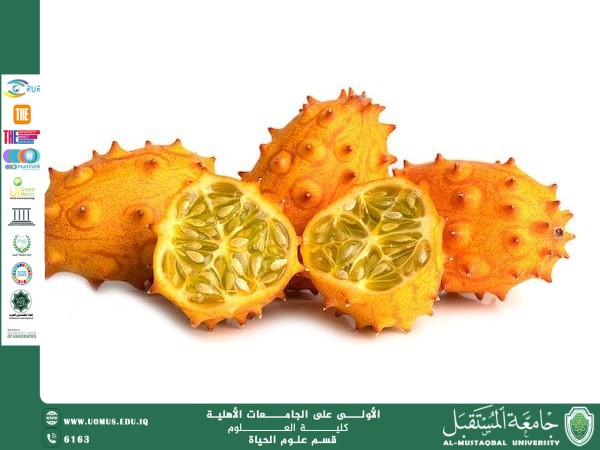
A scientific article by Lecturer M.M. Zainab Nazim Aziz "Kiwano (African Cucumber – Horned Melon)"
Kiwano (African Cucumber – Horned Melon)
Kiwano is considered an exotic and distinctive fruit/vegetable in both appearance and taste. It belongs to the Cucurbitaceae family. It is also known by names such as African cucumber or horned melon due to its prominent spiky exterior.
Botanical Description
Kiwano is an annual herbaceous plant that can climb or spread along the ground, resembling cucumber in its growth. Its leaves are lobed and coarse in texture, and its flowers are yellow. The fruits are oval-shaped, covered with cone-like spikes, and the skin color changes from green to orange when ripe. The inner pulp is a light green jelly-like substance, containing edible seeds.
Nutritional Value
Kiwano is notable for its good nutritional content, including:
Vitamins: C, A, E
Minerals: Potassium, Magnesium, Iron
High water content
Antioxidants
It is also low in calories and suitable for healthy diets.
Health Benefits
Helps in hydrating the body
Boosts the immune system
Contributes to healthy skin
Supports heart health
Aids in digestion
Cultivation and Environmental Requirements
Kiwano thrives in warm and tropical regions and requires:
Relatively high temperatures
Fertile, well-drained soil
Regular watering without waterlogging
Adequate sunlight
Fruits start to ripen 70–90 days after planting.
Uses
Kiwano can be used in various ways, including:
Eating it fresh by slicing and scooping the pulp
Adding it to fruit salads
Using it in juices and beverages
Garnishing dishes due to its attractive shape
Its taste is a pleasant mix of cucumber and kiwi with a slight hint of banana.
Conclusion
Kiwano is a unique plant that combines an exotic appearance, good nutritional value, and refreshing taste, making it a suitable option for both agricultural and culinary experimentation, especially in warm regions.