"Mitochondria" A scientific article by Ms. Noor alhuda Azmi Hassan
Mitochondria are cellular organelles found in most eukaryotic cells. They are responsible for producing the energy that the cell needs to perform its vital functions. They are sometimes called the “powerhouse of the cell” because they convert nutrients into usable energy.
2. Structure of Mitochondria
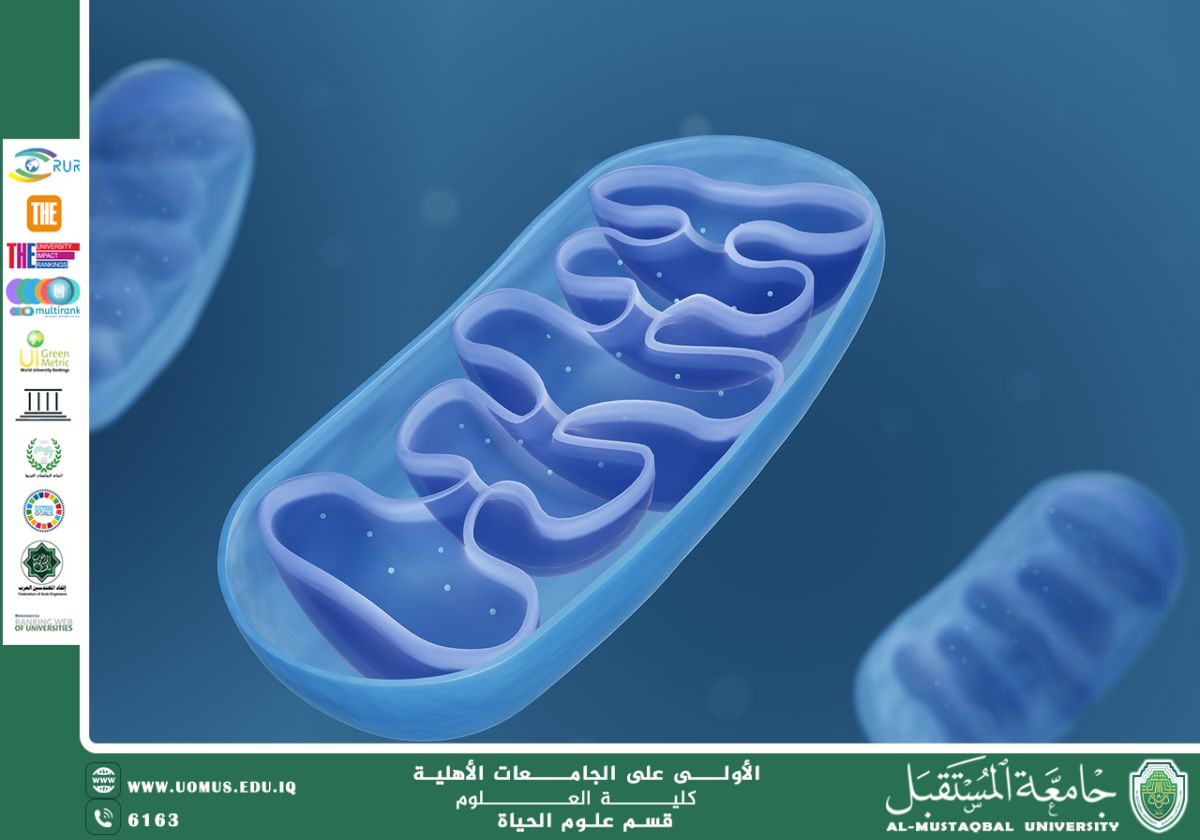
Mitochondria are typically shaped like small rods or beans.
Size: Approximately 1–10 micrometers in length.
Double membrane:
Outer membrane: Smooth and surrounds the organelle.
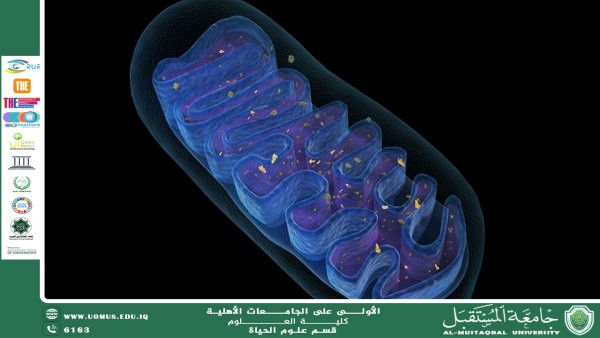
Inner membrane: Contains folds called cristae, which increase the surface area for energy production.
Matrix: The inner fluid of the mitochondrion, containing enzymes, nucleic acids, and small ribosomes.
3. Functions of Mitochondria
Energy production:
Through a process called cellular respiration, glucose and fatty acids are converted into ATP (adenosine triphosphate), the cell’s main energy source.
Regulation of metabolism:
Mitochondria help break down fats and carbohydrates.
Heat production:
Occurs in certain cells, such as brown fat cells.
Role in programmed cell death (Apoptosis):
Mitochondria help the cell eliminate itself when necessary.
4. Characteristics of Mitochondria
They have their own DNA, called mtDNA.
They can produce some of their own proteins and enzymes.
They replicate independently when the cell needs more mitochondria.
5. The Energy Production Process (Briefly)
Glucose is broken down into pyruvate in the cytoplasm.
Pyruvate enters the mitochondria.
Inside the mitochondria, the Krebs cycle occurs → producing NADH and FADH₂.
The electron transport chain on the inner membrane → produces most of the ATP.
Final products: ATP + water + carbon dioxide.
6. Importance of Mitochondria
Without mitochondria, cells cannot obtain the energy required for survival. They are a vital energy center, so any dysfunction can lead to metabolic, muscular, and even neurological diseases.
الهدف الرابع : التعليم الجيد