
"A scientific article by Lecturer M.M. Zainab Nazim Aziz titled "Tomatillo
Tomatillo is a distinctive vegetable crop that is uncommon in some regions. It belongs to the Solanaceae family, the same family as tomatoes, potatoes, and peppers.
Botanical Description
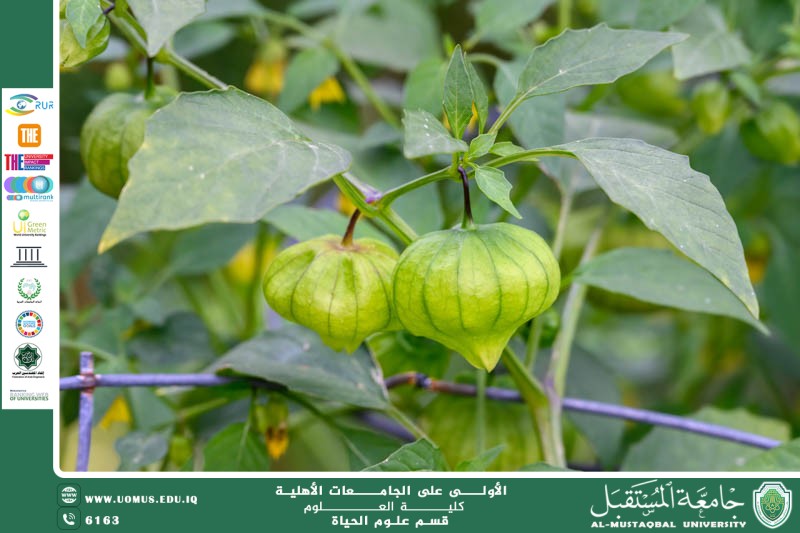
Tomatillo is an annual herbaceous plant, similar in general growth to the tomato plant, although its fruits are smaller. Its spherical fruits can be green or purple and are surrounded by a thin, papery husk resembling a lantern, formed by the enlargement of the calyx. When ripe, the fruit fills the husk, which may partially tear.
Nutritional Value
Tomatillo contains important nutrients, including:
Vitamins: C, A, K
Minerals: Potassium, magnesium, phosphorus
Dietary fiber
Antioxidants
It is also characterized by low calorie content compared to tomatoes.
Health Benefits
Enhances the immune system
Supports digestion
Helps regulate blood pressure
Promotes heart health
Protects cells from oxidative stress
Cultivation and Environmental Conditions
Tomatillo thrives in temperate and warm regions and requires:
Fertile, well-drained soil
Full sun exposure
Regular watering
Cross-pollination, so it is recommended to plant more than one plant to ensure fruit set
Fruits mature approximately 70–90 days after planting.
Uses
Tomatillo is widely used in cooking, especially in Mexican cuisine, where it is used for:
Preparing green sauces (Salsa Verde)
Cooking with meats and poultry
Soups and stews
It has a mildly tangy flavor that is distinct from regular tomatoes.
Conclusion
Tomatillo is an important nutritional plant, combining good nutritional value, distinctive taste, and versatile uses, making it a valuable and diverse addition to both agricultural crops and the diet.
الهدف الرابع : التعليم الجيد