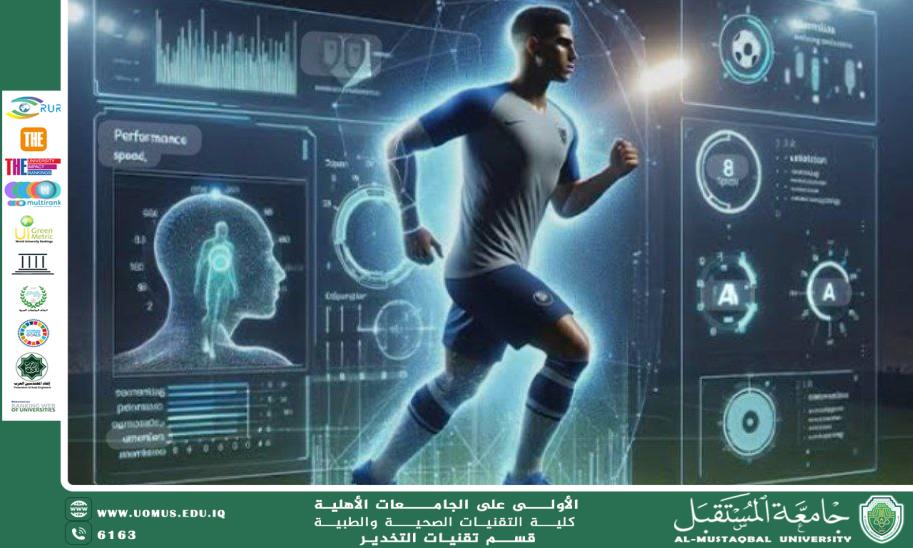



The Role of Sports Equipment and Technology in the Development of Athletic Training
Introduction
In recent decades, sports have witnessed unprecedented technological advancements, with modern sports equipment and technologies becoming an integral part of the athletic training system. This has led to enhanced athlete performance and improved competitive results.
Training tools have evolved from simple equipment to smart wearable devices, motion analysis systems, and training equipment that rely on physiological data, enabling coaches and athletes to improve performance in a scientifically structured and measurable way.
These technologies play a pivotal role in planning, monitoring, analyzing, and adjusting training programs to meet optimal performance conditions while reducing the risk of injury.
1. Evolution of Sports Equipment and Its Impact on Training
The use of modern sports equipment began with the transition from traditional to scientific training. These devices allow coaches to evaluate athletes’ physical capabilities and identify their strengths and weaknesses with higher accuracy than traditional methods.
Historical developments show that sports technology has had a tangible impact on the evolution of training methods, with increased reliance on equipment for physical assessment, motion analysis, and collection of training data.
Recent literature confirms that digital technology and wearable sensors have become essential tools for real-time performance analysis and physiological monitoring, allowing training schedules to be adjusted and optimized instantly.
2. Smart Devices and Data Analysis in Training
Recent advancements in sports equipment include the use of wearable devices (wearables) such as:
• Heart rate monitors
• Force platforms
• Motion tracking devices
These devices provide precise data that help understand the body’s response to different exercises. Studies indicate that using such devices in athletic training aids in:
• Enhancing exercise efficiency
• Reducing injury risk
• Maximizing the benefits of training sessions
Moreover, data analysis systems and digital technologies enable coaches to perform detailed performance analyses, including:
• Speed
• Strength
• Acceleration
• Movement techniques
This enhances the understanding of the relationship between training and athletic performance.
3. Comparison Between Traditional and Modern Methods
Analyses show a clear distinction between traditional training, which relies on experience and intuition, and modern training, which is based on scientific data and smart devices.
In modern training, large amounts of physiological and motion data are collected and interpreted, contributing to the design of more effective personalized training programs and achieving performance improvements faster and more accurately compared to older techniques.
The extensive use of technology in sports data analysis also enhances athletes’ abilities to:
• Develop individual techniques
• Improve recovery after training
• Reduce the risk of injuries
Conclusion
Sports equipment and technology have revolutionized athletic training by enabling coaches and athletes to reach unprecedented levels of analysis and evaluation.
These advancements have contributed to increased training accuracy, improved athletic performance, injury prevention, and the development of customized training methods. It is expected that technology will continue to play an increasingly significant role in the evolution of athletic training, especially with the emergence of artificial intelligence, big data, and portable smart devices, which are expected to open new horizons for enhancing athlete performance in the long term.
Estabraq Rassol Hussein
Al Mustaqbal University
The First University in Iraq