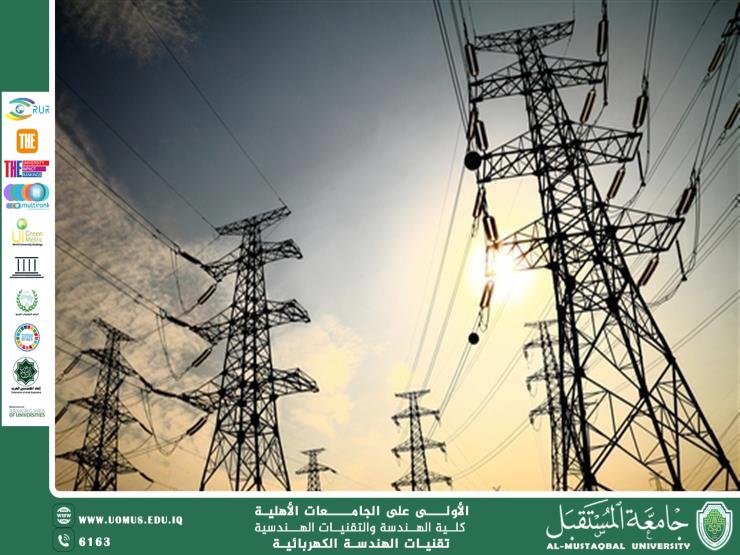
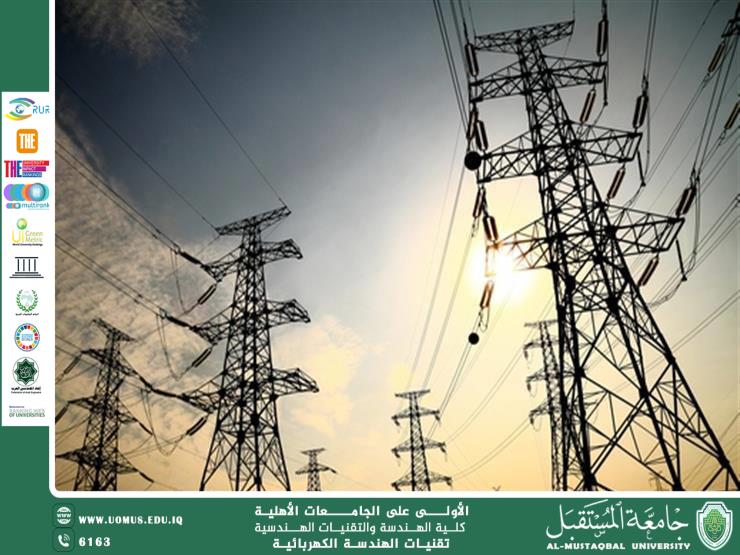
Electricity is the force that has moved the world and shaped the face of civilization.
Engineer Maha Mohammed: From the moment humankind succeeded in harnessing electrical charges, humanity transitioned from the Dark Ages and heavy steam engines to the age of speed and digitalization. Electricity is not merely a means of illumination; it is the physical phenomenon that has redefined our understanding of time, distance, and productivity.
1. The Scientific Foundation: Beyond the Hidden Flow
Electricity is fundamentally based on the structure of matter. Every atom contains electrons bound to its nucleus. When these electrons are subjected to external energy (magnetic or chemical), they are released, creating what we call electric current.
The Dual Current: AC and DC
History witnessed a famous scientific debate (the War of the Currents) that culminated in the adoption of two types of current:
• Direct Current (DC): where electrons flow in one direction, used in batteries and sensitive electronics.
• Alternating Current (AC): which periodically changes direction. This is the key to transmitting power over vast distances across cities, thanks to the ease of raising and lowering its voltage using transformers.
2. The Backbone of Civilization: How Has Electricity Changed Our Lives?
The impact of electricity was not merely recreational; it was fundamental in three key areas:
A. The Third and Fourth Industrial Revolutions
Factories transitioned from relying on gears and massive steam engines to precise electric motors. This shift enabled the emergence of sequential production lines, and later, robotics and artificial intelligence, which depend entirely on ultra-high-speed electrical pulses.
B. The Communications and Information Revolution
Without electricity, there would be no internet or satellites. Today's digital civilization relies on data processing within silicon chips, where the electrical state (the presence or absence of charge) represents the language of zeros and ones (0 and 1) that governs the digital world.
C. Quality of Life and Medicine
From air conditioning, which enabled settlement in hot regions, to MRI machines and operating rooms, electricity has become the difference between life and death in the healthcare sector.
3. The Sustainability Challenge: The Future of Electricity
With increasing global demand, science faces a major challenge: How can we generate electricity without destroying the planet?
1. The Shift Towards Renewable Sources: Relying on solar cells and wind power to convert natural phenomena directly into electrical energy.
2. Energy Storage: Developing lithium-ion and solid-state batteries to overcome the problem of intermittent natural energy sources.
3. Nuclear Fusion: The next scientific dream of generating clean and unlimited energy by mimicking the reactions that occur at the heart of the sun.
4. The Neuroses of Cities: Smart Grids
Traditional networks are transforming into smart grids, systems that use sensors and artificial intelligence to distribute electricity efficiently, predict outages before they occur, and integrate electric vehicles as part of the global energy storage system.
Al-Mustaqbal University, the leading university in Iraq.