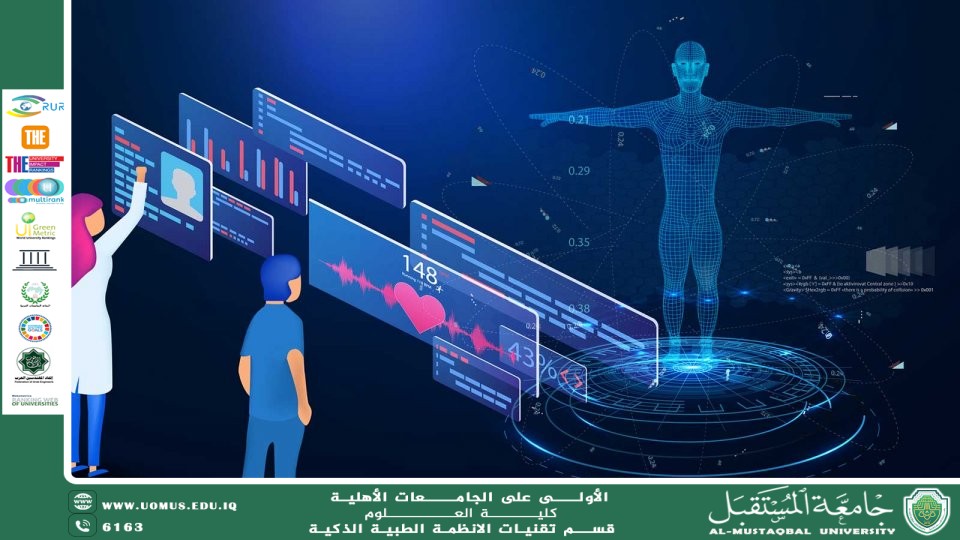
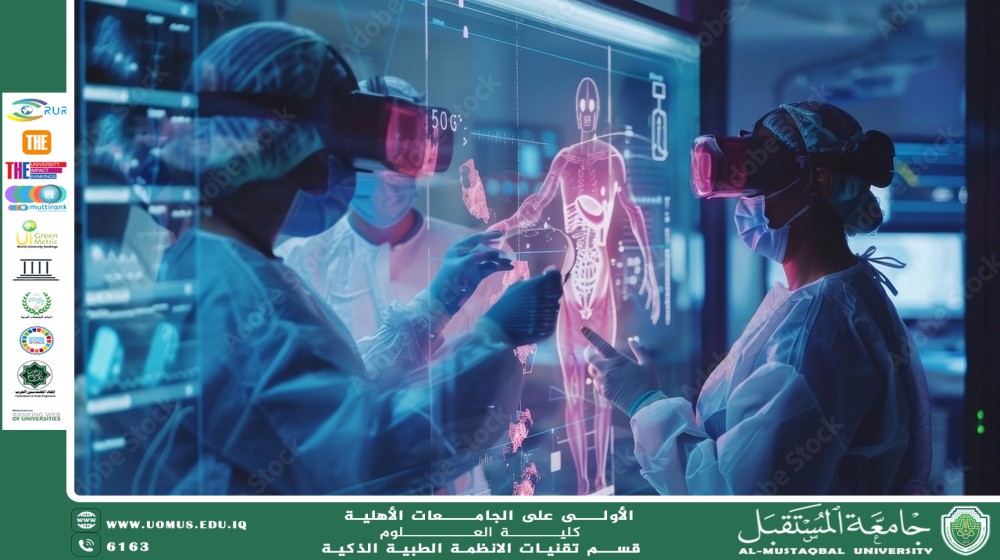
.The Role of Deep Learning in Advancing Smart Medical Systems and Diagnosing Chronic Diseases, and Supporting Healthcare Teams in Reducing Human Errors
The healthcare sector is experiencing rapid advancement through the integration of deep learning technologies within smart medical systems, which has significantly improved the diagnosis of chronic diseases and enhanced support for healthcare teams in reducing human errors. Deep learning, as a branch of artificial intelligence, has the capability to analyze large and complex medical datasets and identify precise patterns that are often difficult to detect using traditional approaches.
Deep learning contributes to the development of smart medical systems by enabling the analysis of medical images, laboratory test results, and electronic health records, leading to earlier and more accurate diagnosis of chronic diseases such as cardiovascular conditions, diabetes, and cancer. These systems rely on advanced models that continuously learn from historical and real-time data, improving their ability to predict disease progression and provide clinical decision support to physicians.
In supporting healthcare teams, deep learning–based smart medical systems play an essential role in minimizing human errors caused by workload pressure, information overload, and the complexity of clinical cases. These systems offer decision-support tools and generate alerts that assist healthcare professionals in identifying potential diagnostic or therapeutic risks, thereby improving accuracy and patient safety.
Furthermore, smart medical systems enable continuous monitoring of patients with chronic illnesses through intelligent devices and remote monitoring technologies. This allows healthcare professionals to intervene promptly when abnormal changes occur, reducing emergency situations, improving patient outcomes, and alleviating the burden on healthcare facilities and medical staff.
Despite the significant potential of deep learning in smart medical systems, its effectiveness depends on proper integration with human expertise. These technologies are designed to support rather than replace healthcare professionals, which necessitates continuous training, high-quality data, and regular system updates to ensure reliability and ethical application.
In conclusion, deep learning represents a fundamental pillar in enhancing the performance of smart medical systems by improving chronic disease diagnosis and reducing human errors. This integration contributes to building a more accurate, safe, and efficient healthcare system while preserving the essential human role in medical care and decision-making.
Al-Mustaqbal University is the first one university in Iraq.