A Scientific Article by Dr. Ali Turki Entitled: “An Advanced Gene-Based Platform: A New CRISPR-Cas Tool That Spreads Through Bacteria to Disable Antibiotic Resistance Genes.”
An Advanced Gene-Based Platform
A new CRISPR tool spreads through bacteria to disable antibiotic resistance genes
Antimicrobial Resistance (AMR) is considered one of the most serious contemporary health challenges. It is projected to cause more than 10 million deaths annually by 2050, due to the emergence of “superbugs” capable of neutralizing the effectiveness of existing drug treatments.
In this context, researchers from the University of California, San Diego have developed an advanced genetic platform based on CRISPR-Cas technology, aimed at reversing the spread of antibiotic resistance genes within bacterial populations.
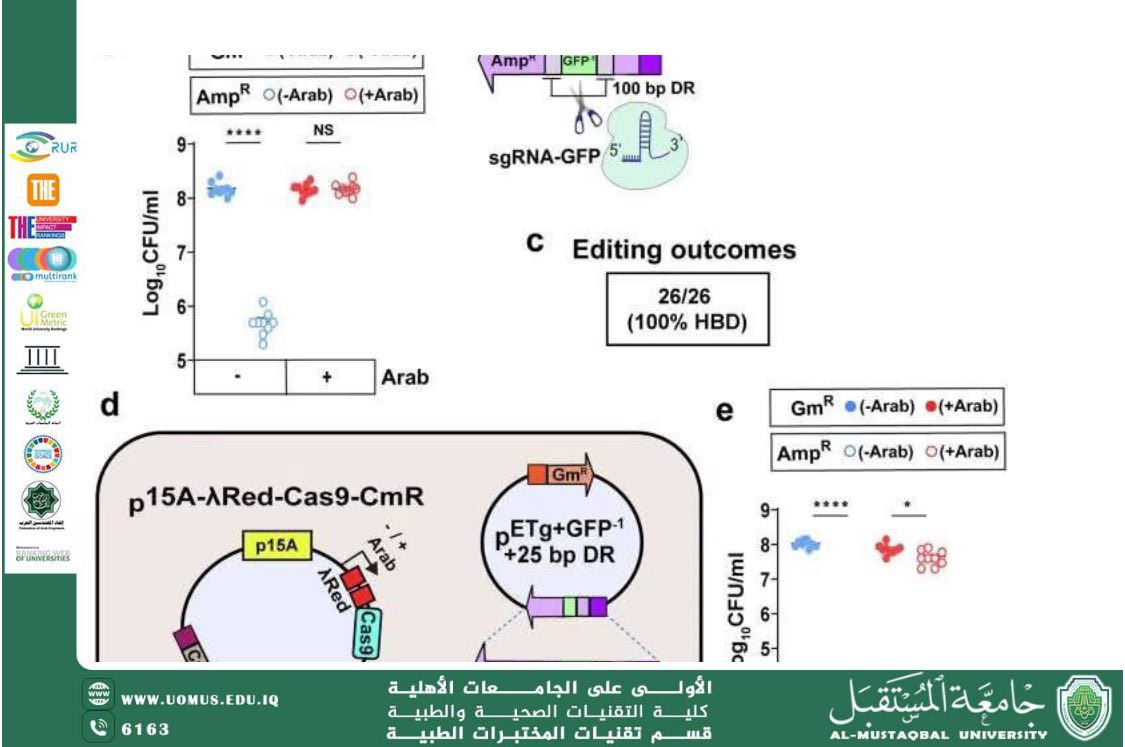
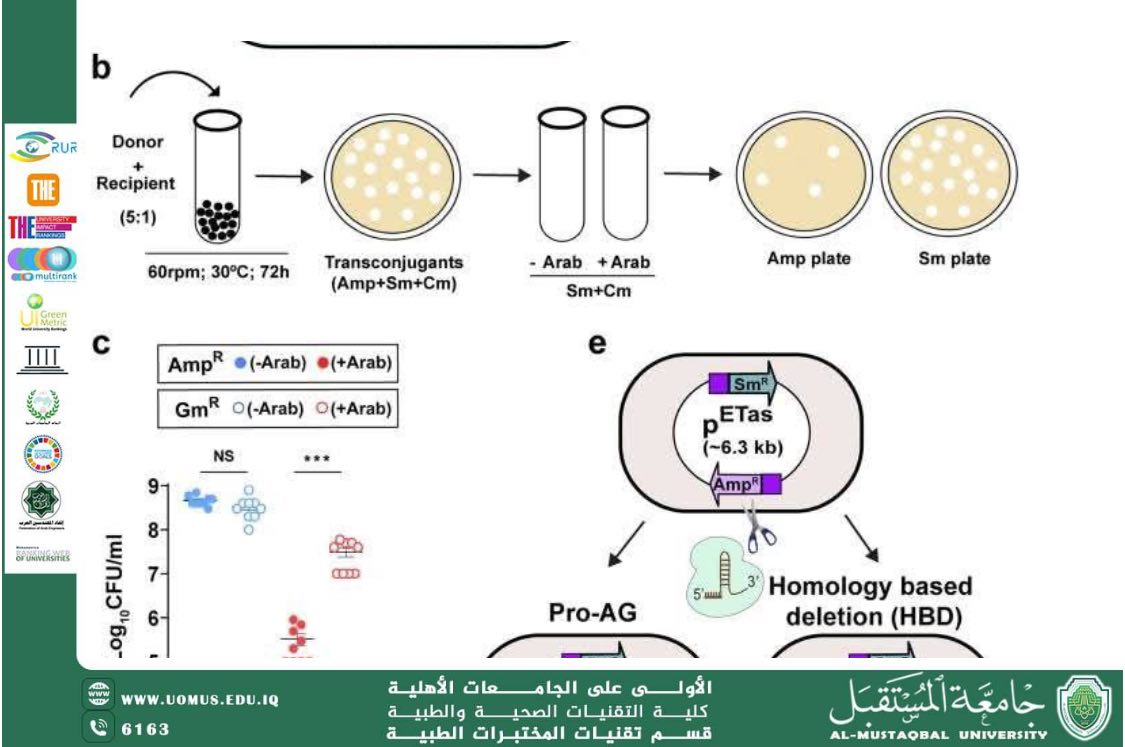
The new technology, known as Pro-Active Genetics (Pro-AG)—specifically its second-generation version pPro-MobV—relies on introducing a specially designed genetic cassette that targets resistance genes located on plasmids. Plasmids are independent, circular DNA molecules that can be transferred horizontally between bacteria.
This cassette functions through CRISPR-guided DNA cleavage, leading to the disruption of resistance genes and restoring bacterial sensitivity to conventional antibiotics.
A key advantage of the pPro-MobV system is its ability to self-propagate within bacterial communities via conjugative transfer, a natural mechanism of genetic exchange between bacterial cells, conceptually similar to cellular “mating.”
Researchers have demonstrated the effectiveness of this system within biofilms, which are complex microbial structures composed of bacteria (and sometimes fungi) embedded in an extracellular polymeric matrix. Biofilms are among the most resistant forms of microbial growth to antibiotics and disinfectants.
The study also showed that components of the active genetic system can be transferred by bacteriophages, viruses that infect bacteria and play a major role in their ecological evolution. The researchers propose combining pPro-MobV with genetically engineered phages capable of overcoming bacterial defense mechanisms and delivering CRISPR components more efficiently.
Additionally, the system includes a homology-directed deletion mechanism as a biosafety measure, allowing the removal of the genetic cassette when needed.
These findings suggest that Pro-AG technology represents an innovative strategy that not only limits the spread of antibiotic resistance but actively reverses it at the genetic level across microbial populations. This approach holds broad potential applications in clinical medicine, environmental pollution control, and microbiome engineering in human, animal, and environmental systems.
Al-Mustaqbal University is the first university in Iraq
Department of Medical Laboratory Techniques – First in the Iraqi National Ranking.