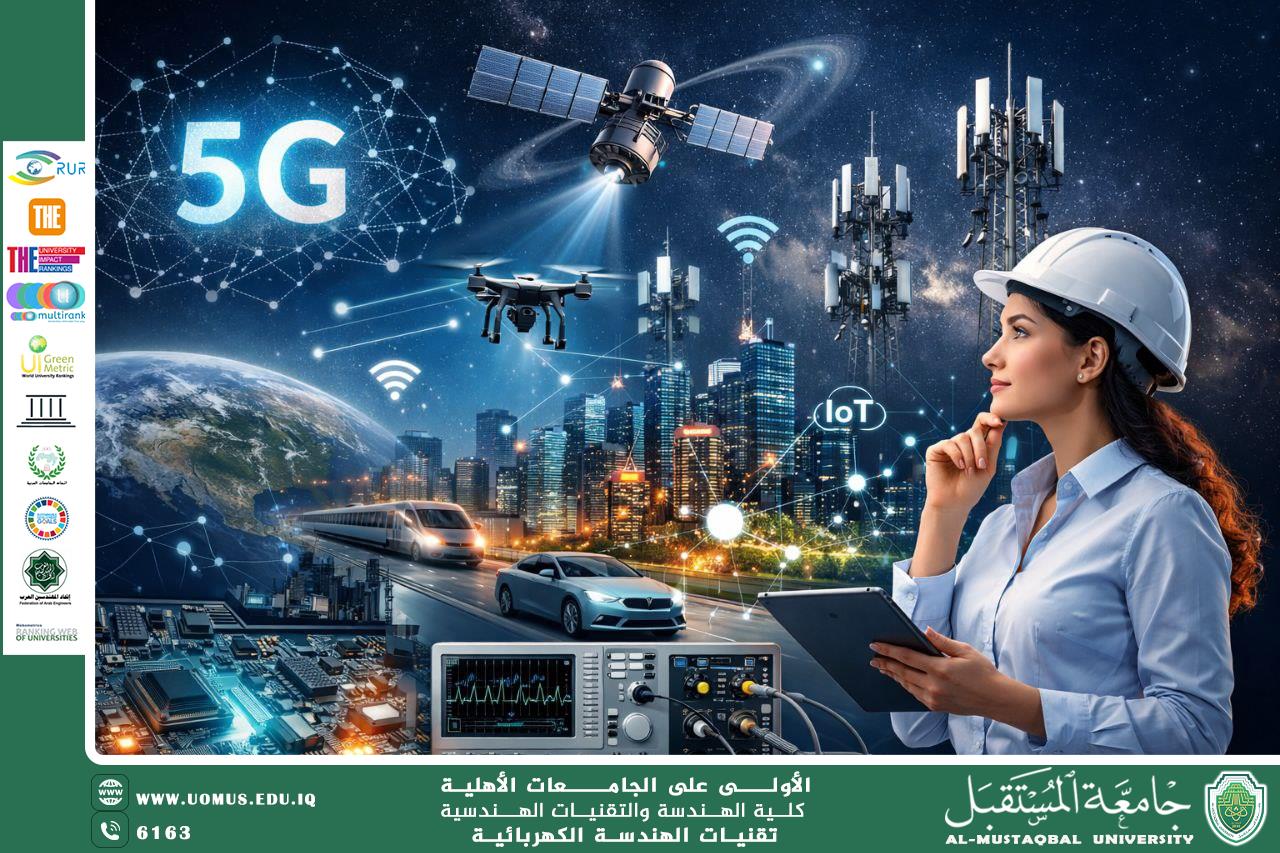
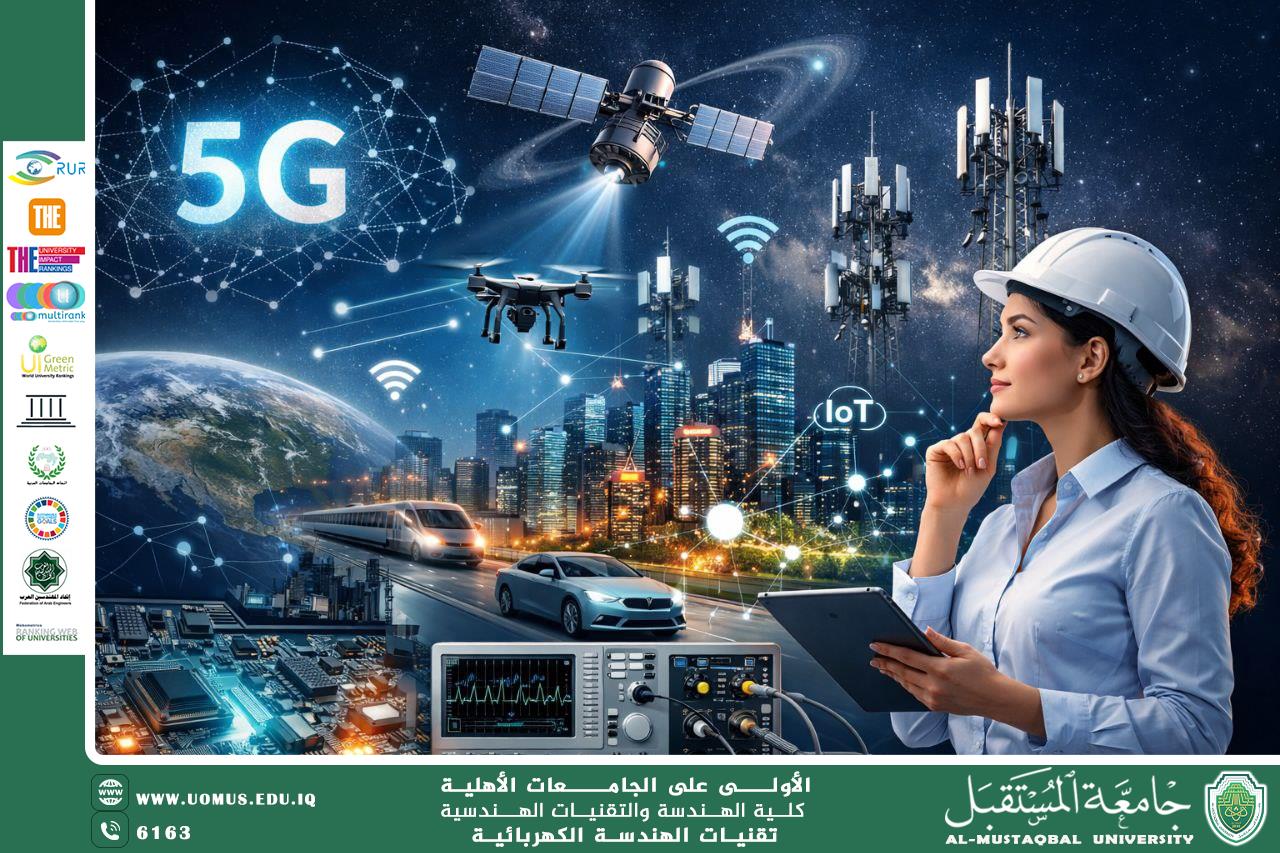
Integration between electrical engineering and communication systems under 5G technologies
Engineer Ali Naji Radi: At the heart of the digital revolution the world is witnessing today, communication systems stand as one of the most important technological pillars that have reshaped the concept of human and industrial connectivity. Networks are no longer merely conduits for data transmission; they have become intelligent systems that manage information flow with high efficiency, adapt to real-time changes, and provide a reliable communication environment that supports innovation and continuous development.
From Traditional Transmission to Smart Communications
In traditional systems, the role of communication networks was limited to transmitting the signal from sender to receiver with minimal distortion, relying on fixed settings and predefined parameters. Today, however, these systems are capable of managing the frequency spectrum with high efficiency, automatically improving service quality, and adapting to changes in the number of users or channel conditions.
Artificial Intelligence in Communication Systems
Artificial intelligence has become an essential part of communications systems engineering, where machine learning algorithms are used to:
Improve frequency resource allocation
Reduce signal interference
Enhance the efficiency of modulation and coding systems
Predict network congestion before it occurs
Improve signal quality in complex environments
These technologies rely on analyzing massive amounts of data received from towers, stations, and user devices, enabling the network to make autonomous decisions in real time.
5G and Beyond
Fifth-generation (5G) and future sixth-generation (6G) networks represent a major integration of electrical engineering and communications systems, relying on advanced technologies such as:
Smart antennas
Millet waves
Beamforming technologies
Internet of Things (IoT)
These networks not only provide high speeds but also enable smart cities, autonomous vehicles, and automated industrial systems. Integration with Electrical Engineering
Communication systems are closely linked to electrical engineering through:
Design of high-frequency electronic circuits
Power supply systems for communication stations
Signal processing technologies
Control and measurement systems. Today, electrical engineers no longer work in isolation from communications; rather, they have become part of an integrated technological system that combines power, spectrum, signal, and control.
Challenges and Future Prospects
Despite significant advancements, communication systems face challenges such as information security, managing limited spectrum, energy consumption, and the need for multidisciplinary engineering personnel who combine electrical, electronics, and software expertise.
However, the future clearly indicates that intelligent communication systems will be the foundation for building digitally interconnected societies, relying on speed, accuracy, and immediate response in information transmission.
Al-Mustaqbal University, the leading university in Iraq