Blood as a Link Between Biology and Forensic Evidece (Asst. Prof. Bushra Hussein Atiyah)
Blood is one of the most significant biological forms of evidence found at crime scenes due to the valuable biological information it contains. In forensic science, blood is used to identify individuals, reconstruct criminal events, and link suspects to crime scenes. Advances in cellular and molecular biology have greatly enhanced the accuracy of forensic blood analysis.
Biological Composition of Blood and Its Forensic Importance
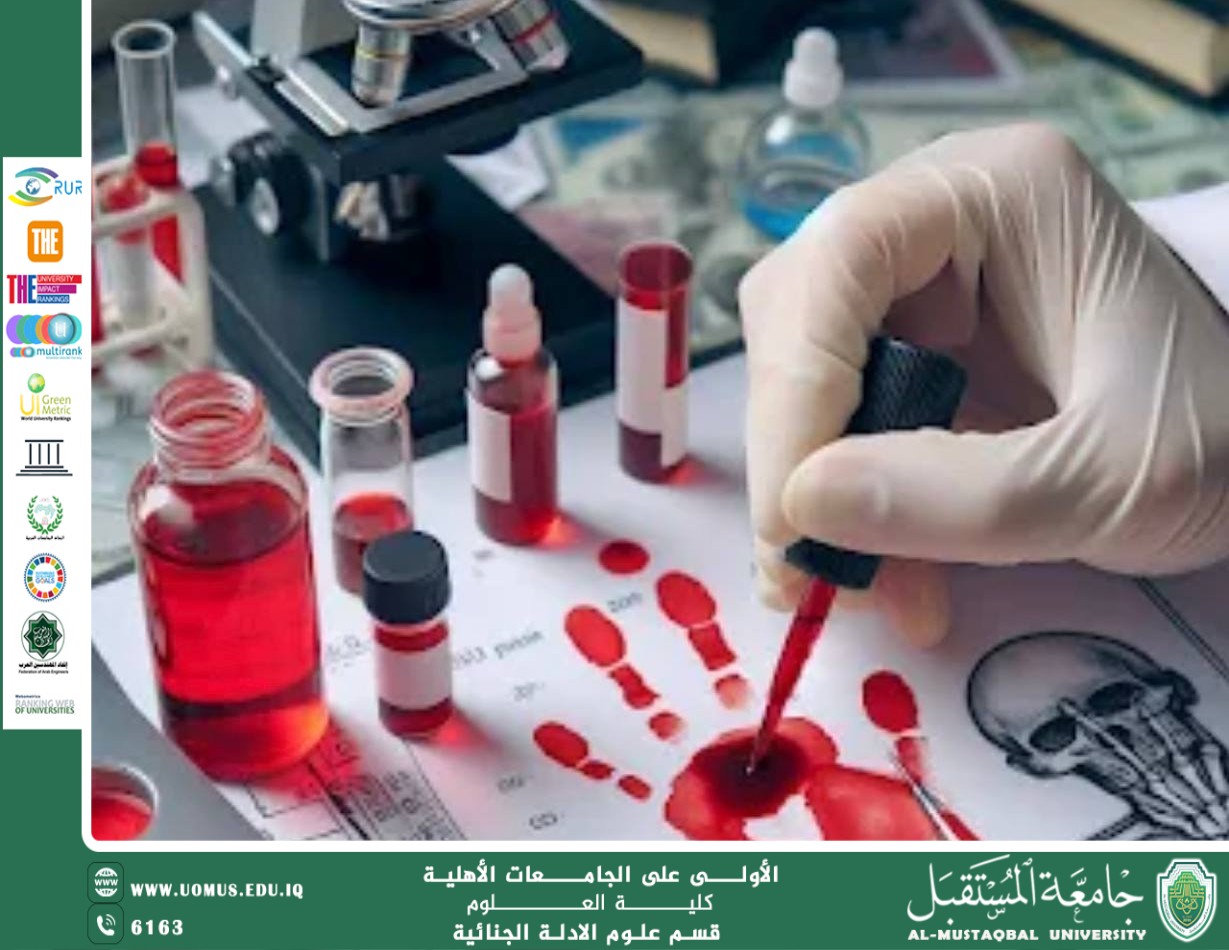
Blood consists of plasma, red blood cells, white blood cells, and platelets. White blood cells contain DNA, which serves as the most critical biological evidence in forensic investigations. Red blood cells carry antigens that are used in blood group determination.
Blood Group Analysis in Forensic Science
The ABO blood group system and the Rh factor are commonly used in forensic investigations to exclude or support suspects, particularly when DNA analysis is not possible. Although blood typing cannot uniquely identify an individual, it provides valuable supportive evidence.
Bloodstain Pattern Analysis and Crime Reconstruction
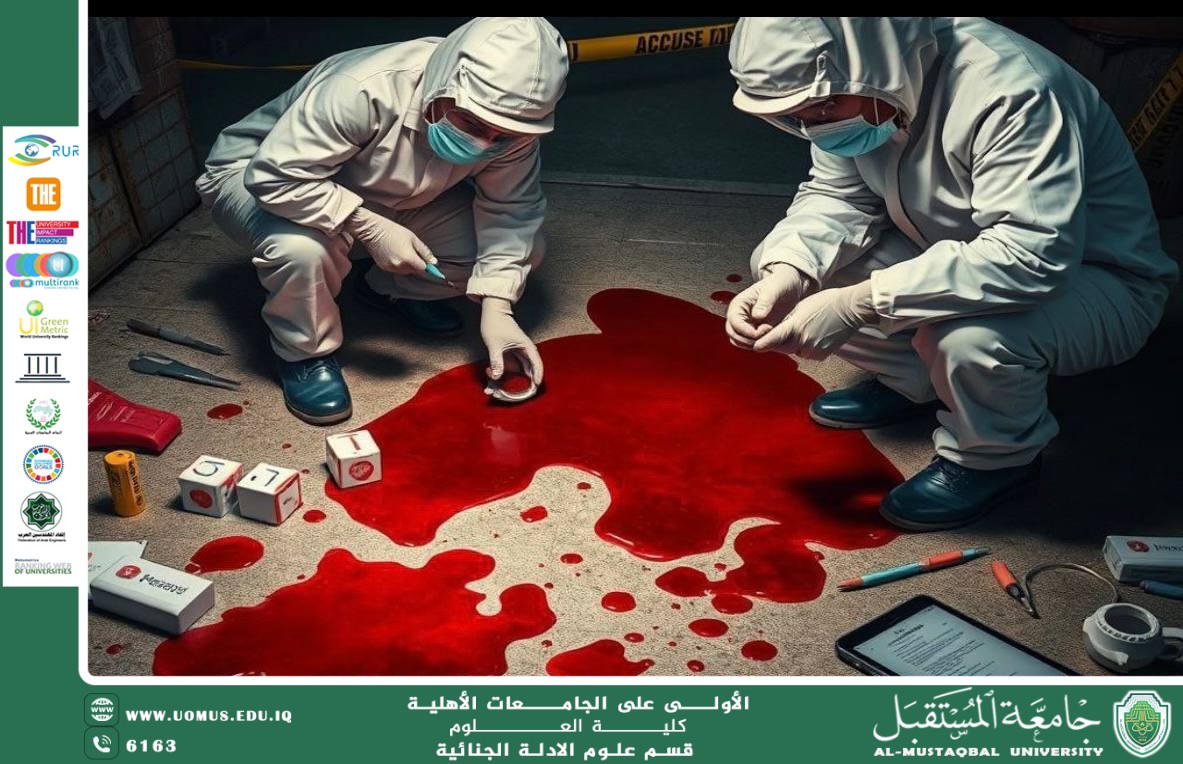
Bloodstain pattern analysis helps forensic investigators interpret how a crime occurred by examining the size, shape, and distribution of bloodstains. This analysis can determine the direction of force, type of weapon used, and the positions of the victim and the offender. It relies on biological and physical principles governing blood behavior.
Importance of Blood in Linking Biology to Forensic Justice
Blood represents a clear connection between biology and forensic science, combining biological knowledge with legal application. This integration enhances the reliability of scientific evidence and supports the justice system.
Conclusion
Blood remains one of the most powerful biological evidences in forensic investigations due to its rich genetic and structural information. With continuous advances in biology, the forensic value of blood evidence continues to expand, improving crime-solving capabilities and ensuring justice.
Al-Mustaqbal University – the first university in Iraq.
SDG4