Forensic Genetics and Its Significance in Human Identification (Asst. Lecturer Huwayda Nazzal Hussein)
Forensic genetics is one of the most advanced and influential branches of life sciences in modern forensic investigations. It has revolutionized crime detection by relying on human genetic material as a highly accurate and reliable form of evidence. As crimes become more complex, forensic genetics has become essential in achieving justice.
Concept of Forensic Genetics
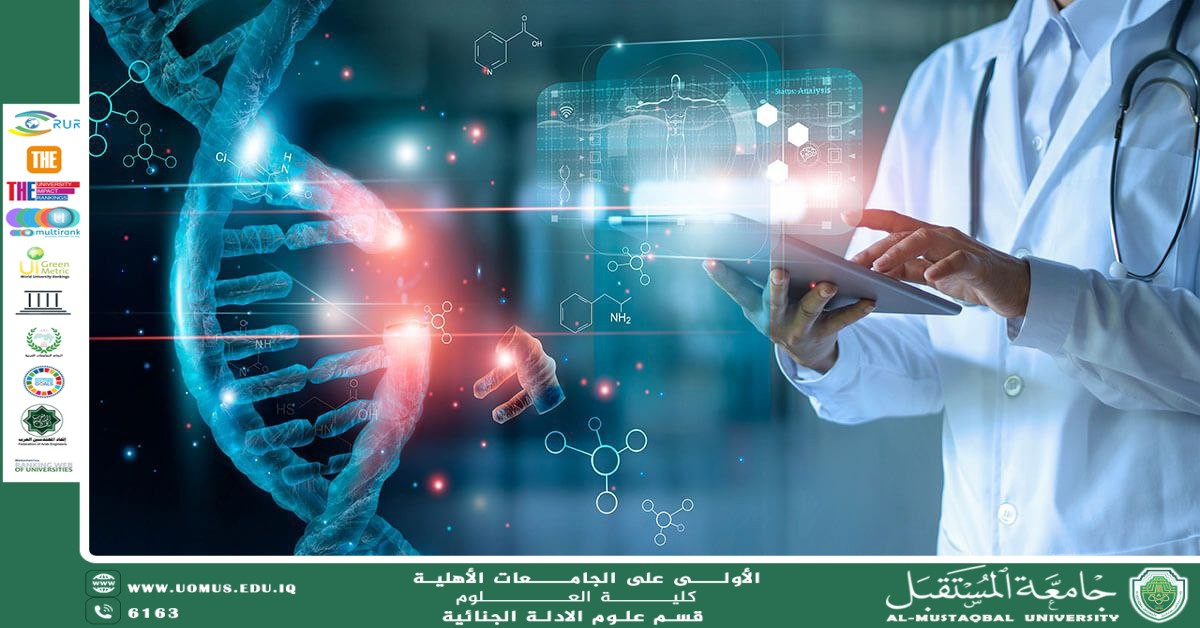
Forensic genetics is an applied branch of genetics that focuses on the analysis of DNA within criminal investigations. It is based on the scientific principle that every individual has a unique genetic profile.
DNA can be extracted from biological samples such as blood, saliva, hair, and tissues, and analyzed using advanced laboratory techniques.
Scientific Properties of DNA and Its Forensic Value
The strength of forensic genetics lies in the unique properties of DNA, including:
Genetic stability throughout a person’s life
Individual uniqueness
Ability to extract DNA from very small samples
Relative resistance to environmental conditions
These properties make DNA one of the most reliable forms of forensic evidence.
Role of Forensic Genetics in Human Identification
Forensic genetics plays a critical role in identifying individuals in various cases, such as:
Identifying criminal offenders
Identifying unknown victims
Recognizing decomposed or burned bodies
Linking suspects to crime scenes
This scientific approach replaces speculation with objective evidence.
Forensic Genetics in Paternity and Legal Cases
Beyond criminal investigations, forensic genetics is widely used in paternity testing and legal disputes.
DNA analysis provides highly accurate results in determining biological relationships, making it a trusted tool in judicial systems worldwide.
Reducing Judicial Errors through Forensic Genetics
Before the widespread use of genetic evidence, many cases relied on unreliable testimony or circumstantial evidence.
Forensic genetics has contributed to:
Reopening cold cases
Exonerating wrongfully convicted individuals
Increasing judicial accuracy and fairness
Thus, it plays a major role in protecting human rights.
Ethical and Legal Challenges
Despite its benefits, forensic genetics raises ethical concerns, including:
Protection of genetic privacy
Misuse of genetic databases
Ensuring proper sample handling
Strict legal regulations are required to ensure ethical application.
Conclusion
Forensic genetics is a cornerstone of modern forensic science. Its high accuracy in identification and crime-solving has strengthened justice systems and reduced judicial errors, making it indispensable in contemporary legal investigations.
Al-Mustaqbal University – the first university in Iraq.