
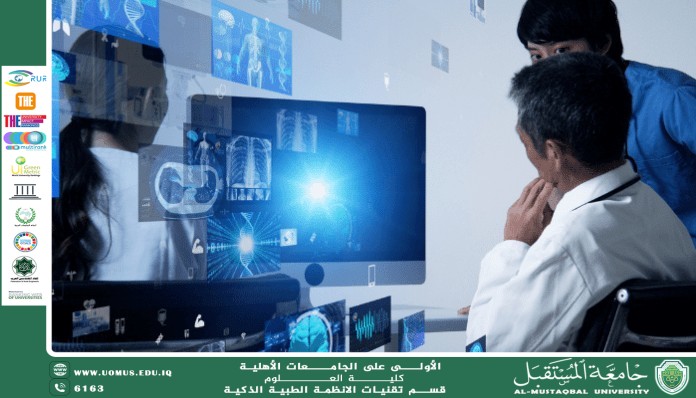
Technology in the Treatment of Neurodegenerative Diseases: The Role of Artificial Intelligence in Analyzing Data Related to Disorders such as Alzheimer’s (Asst. Programmer Huda Khudair Hani)
Medical technology is witnessing rapid advancement in the field of treating neurodegenerative diseases such as Alzheimer’s, Parkinson’s disease, and multiple sclerosis. These conditions are characterized by the progressive deterioration of nervous system functions and significantly affect memory, movement, behavior, and cognitive abilities. Due to the complexity of these disorders and the interaction of genetic, environmental, and biological factors, it has become essential to employ modern technologies—most notably artificial intelligence and medical robotics—to better understand them and improve methods of diagnosis and treatment.
Artificial intelligence plays a pivotal role in analyzing the vast amounts of data associated with neurodegenerative diseases, including MRI scans, genetic test results, and patients’ clinical and behavioral data. Through machine learning and deep learning algorithms, intelligent systems can detect subtle patterns that may be difficult for humans to identify. This capability supports the early diagnosis of Alzheimer’s disease, sometimes years before clear symptoms appear. AI also contributes to predicting disease progression and determining the rate of decline for each patient, enabling the development of more accurate and personalized treatment plans.
In addition, data analysis technologies help evaluate patients’ responses to various treatments by continuously monitoring biomarkers and cognitive changes. This provides valuable feedback to physicians, allowing them to adjust treatment strategies when necessary. Such a data-driven approach strengthens the concept of precision medicine, which focuses on individualized care rather than standardized treatment protocols.
In the field of rehabilitation and supportive therapy, robotics has become increasingly important in improving the quality of life for patients with neurological disorders. Therapeutic robots are used in motor rehabilitation sessions to assist patients with Parkinson’s disease or stroke in regaining movement and balance through precisely programmed exercises based on structured and repetitive motion. These systems can measure performance levels and adjust the intensity of exercises according to the patient’s progress.
Furthermore, social robots designed to interact with Alzheimer’s patients contribute to memory stimulation, enhanced communication, and reduced feelings of isolation and depression. This type of psychological and behavioral support complements medical treatment, particularly in advanced stages of the disease. Assistive robots used in home settings also enable patients to perform certain daily activities more independently, promoting dignity and reducing the burden on caregivers.
The integration of artificial intelligence and robotics in addressing neurodegenerative diseases represents a qualitative transformation in healthcare. It combines precise data analysis with practical, patient-centered support. As research and development in this field continue to advance, these technologies are expected to enhance early detection opportunities, foster more personalized treatment approaches, and significantly improve the quality of life for patients and their families.
Al-Mustaqbal University – The First University in Iraq
الهدف الرابع(التعليم الجيد).