Scientific Article Advanced Thermal Insulation a Study on the Impact of Modern Insulators in Reducing Cooling Loads for University Buildings By noor isaa
1. Introduction
With the continuous rise in temperatures in Iraq, air conditioning units consume the largest share of energy budgets in universities. Advanced Thermal Insulation emerges as a radical engineering solution, not only to reduce energy bills but also to ensure optimal thermal comfort for students and faculty. This article aims to review the latest insulation technologies and their practical impact on reducing thermal loads within the new buildings of Al-Mustaqbal University.
2. Heat Transfer Mechanisms in University Buildings
Heat is transferred into lecture halls and laboratories through three primary methods: conduction through walls, radiation through windows, and convection via air leakage.
The Physical Role of Insulators: Insulating materials create high thermal resistance (R-value) that obstructs the flow of heat from the hot external environment to the cooled interior.
3. Modern Insulators: Innovations and Materials
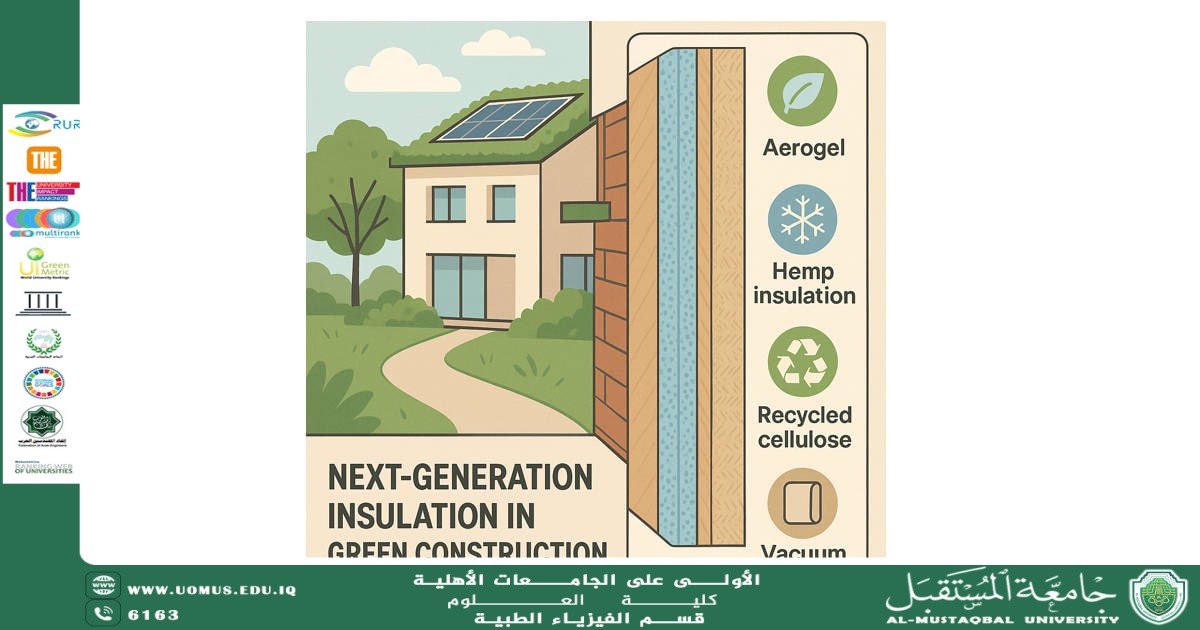
Insulation is no longer limited to traditional rock wool; it has evolved into more efficient materials:
Aerogel: Known as "frozen smoke," it is the world’s lightest solid material and provides the highest levels of thermal insulation with minimal thickness.
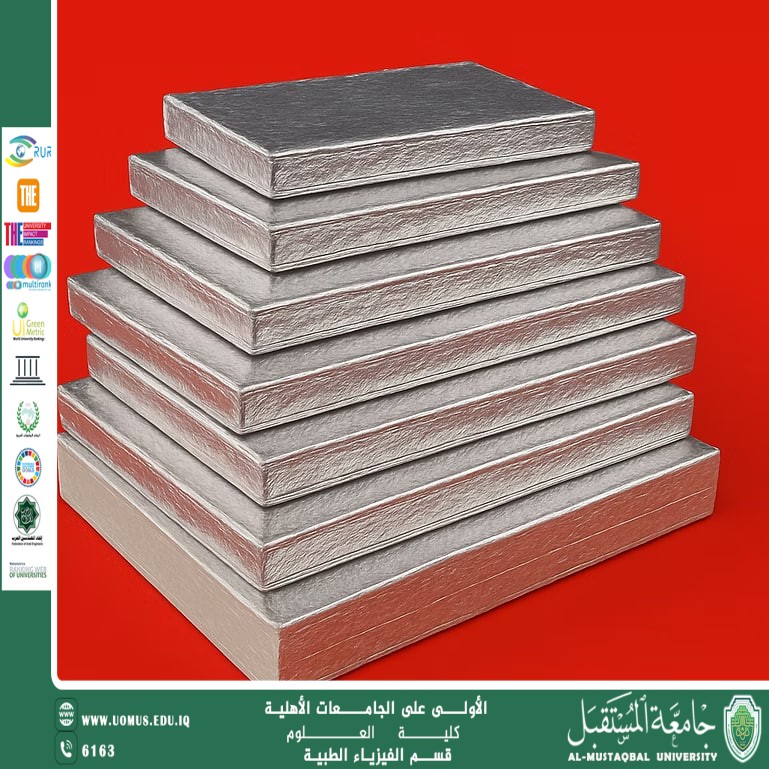
Vacuum Insulation Panels (VIPs): These rely on creating a vacuum to prevent heat transfer by conduction, making them ideal for buildings requiring maximum efficiency.
Phase Change Materials (PCMs): Smart materials that absorb excess heat during the day and release it at night, maintaining stable internal temperatures.
4. Impact of Insulation on Reducing HVAC Loads
Applying advanced thermal insulation in the university’s new buildings leads to:
Reduction in Required Equipment Capacity: Instead of using massive AC units, insulation reduces the "Total Thermal Load," allowing for the installation of smaller, more energy-efficient units.
Performance Stability: Insulation reduces the operating hours of the compressor, thereby extending the lifespan of air conditioning systems and reducing maintenance costs.
Thermal Fluctuations Reduction: Maintaining a constant temperature for longer periods even after switching off the AC units.
5. Applied Study: Al-Mustaqbal University Buildings as a Model for Smart Structures
In its recent urban expansions, Al-Mustaqbal University has adopted integrated insulation strategies:
Smart Windows (Double/Triple Glazing): Utilizing double glazing with Low-Emissivity (Low-E) coatings to reduce radiant heat transfer by up to 70%.
Cool Roofs: Applying heat-reflective coatings that minimize the roof’s absorption of direct sunlight.
High Thermal Mass Walls: Integrating insulators within concrete structures to ensure sustainable thermal protection.
6. Conclusion and Recommendations
Investing in advanced thermal insulation is a long-term investment that balances urban development with environmental preservation. Based on the above, we recommend:
Mandatory implementation of thermal insulation standards in all higher education facilities.
Conducting periodic inspections using Thermal Imaging cameras to detect heat leakages in buildings.
Supporting student research within the Department of Air Conditioning and Refrigeration Techniques to develop local insulating materials from sustainable sources.
Al-Mustaqbal University: Towards a Green and Sustainable Campus.
Al-Mustaqbal University is the first university in Iraq.