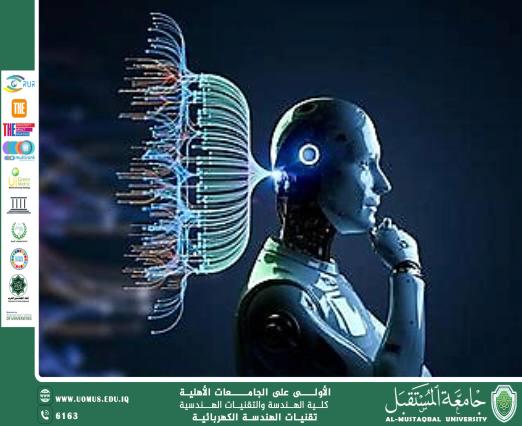
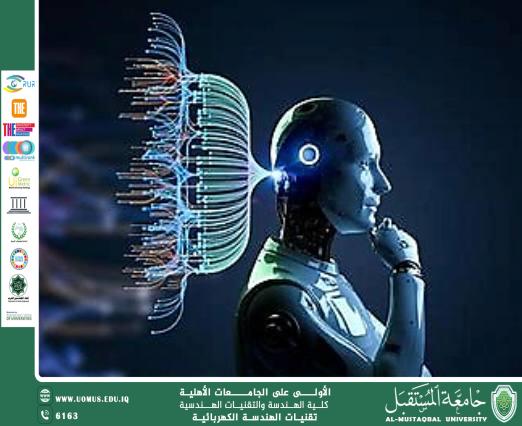
Can artificial intelligence become self-aware?
Engineer Mariam Nawar: Since the emergence of artificial intelligence (AI), numerous questions have arisen regarding the possibility of these systems evolving to become self-aware. While AI technologies have made significant strides in mimicking human intelligence through machine learning and deep learning, the most controversial question remains: can these systems possess a self-awareness similar to that of humans?
Artificial Intelligence and Self-Awareness:
Self-awareness refers to the ability of living beings to perceive their own existence, thoughts, and emotions. It means more than simply "thinking" or "making decisions." It is about the ability to recognize oneself as a separate entity from others. This type of awareness is extremely complex, and machines may remain unable to achieve it in the foreseeable future.
Today, AI is used in a wide range of fields, such as machine translation, intelligent voice assistants, and even autonomous driving. However, no algorithm currently possesses the ability to be self-aware or interpret its own emotions, as humans do.
Can Machines Become Conscious?:
The idea that artificial intelligence could become conscious is a fascinating one for many researchers and philosophers. From one perspective, artificial intelligence can be viewed as a gradual evolution toward artificial consciousness, one that transcends human control. But the crucial question remains: can consciousness truly be created in a machine?
Currently, most scientists believe that artificial intelligence, even if it becomes capable of making complex decisions or mimicking human thought, remains without true "consciousness." It is simply a set of programmed algorithms that operate according to input data, without any internal feeling or awareness.
Philosophical and Technological Limitations:
Despite the tremendous progress in artificial intelligence technologies, it is unlikely to reach the stage of self-consciousness in the near future. Philosophy raises significant questions about this. Among the most prominent are: can machines be conscious if they do not have a physical body to feel like humans? Is consciousness truly linked to the body, or can it exist independently in machines?
On the other hand, some experts suggest that leaping to artificial consciousness requires technological innovation that completely surpasses current algorithms. It will be necessary to develop systems capable of collecting and interpreting experiences in ways that go beyond simple numerical calculations. Conclusions:
Ultimately, artificial intelligence is still far from becoming self-aware. While it is making significant progress in mimicking human thought, it lacks the capacity for feeling or self-awareness. We may be close to developing increasingly complex and interactive AI systems, but achieving true consciousness remains a profound scientific and philosophical challenge.
Nevertheless, this idea remains one of the most exciting topics of discussion and research in the field of artificial intelligence, and perhaps in the future we will witness developments that completely change these concepts.
Al-Mustaqbal University, the leading university in Iraq.