Students of Fuel and Energy Engineering Conduct a Field Survey Study on the Impact of Fuel on the Economic Situation
Under the directives of the President of Al-Mustaqbal University, Professor Hassan Shaker Majdi, and under the supervision of the Dean of the Engineering Technical College, Assistant Professor Dr. Azhar Mohsen Abdul, and in alignment with the Sustainable Development Goals—particularly Goal 7 (Affordable and Clean Energy), Goal 8 (Decent Work and Economic Growth), Goal 12 (Responsible Consumption and Production), and Goal 13 (Climate Action)—a group of students from the Department of Fuel and Energy Engineering conducted a field survey study aimed at linking theoretical knowledge with practical application. The study examined the impact of various types of fuel on the economic situation, highlighting their direct implications on different segments of society.
The study was carried out by distinguished second-year students under the supervision of the Head of the Department of Fuel and Energy Engineering, Assistant Professor Dr. Ammar Abdul-Kadhim Fathi, with field follow-up by Lecturer Ali Yassin.
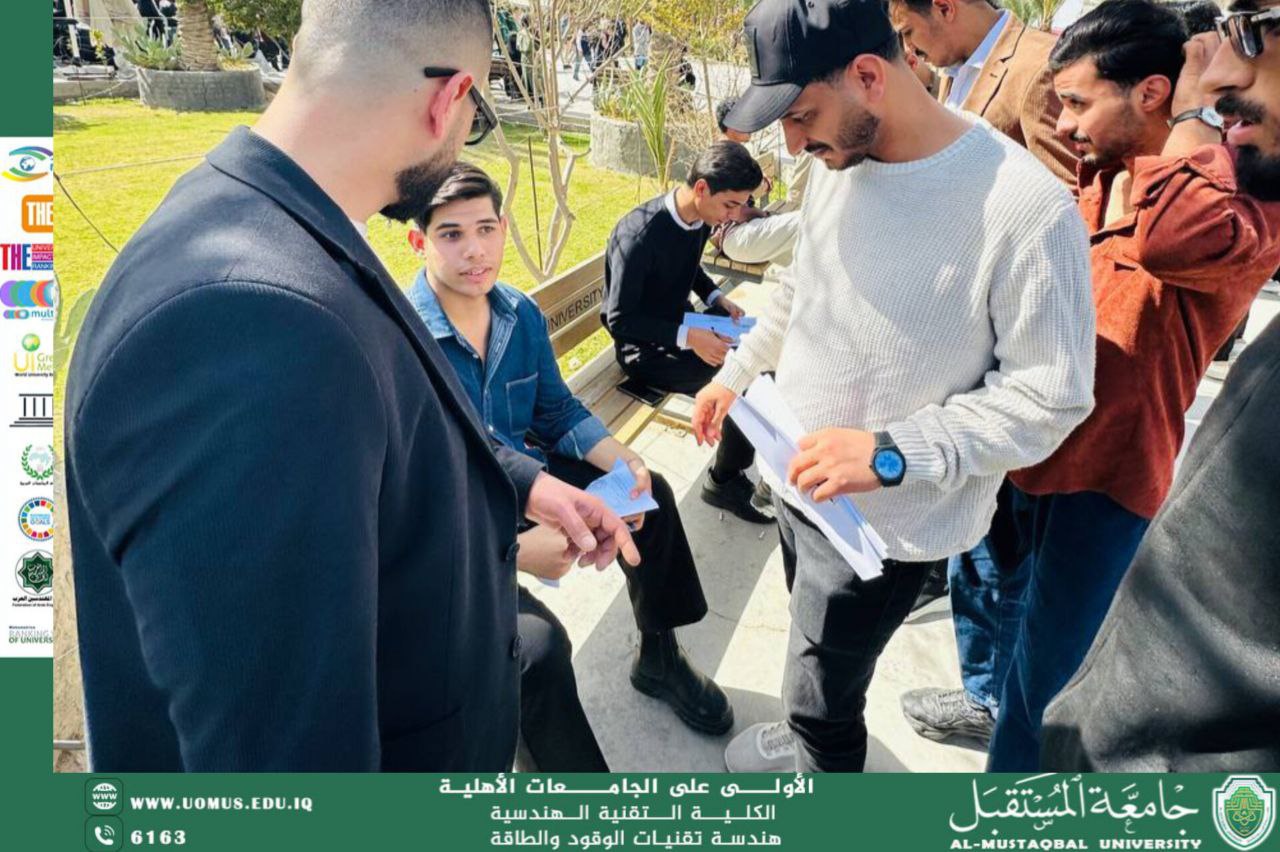
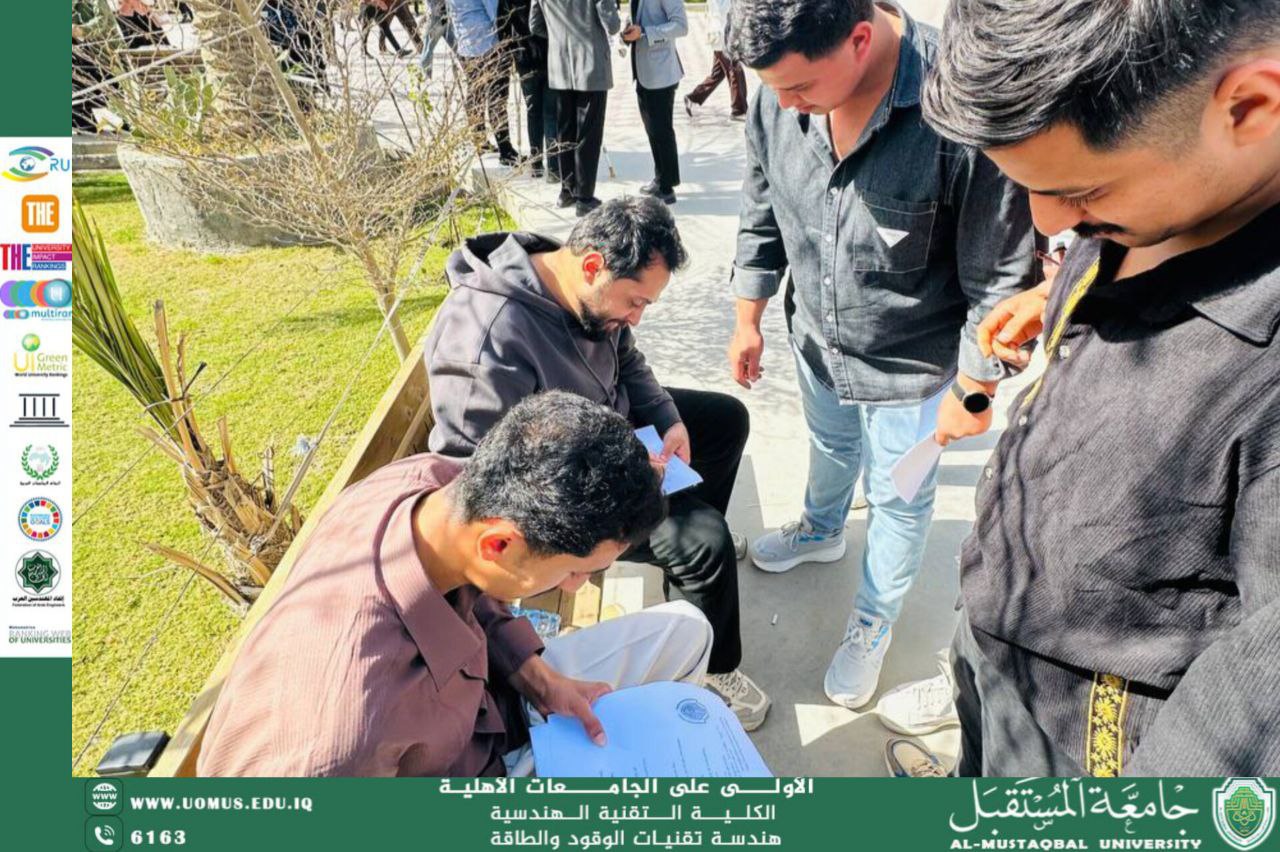
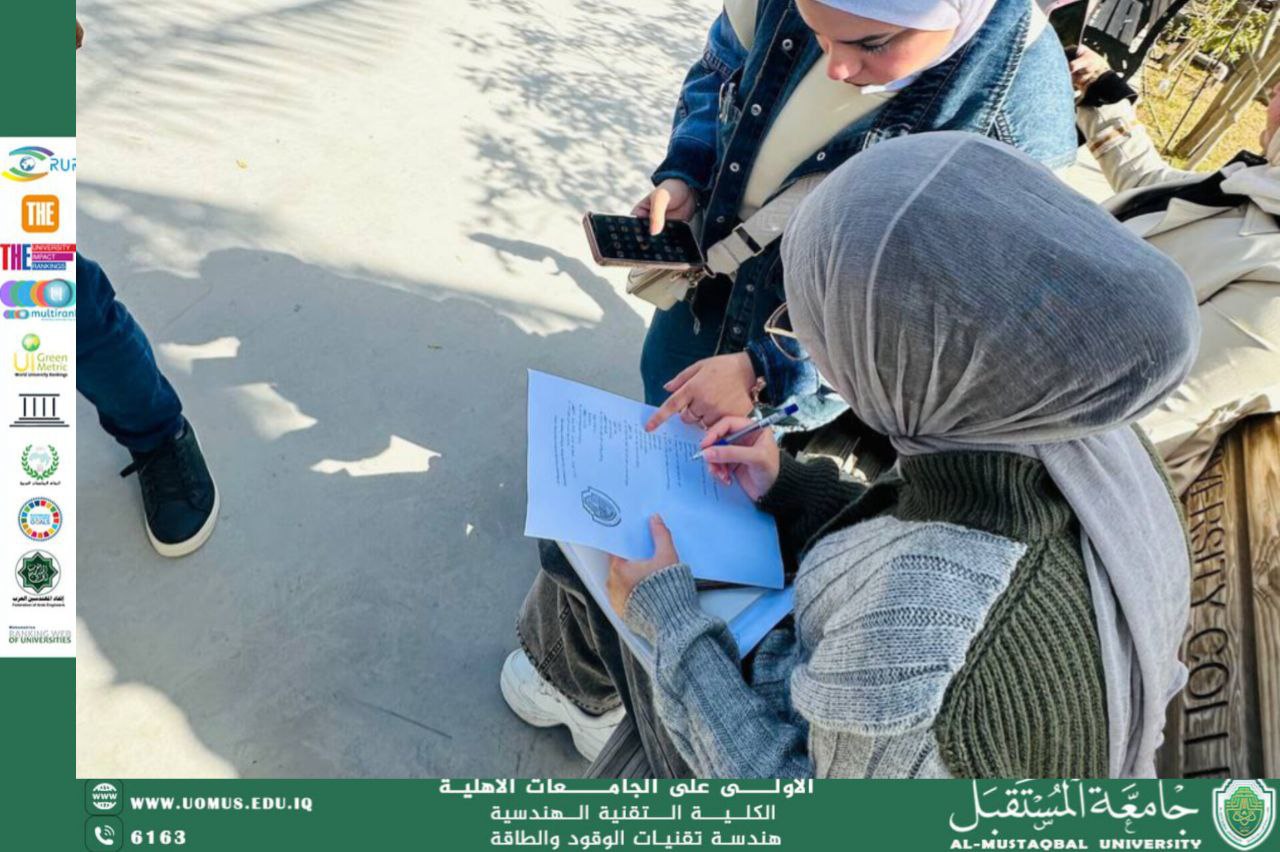
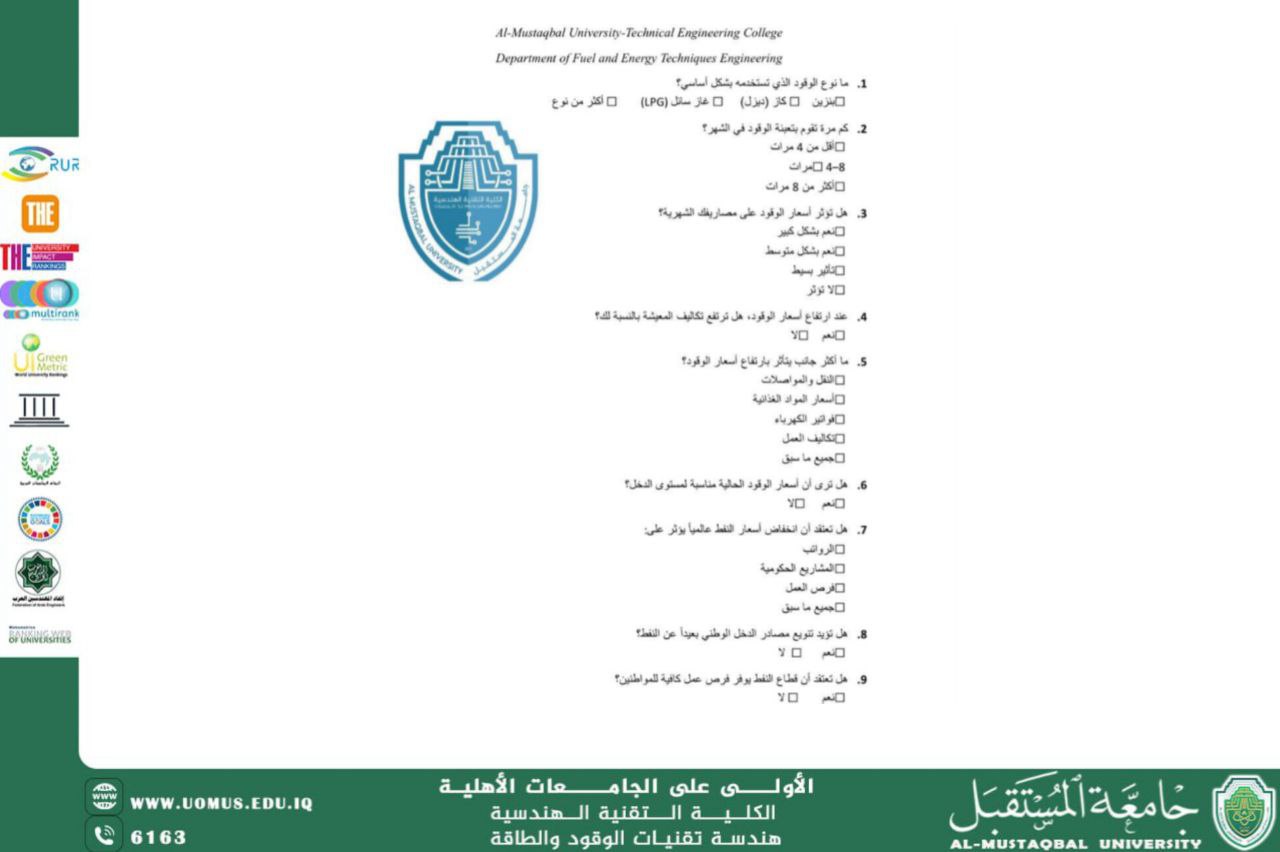
The research targeted university students as an aware and influential segment of society. Field questionnaires were distributed to measure the level of awareness regarding the relationship between fuel prices, transportation costs, prices of goods and services, and their overall impact on students’ living standards.
The findings revealed significant indicators demonstrating the direct connection between the fuel sector and economic stability, particularly amid continuous fluctuations in global and local energy prices. The study emphasized the importance of diversifying energy sources and promoting sustainable alternatives to reduce economic burdens and support balanced, long-term sustainable development.