The Impact of Low-Dose Radiation on Biological Tissues: A Study in Radiophysics Artical By Al-shaymaa Firas
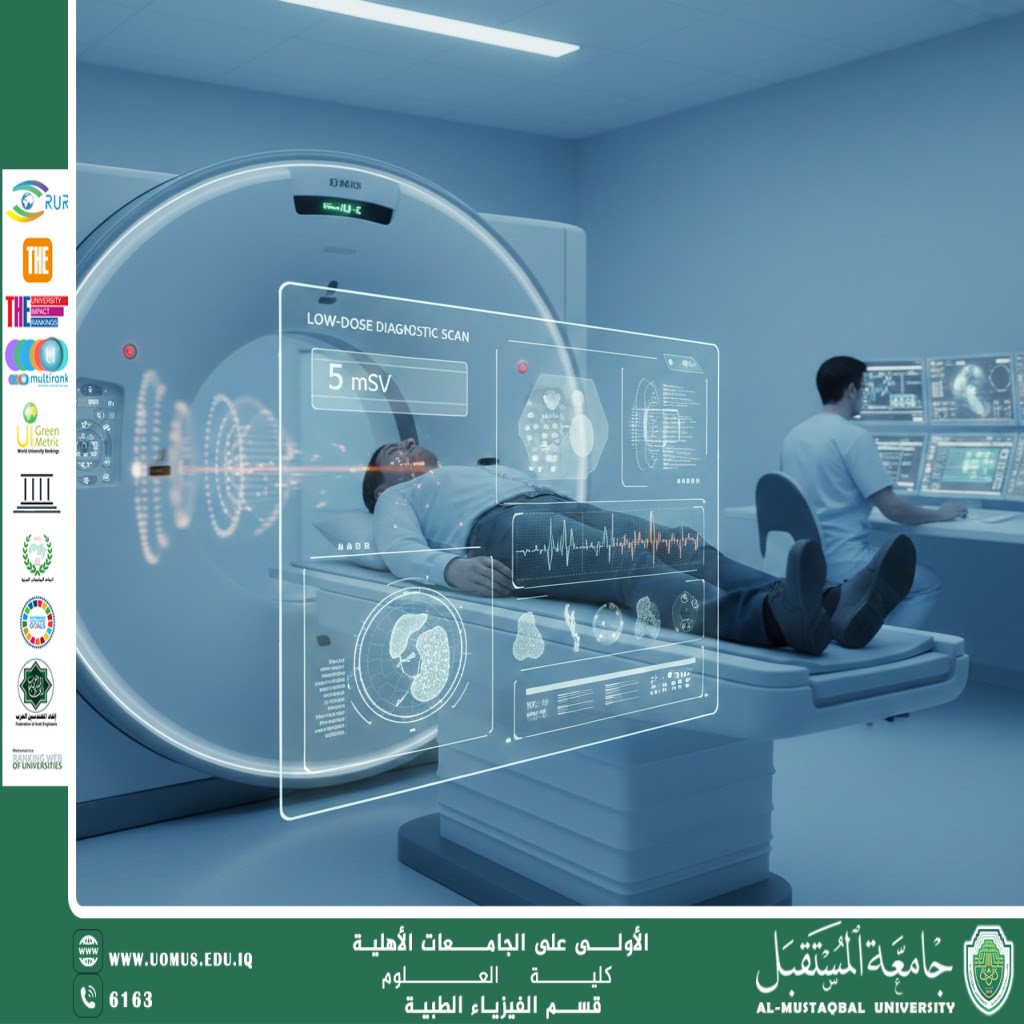
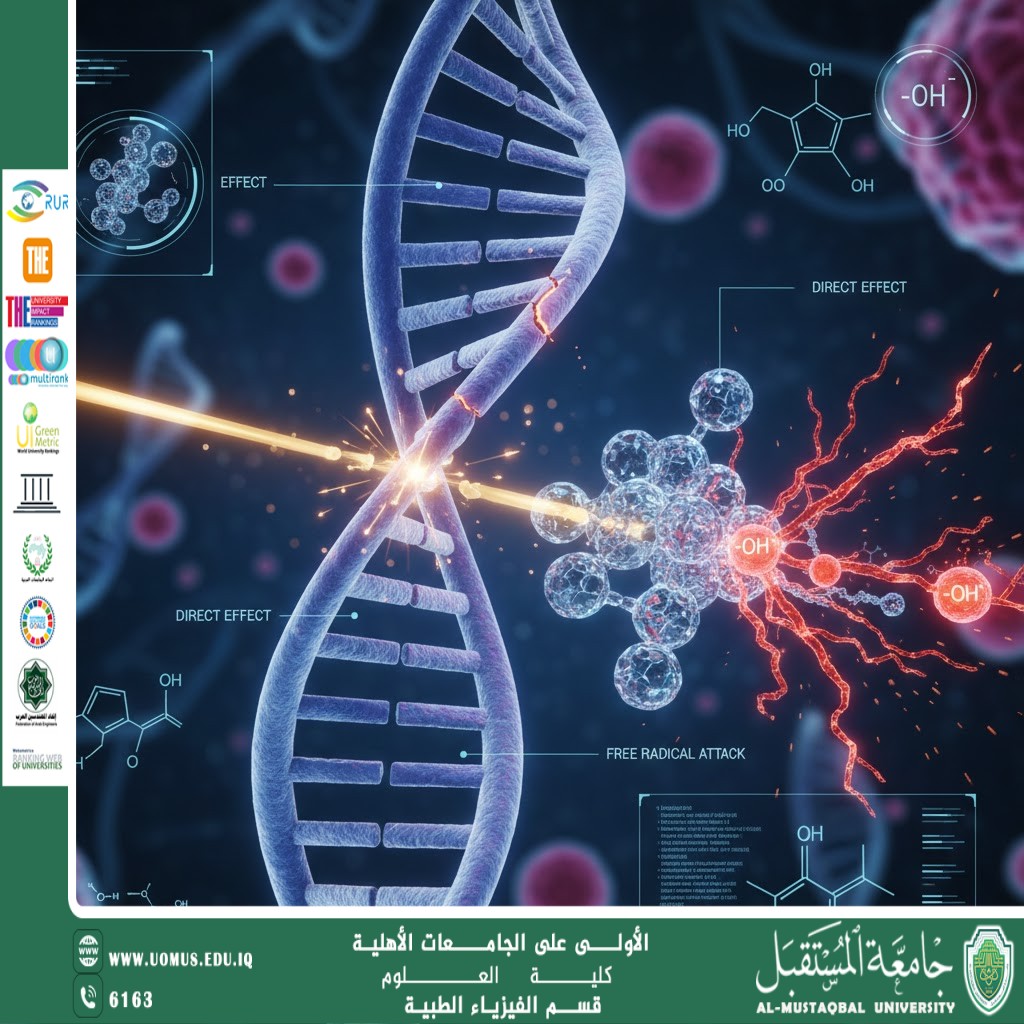
1. IntroductionLow-Dose Radiation (LDR) is generally defined as doses below 100 millisieverts (mSv). While the effects of high doses are well-known and immediate (such as radiation burns), the effects of low doses—to which patients are exposed during routine diagnostic procedures like X-rays or Computed Tomography (CT) scans—present a complex subject in radiophysics due to their "stochastic" (long-term and probabilistic) nature.2. Physical and Biological Interaction MechanismsWhen radiation penetrates biological tissues, the interaction occurs through two main pathways:Direct Effect: Photons collide directly with the DNA molecule, leading to the breakage of chemical bonds.Indirect Effect (Radiolysis of Water): This is the most common mechanism, where radiation ionizes water molecules within the cell, producing "Free Radicals" such as $OH^-$. These radicals are unstable atoms that attack cellular components, causing oxidative stress.3. Mathematical Models for Risk AssessmentRadiophysics relies on several models to estimate the impact of low doses, the most prominent being:Linear No-Threshold Model (LNT Model): This model assumes that any amount of radiation, no matter how small, carries a potential risk that is directly proportional to the dose magnitude.Radiation Hormesis: A scientifically controversial hypothesis suggesting that very low doses might stimulate cellular repair mechanisms and boost the immune system, leading to a "positive" effect, contrary to high doses.4. Biological Tissue ResponseSensitivity to low radiation varies based on the "Bergonie and Tribondeau Law," where tissues are more sensitive if they:Have a high rate of cellular division (such as bone marrow and lymphoid tissues).Are functionally undifferentiated (such as stem cells).Cancer Cells vs. Healthy Cells: Recent research at Al-Mustaqbal University focuses on how radiophysics can be utilized to enhance the targeting of infected cells while minimizing collateral damage to adjacent healthy tissues.5. Long-Term Effects (Stochastic Effects)Unlike deterministic effects, consequences resulting from low doses do not appear immediately; they may manifest years later:Genetic Mutations: Changes in the DNA sequence that may not kill the cell but alter its function.Radiation Carcinogenesis: A slight increase in the probability of developing tumors in the long term.6. The Role of Radiation ProtectionMedical physics adopts the ALARA principle (As Low As Reasonably Achievable), which aims to minimize radiation exposure through three main pillars:Time: Reducing exposure time.Distance: Increasing distance from the radiation source (Inverse Square Law $I \propto \frac{1}{d^2}$).Shielding: Using lead shielding and insulating materials.7. Conclusion and RecommendationsUnderstanding the impact of low-dose radiation remains an ongoing challenge that integrates physics, biology, and statistics. The study recommends:The necessity of periodic calibration of diagnostic X-ray machines to ensure the lowest possible dose (Dose Optimization).Activating the use of Artificial Intelligence to reduce noise in radiographic images, allowing for lower doses without compromising diagnostic quality.Intensifying laboratory research on the "adaptive response" of human cells when exposed to repeated, low-dose radiation.
"AL_mustaqbal University is the first university in Iraq"