Telemedicine: Evaluating the Experience in Rural Areas and Technical Challenges Artical by Dr.sara mahde
1. Introduction
Telemedicine is defined as the use of information and communication technologies to provide healthcare services and exchange medical information from one location to another. In rural areas, where geographical distances constitute a barrier to obtaining prompt medical consultation, telemedicine has emerged as a strategic solution to bridge the gap between patients and specialized medical centers. This contributes to achieving the Sustainable Development Goals (Goal 3: Good Health and Well-being).
2. Implementation Mechanisms in Rural Environments
The experience of telemedicine in rural areas relies on three main modalities:
Synchronous Interaction: Live video conferencing between the patient and the specialist physician.
Asynchronous (Store-and-Forward): Sending radiology images (X-rays) or Electrocardiograms (ECGs) to a consultant in another city for later analysis.
Remote Monitoring: Using wearable devices to monitor vital signs of patients with chronic diseases (diabetes, hypertension) and transmitting data immediately to the health center.
3. Assessment of Clinical and Economic Benefits
Field studies have proven that the implementation of telemedicine in rural areas achieves tangible positive results:
Early Intervention: Reducing diagnostic time for acute diseases such as strokes and heart attacks, as an emergency physician in rural areas can immediately consult a specialist.
Cost Reduction: Minimizing travel and accommodation expenses for patients and their families, as well as reducing the burden on central hospitals.
Continuity of Care: Improving the management of chronic diseases through regular follow-ups without requiring the patient to travel.
4. Challenges and Barriers
Despite its successes, the experience faces fundamental challenges in rural areas:
Digital Infrastructure: Poor internet networks and the lack of broadband in remote villages hinder the quality of live streaming for high-resolution medical images.
Digital Illiteracy: Difficulty for the elderly in rural areas to interact with smart applications and devices.
Legal and Privacy Barriers: Challenges in protecting patient data and ensuring the confidentiality of medical information as it moves across public networks.
Lack of Direct Clinical Examination: "Medical touch" and physical examination remain an integral part of diagnosis, which telemedicine lacks in some complex cases.
5. Evaluation from Patient and Physician Perspectives
Patient Satisfaction: Surveys indicate high acceptance due to saving time and effort, but concerns remain regarding "diagnostic confidence" compared to in-person visits.
Physician Efficiency: Physicians believe that telemedicine reduces "professional burnout" and facilitates data access, but it requires communication skills entirely different from in-person interviews.
6. Future Vision and Recommendations
To enhance the success of the telemedicine experience in rural Iraq and the region, we recommend:
Investing in 5G Networks: To provide data transfer speeds that allow for remote surgeries or instant radiological diagnosis.
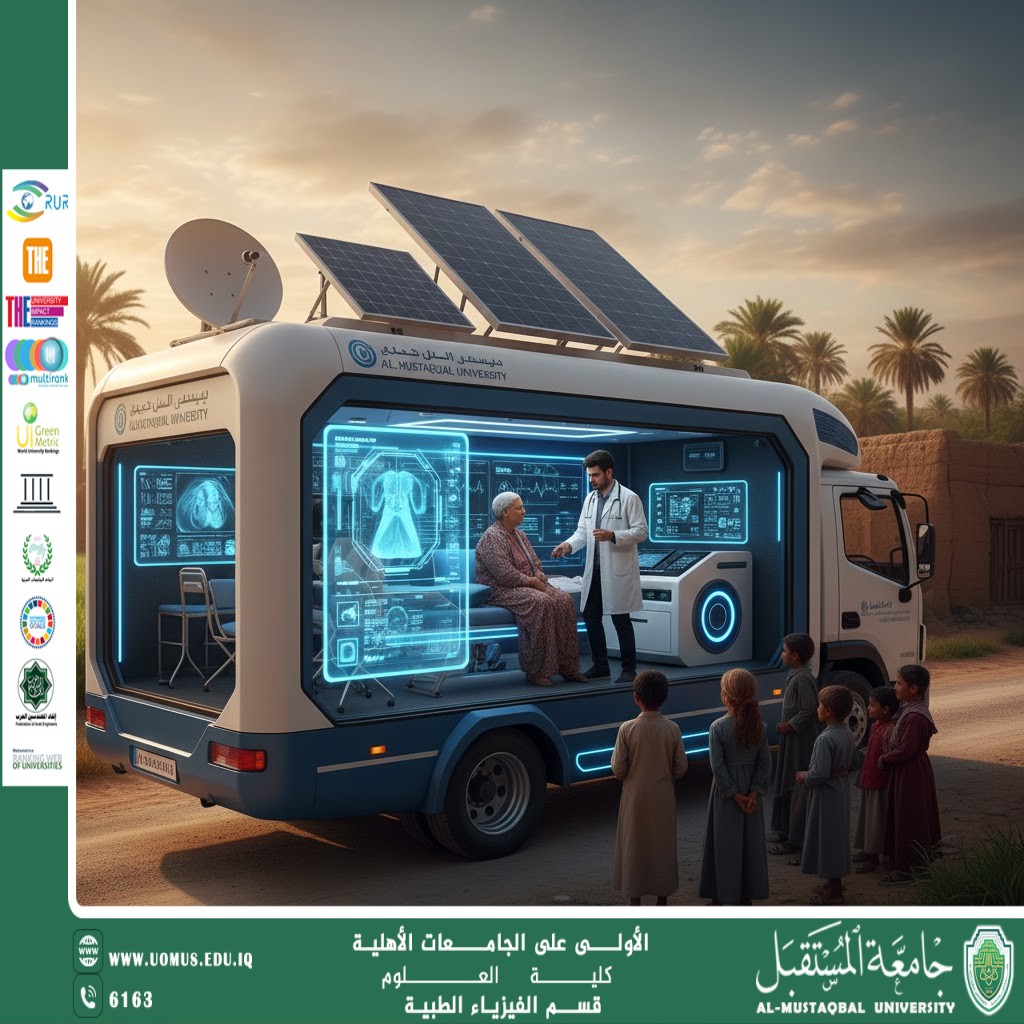
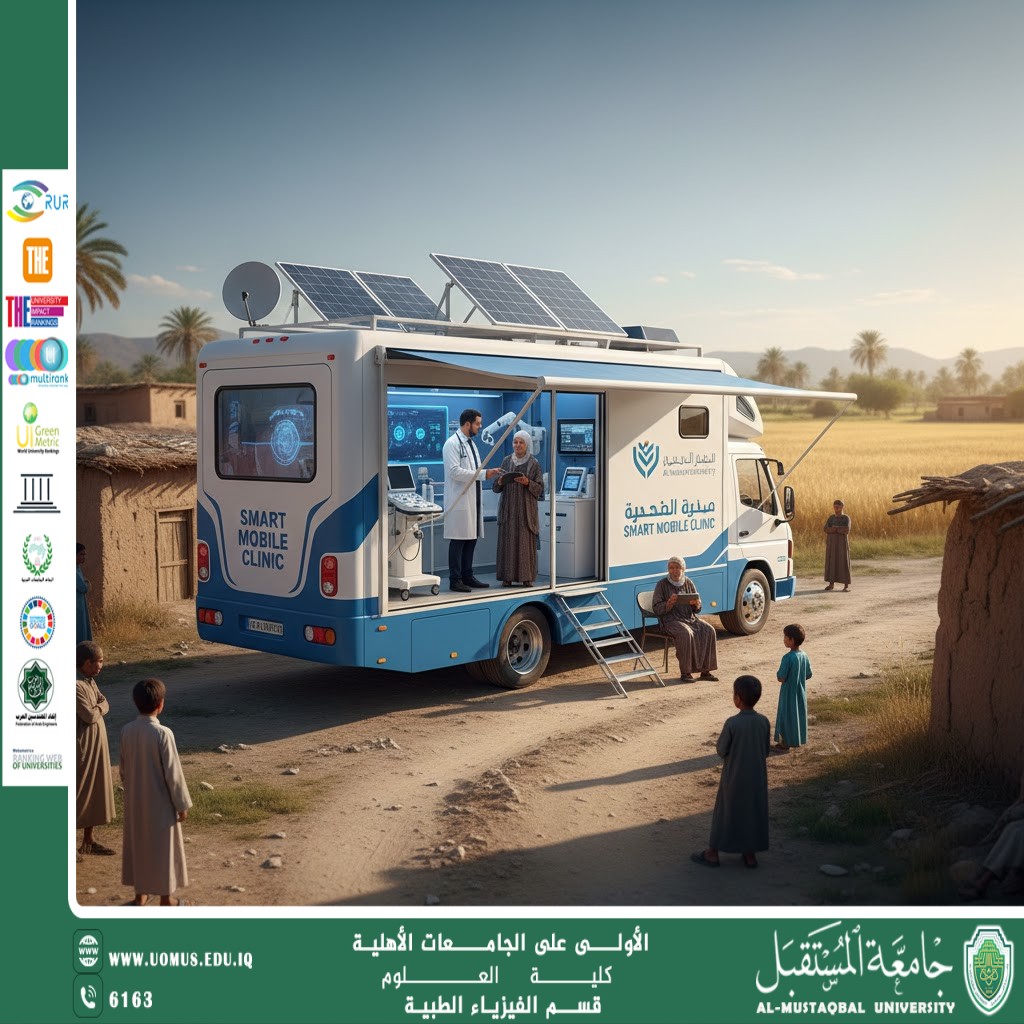
Smart Mobile Clinics: Equipping ambulances or mobile clinics with examination devices linked to satellites.
Academic Training: Integrating "Digital Medicine" courses into medical and science colleges at Al-Mustaqbal University to prepare a generation that interacts professionally with these technologies.
7. Conclusion
Telemedicine is not merely an alternative to the traditional visit; it is an imperative necessity to achieve "healthcare equity." With support from academic and research institutions, rural areas can be transformed from medically deprived regions into areas covered by a smart digital health safety net.
"AL_mustaqbal University is the first university in Iraq"