
Student Activity on Fossil Fuels: A Historical Overview and Future Perspectives in Light of Sustainable Development
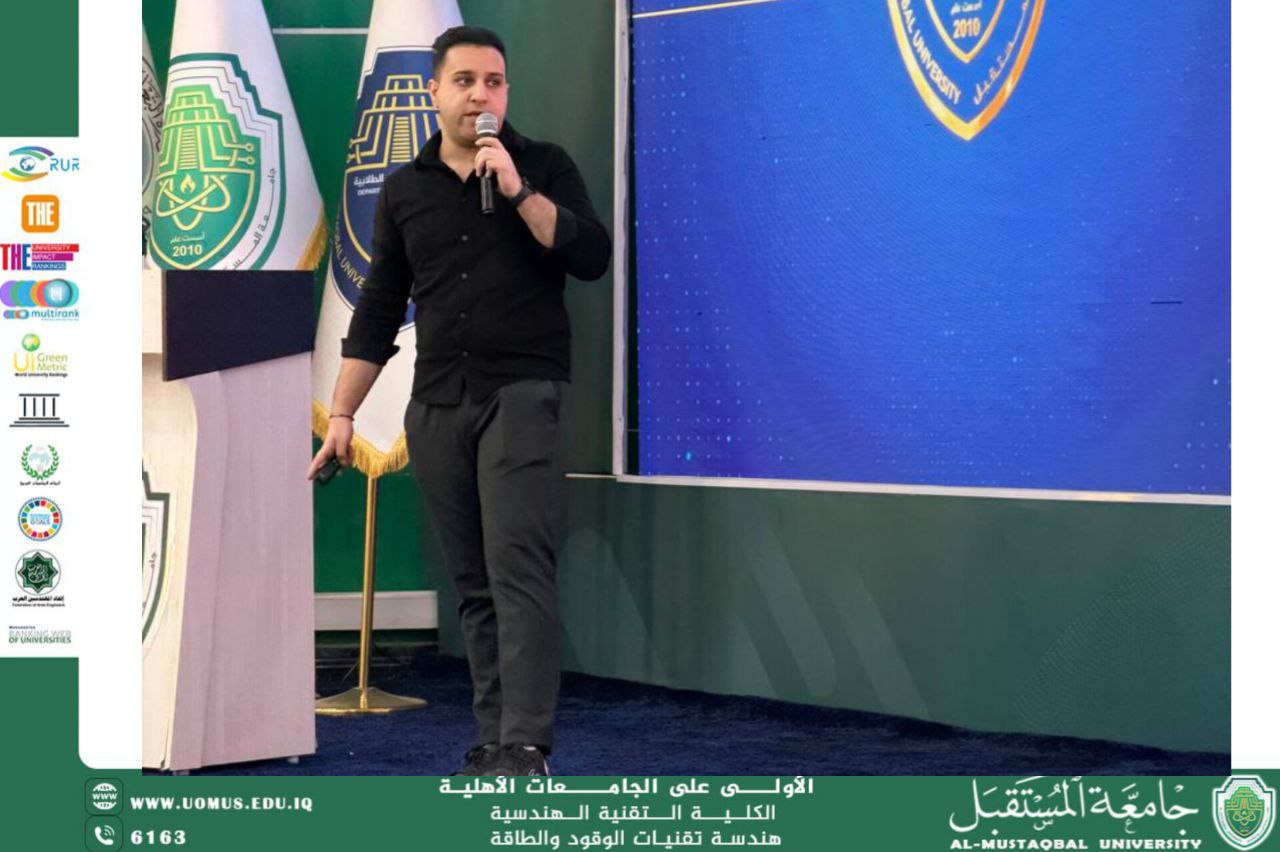
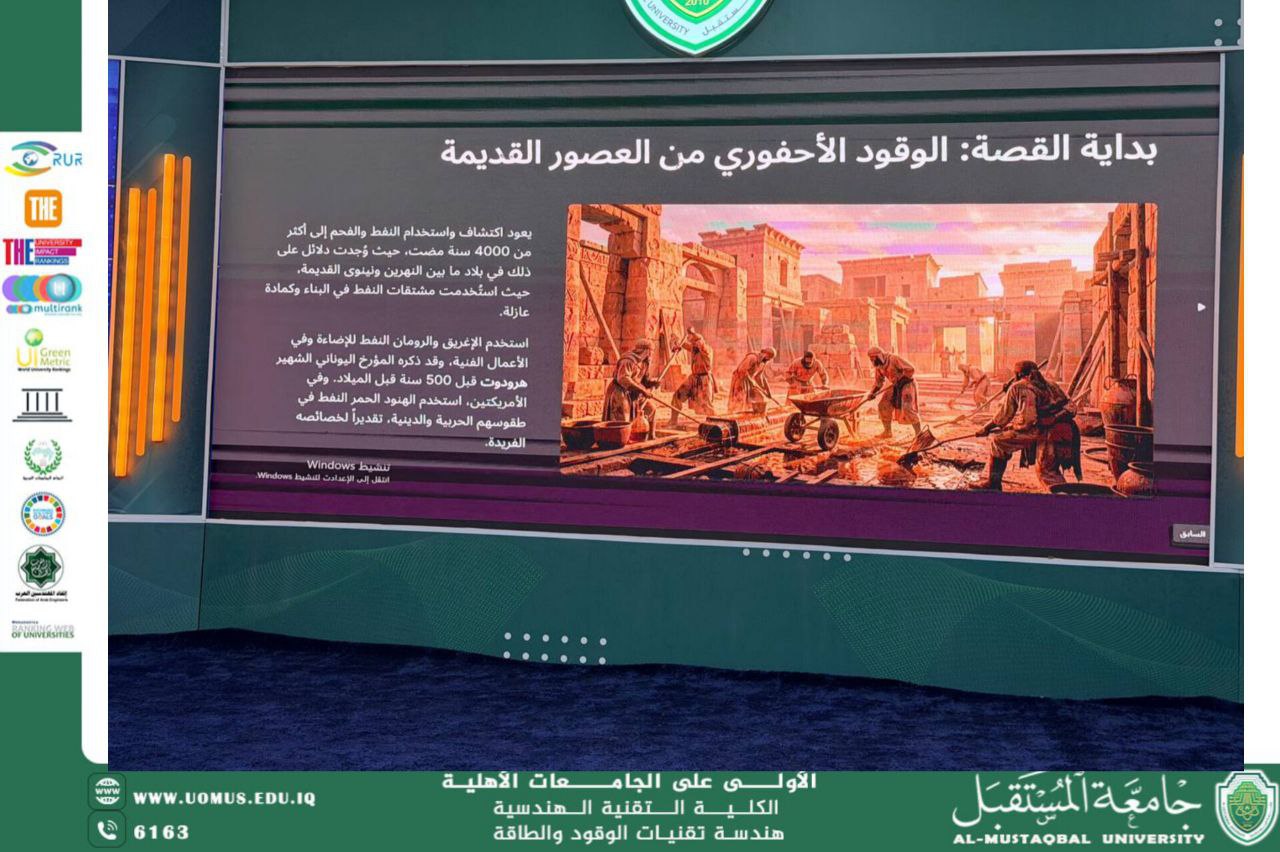
As part of the department’s scientific activities aimed at enhancing academic knowledge and developing students’ presentation and analytical skills, a student delivered a presentation on fossil fuels. The presentation covered their origin and main types (oil, coal, and natural gas), their role in supporting the Industrial Revolution and the global economy, as well as their environmental impacts and the challenges associated with the transition to renewable energy sources.
The activity witnessed active engagement and constructive scientific discussion, contributing to the development of students’ research abilities and critical thinking skills. This event aligns with the Sustainable Development Goals (SDGs), particularly SDG 4: Quality Education, by promoting academic excellence and scientific skills; SDG 7: Affordable and Clean Energy, through discussing energy issues and sustainable alternatives; and SDG 13: Climate Action, by highlighting the environmental impacts of fossil fuels and the importance of reducing carbon emissions.
The activity was supervised by Lecturer Zahraa Salah Hadi and Engineer Norhan Thamer Assi.