Workshop in the Heat Transfer Laboratory on Heat Transfer through Rectangular Fins
Under the patronage of Professor Dr. Hassan Shaker Majdi, President of Al-Mustaqbal University, and in cooperation with the Women’s Affairs Division, the Women’s Affairs Unit at the Engineering Technical College / Department of Engineering Technologies organized an awareness activity in line with the Sustainable Development Goals, particularly Goal 4 (Quality Education), on Tuesday, February 7, 2026.
The activity was titled:
“A Workshop in the Heat Transfer Laboratory on Heat Transfer through Rectangular Fins.”
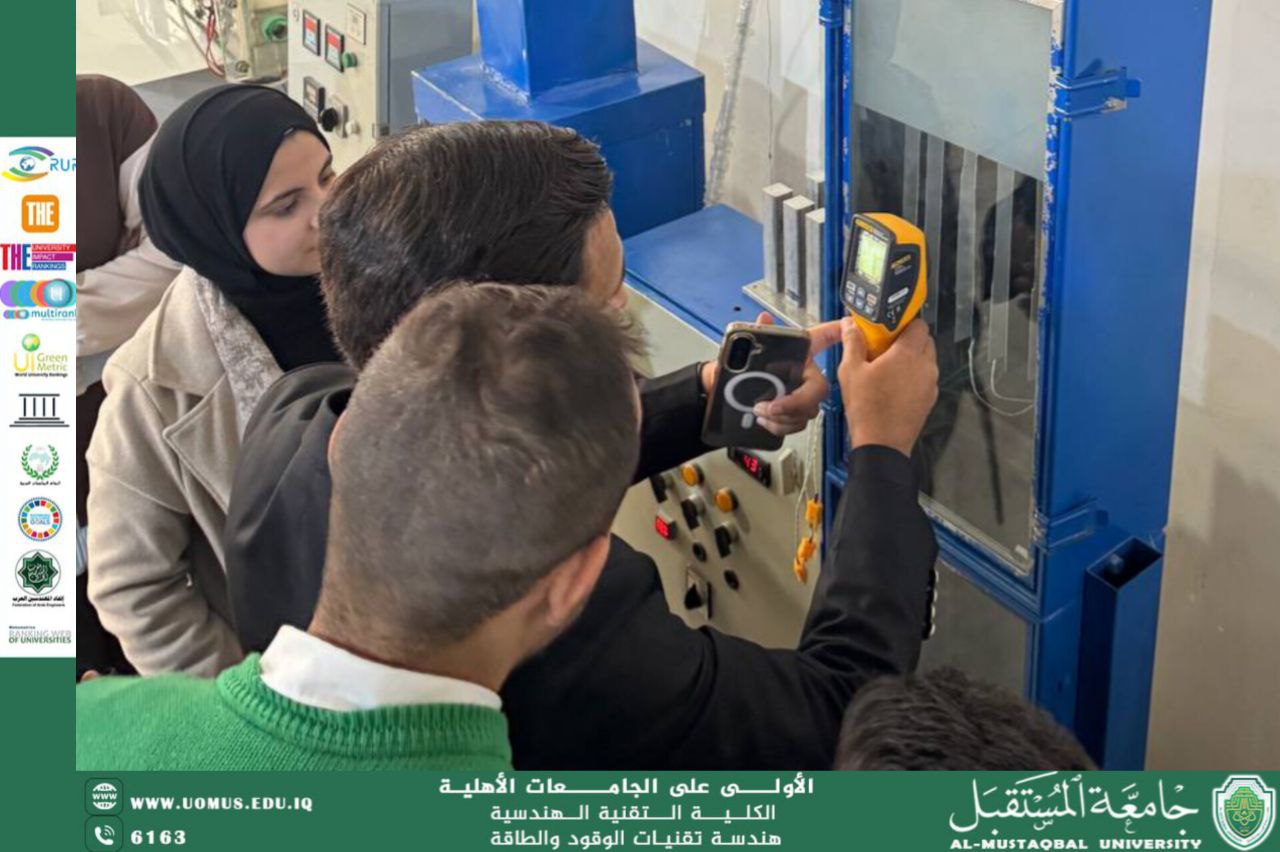
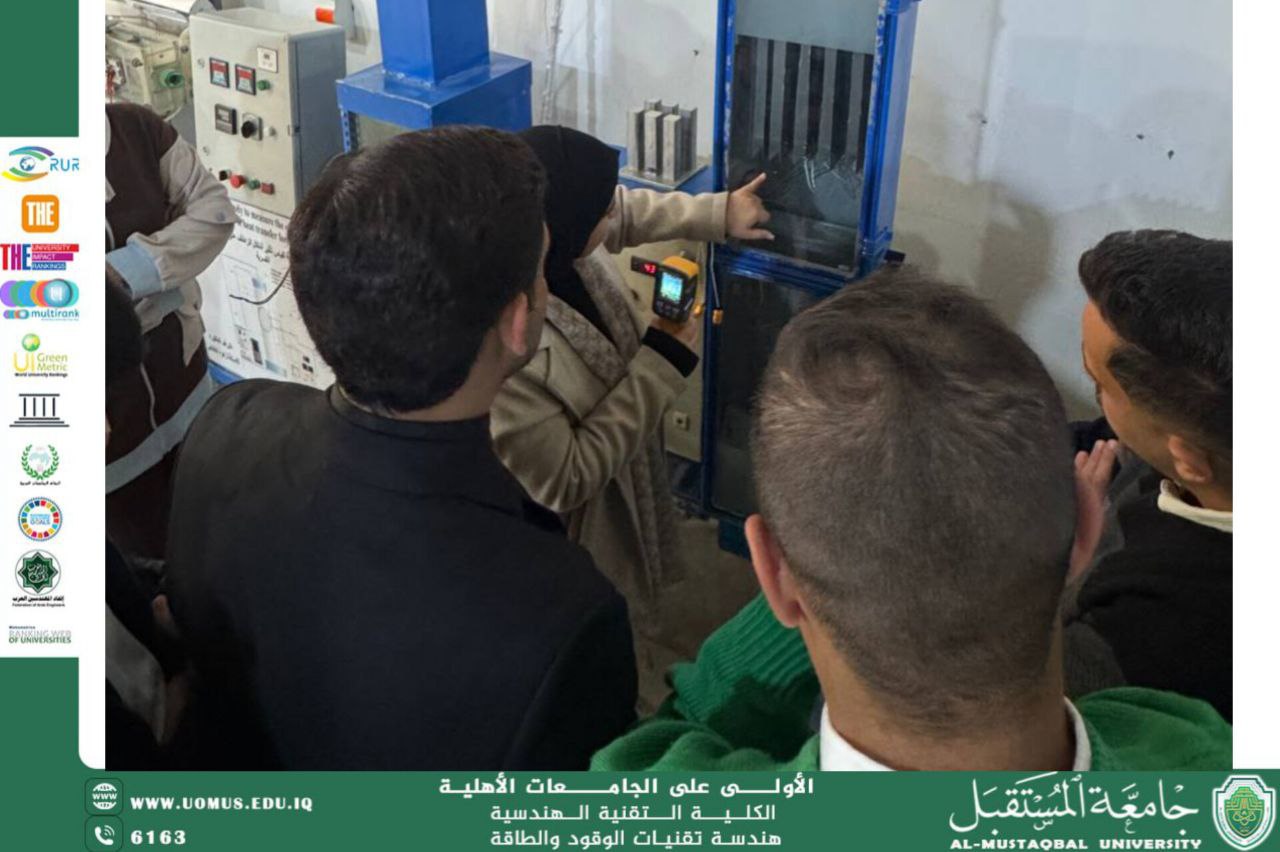
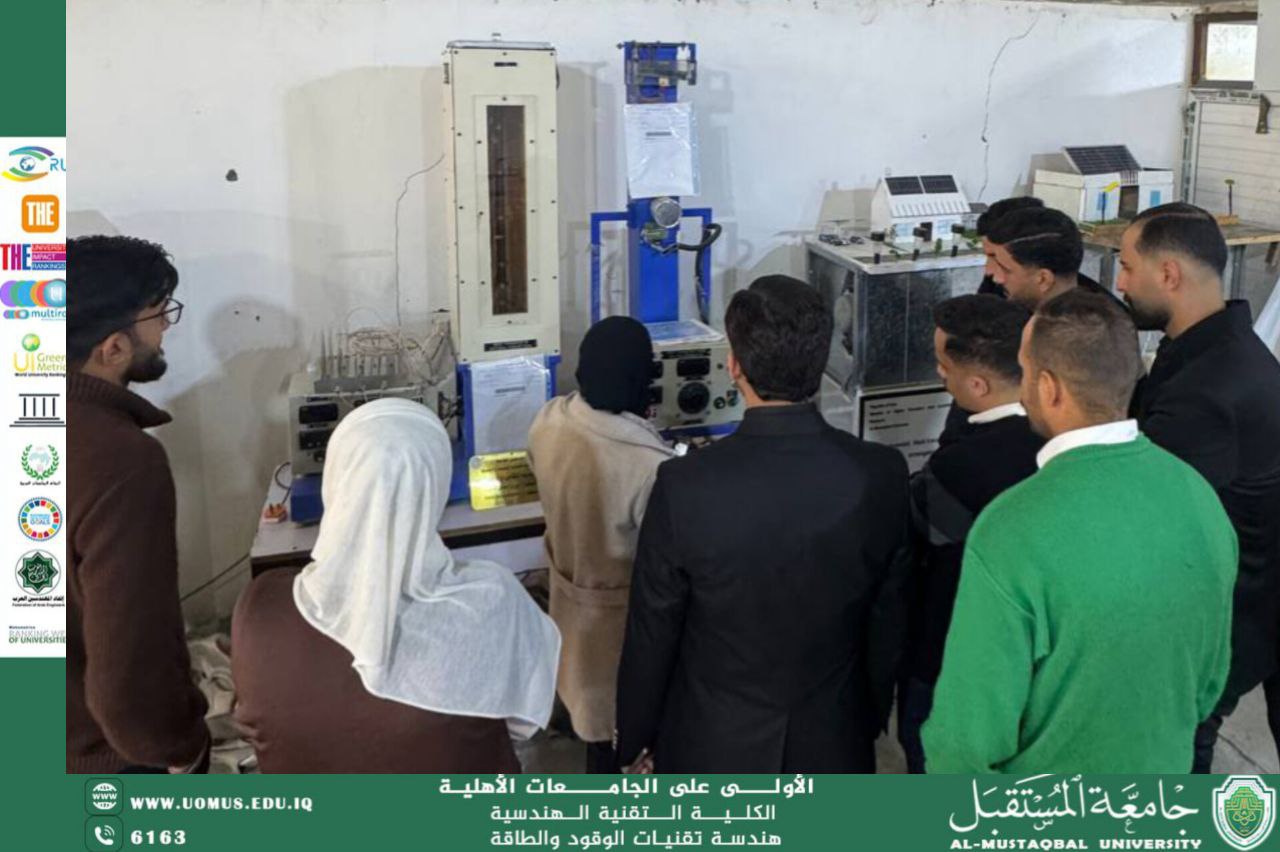
The workshop was organized for students of the relevant academic stage and included an explanation of the scientific principles of heat transfer by conduction and convection through rectangular fins, which are used to increase the rate of heat transfer and improve the efficiency of thermal systems.
The workshop also involved practical experiments to measure temperature distribution along the fin, analyze the heat transfer coefficient, and compare experimental results with theoretical values. In addition, discussions were held on the effect of fin dimensions and material properties on thermal performance.
The activity aimed to develop students’ skills in thermal analysis and interpretation of laboratory data, as well as to link practical results with real-world engineering designs used in cooling systems, heat exchangers, and power generation plants, thereby enhancing their professional readiness in the fields of energy and industry.
This activity falls within the pillar of empowerment and development and reflects the department’s ongoing efforts to promote a culture of research and practical application, and to prepare qualified engineering personnel capable of effectively contributing to the development of the energy and industrial sectors, in alignment with the Sustainable Development Goals.