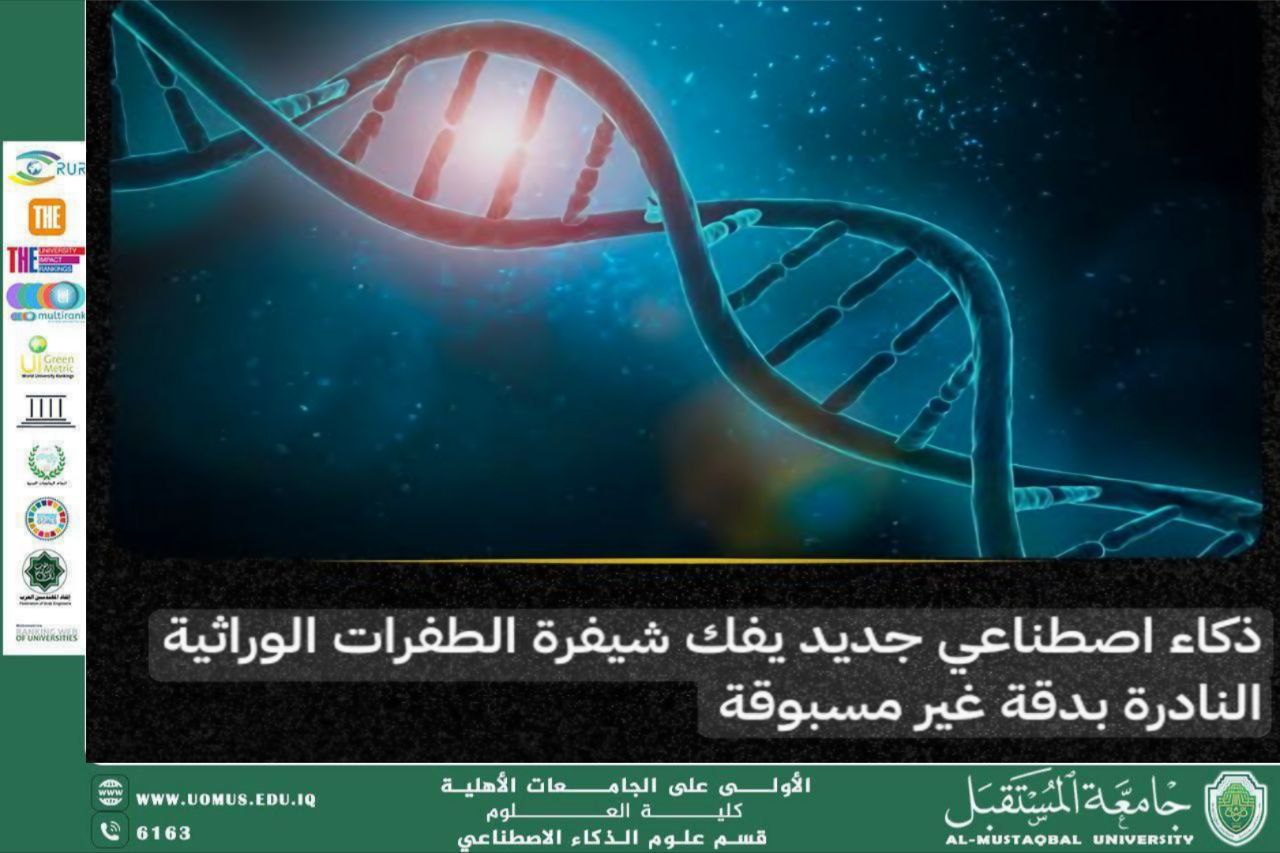
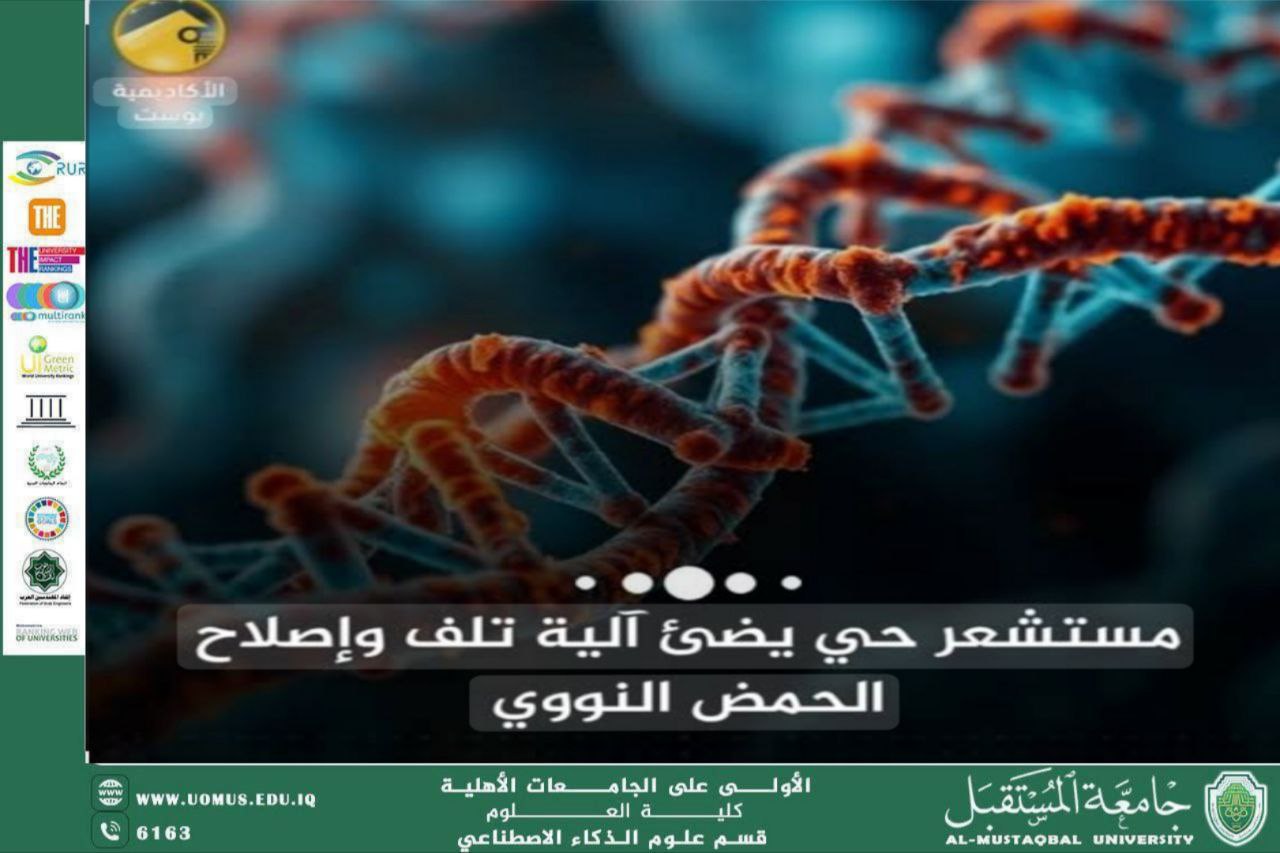
A scientific article entitled Artificial Intelligence Reads the Code of Life: A Revolution in Biology (M.M. Samar Hussein Hilal)
Artificial Intelligence Reads the Code of Life: A Revolution in Biology
In an era of unprecedented technological advancement, artificial intelligence (AI) is emerging as an exceptional ally for biology, revolutionizing our understanding of life itself. Biology is no longer confined to observation and experimentation in laboratories; it has become a science based on big data analysis and predictive modeling. AI can process vast amounts of genetic information in mere seconds, a feat that previously required years of research. For example, systems like AlphaFold have revolutionized structural biology by predicting the three-dimensional structures of proteins with astonishing accuracy, solving a puzzle that has baffled scientists for half a century and opening up limitless possibilities for understanding diseases and designing treatments. AI also significantly accelerates drug discovery by simulating the interactions of millions of chemical compounds with biological targets within a computer, saving years of research and drastically reducing costs. In synthetic biology, scientists have begun using machine learning algorithms to design entirely new gene sequences, aiming to create microorganisms capable of producing biofuels or breaking down plastics in the oceans. However, this convergence raises profound ethical questions about genetic privacy and the potential for these technologies to be misused to create biological weapons, necessitating robust international regulatory frameworks. Ultimately, we are witnessing the birth of a new era of "digital biology," where complex biological systems can be simulated with unparalleled accuracy on computers, enabling us to test scientific hypotheses before moving to real-world experiments. This exciting intersection of the two sciences is not merely an aid to researchers; it represents a radical shift in the methodology of scientific inquiry itself, with artificial intelligence becoming a true partner in discovery. By combining the power of computing with the complexity of life, we are getting closer to understanding the mysteries of intractable diseases, developing personalized treatments tailored to each patient's DNA, and even slowing the aging process. The greatest challenge now lies not only in technology but also in training a new generation of scientists proficient in both biology and programming to lead this cognitive revolution. As AI algorithms continue to evolve, we may one day grasp the fundamental laws governing life itself, giving us the key to improving human health and preserving our planet. This close integration of artificial intelligence and biology undoubtedly represents one of the most exciting scientific stories of the 21st century, where the boundaries between creator and creature, and between natural and artificial, are blurring in humanity’s perpetual quest to understand the greatest mystery of all: life.