A scientific article by Miss Nour Al-Huda Azmi Hassan entitled :Tissues
Tissues are groups of cells that are similar in shape, structure, and function, working together to perform a specific task within the body. Tissues represent the second level of biological organization after the cell. Cells combine to form tissues, tissues form organs, and organs form integrated systems that make up the human body.
The human body is divided into four main types of tissues: epithelial tissue, connective tissue, muscle tissue, and nervous tissue.
First: Epithelial Tissue
Definition:
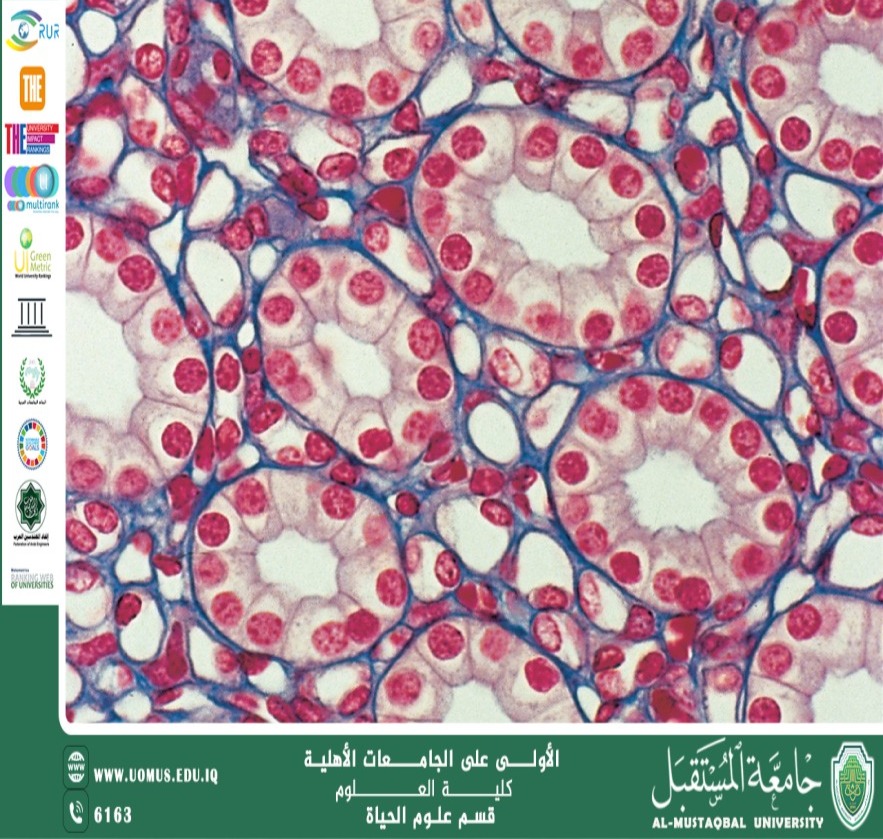
It is the tissue that covers the external surface of the body and lines internal cavities and organs.
Characteristics:
Its cells are tightly packed and closely arranged.
It does not contain direct blood vessels.
It rests on a basement membrane that separates it from other tissues.
Functions:
Protection (such as the skin).
Absorption (as in the intestines).
Secretion (glands).
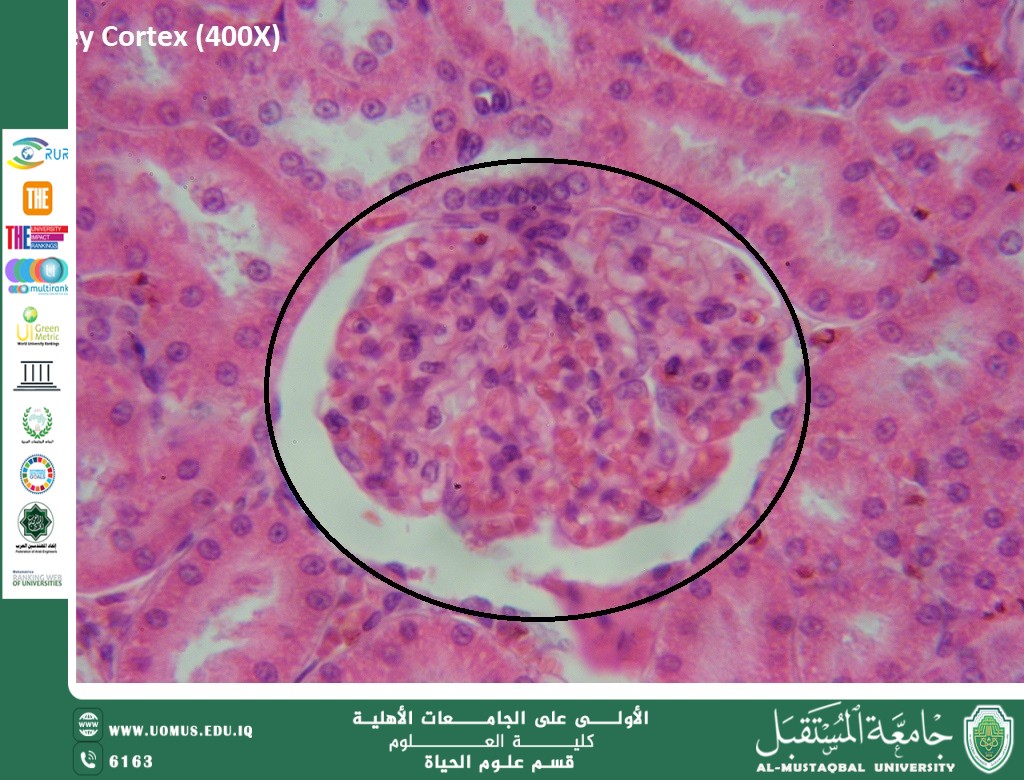
Filtration (in the kidneys).
Types:
Squamous epithelium
Cuboidal epithelium
Columnar epithelium
Transitional epithelium
Second: Connective Tissue
Definition:
A tissue that connects, supports, and protects other tissues and organs.
Characteristics:
Contains widely spaced cells.
Has a clear extracellular matrix.
Usually rich in blood vessels (except cartilage).
Functions:
Support and protection (bones).
Energy storage (adipose tissue).
Transport of substances (blood).
Connecting muscles to bones (tendons).
Types:
Loose connective tissue
Dense connective tissue
Bone tissue
Cartilage tissue
Blood tissue
Third: Muscle Tissue
Definition:
A specialized tissue responsible for contraction and relaxation to produce movement.
Types:
Skeletal muscles: responsible for voluntary movement.
Smooth muscles: found in internal organs such as the stomach and intestines.
Cardiac muscle: found in the heart and works involuntarily.
Functions:
Movement
Pumping blood
Maintaining body posture
Fourth: Nervous Tissue
Definition:
A tissue responsible for transmitting nerve impulses and controlling body functions.
Components:
Nerve cells (neurons).
Supporting glial cells.
Functions:
Receiving stimuli.
Transmitting electrical signals.
Regulating motor and sensory responses.
Importance of Studying Tissues
Understanding the structure and functions of body organs.
Diagnosing diseases through histological examination.
Supporting scientific research in medicine and biological sciences.
Tissues form the structural foundation of the human body. Through their integration and cooperation, organs and vital systems are formed. Studying tissues helps in understanding how the body functions and in explaining many physiological processes and diseases.
Al-Mustaqbal University is the First University in Iraq