
Large language models and their impact on natural language processing. Researcher: Banin Nazim
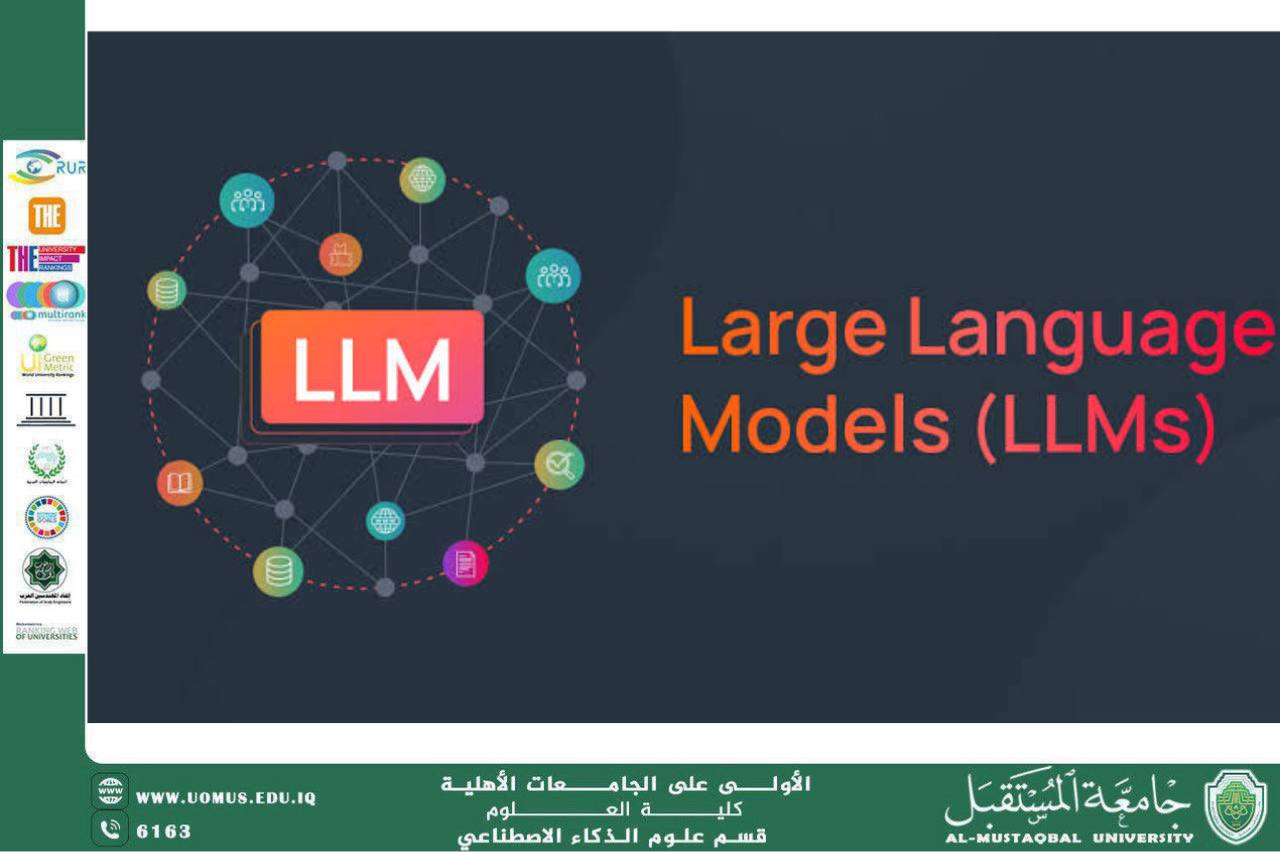
In recent years, Large Language Models (LLMs), based on Artificial Intelligence and deep learning, have shown remarkable ability to understand and generate human-like text. These models have significantly influenced Natural Language Processing (NLP), including machine translation, text generation, semantic analysis, and content classification. This paper reviews the mechanisms of LLMs, their applications in NLP, benefits, and challenges associated with their use.
Keywords: Large Language Models, LLMs, Natural Language Processing, NLP, Artificial Intelligence, Deep Learning.
Natural Language Processing (NLP) is a key field of AI aiming to enable machines to understand and analyze human language. The emergence of Large Language Models, such as GPT and BERT, has expanded the boundaries of NLP, providing powerful capabilities to generate accurate text, understand context, and respond to queries naturally.
These models represent a qualitative step toward developing intelligent systems capable of interacting with humans more effectively.
How Large Language Models Work
LLMs rely on deep learning algorithms, especially Transformers, and have the following features:
1. Context Understanding: Analyze long texts and detect relationships between words.
2. Text Generation: Produce new content consistent with the original style.
3. Learning from Large Datasets: Enhance performance through massive data training.
4. Multi-tasking: Perform various tasks such as translation, question-answering, and summarization.
Applications of LLMs in NLP
• Machine Translation: Improve translation quality between languages.
• Text Summarization: Generate accurate summaries for long texts.
• Sentiment Analysis: Understand user opinions and analyze social text.
• Content Generation: Automatically create articles, product descriptions, or marketing content.
• Chatbots & Virtual Assistants: Enable natural user interactions.
Benefits
• Improved accuracy and efficiency in NLP.
• Support innovation in education, marketing, and journalism.
• Reduce time and effort in creating and analyzing text.
• Enable natural human–machine interaction.
Challenges
• Require massive datasets for training.
• Risks of bias in data and models.
• High computational and energy requirements.
• Difficulty in interpreting some model outputs.
Large Language Models represent a revolutionary step in NLP, allowing machines to understand and generate human-like text accurately and naturally. With ongoing advancements, these models are expected to play a pivotal role in enhancing digital interaction, supporting innovation, and enabling AI applications across diverse domains.