A scientific article titled "Artificial Intelligence in Smart Education and Personalizing the Educational Path" by researcher Banin Nazim.
Artificial Intelligence in Smart Education and Personalized Learning Paths
In recent years, education has undergone significant transformations due to continuous technological advancements, and one of the most prominent developments has been the emergence of artificial intelligence, which has become one of the most important modern tools for enhancing the educational process. Artificial intelligence contributes to the precise analysis of educational data, allowing a deep understanding of individual students’ needs and their academic performance levels. Through these analyses, teachers can design educational programs tailored to each student’s abilities and provide customized content that helps them progress at their own pace.
Artificial intelligence technologies collect a wide range of information about students’ performance, including grades and learning behaviors, such as comprehension speed and interaction with educational materials. Based on this data, teachers can accurately identify each student’s strengths and weaknesses, enabling them to offer targeted support to develop specific skills and address learning difficulties promptly. This approach ensures that no student is left behind and increases the chances of both individual and collective success.
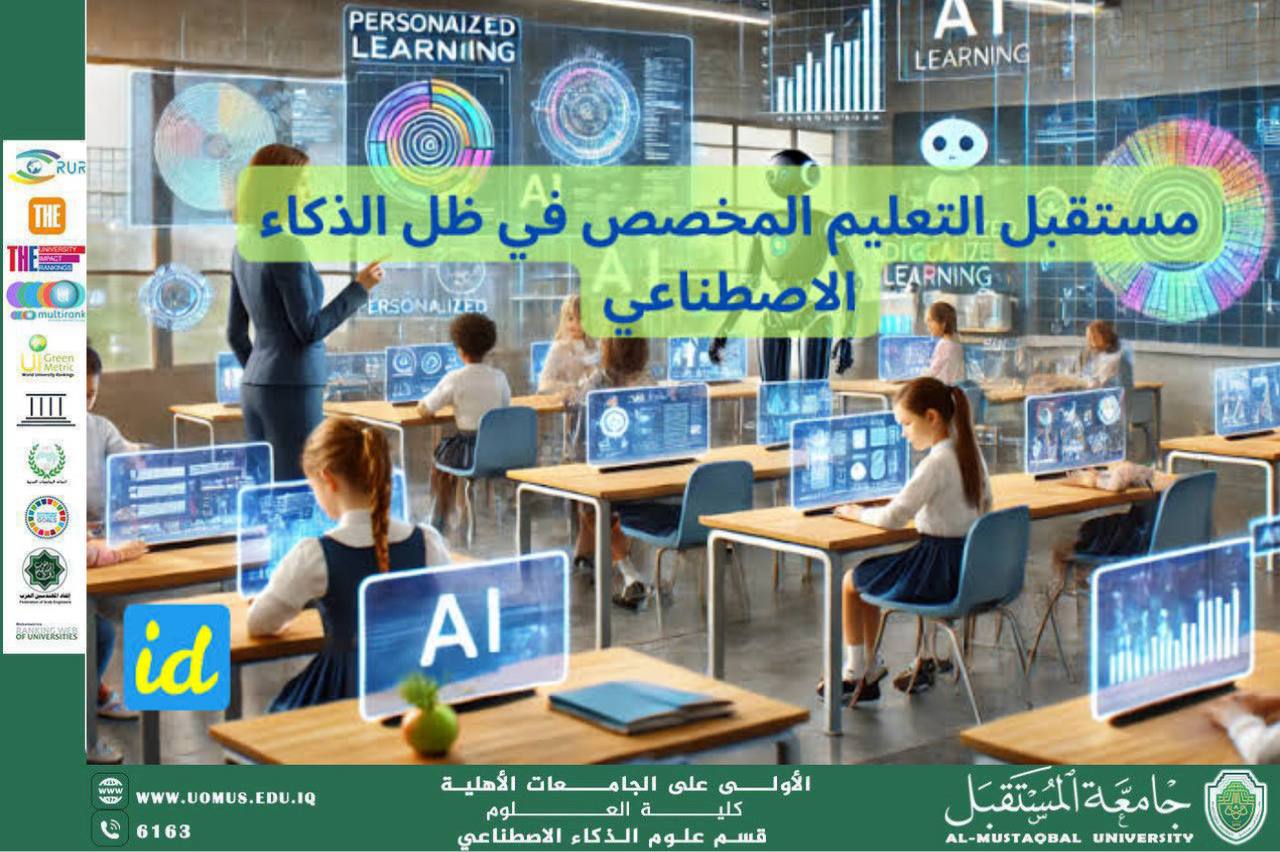
Personalizing the learning path has become a central goal for smart educational systems, where lesson difficulty and content can be adjusted according to student performance, a method known as adaptive learning. Students can also be guided toward the most suitable educational resources, whether they are instructional videos, digital books, or interactive exercises, which enhances their skills and motivates them toward self-directed learning. This personalization allows students the freedom to follow their own learning pace, increasing engagement and motivation, and transforming the learning experience from a general approach to an effective, individualized one.
Moreover, educational applications that rely on artificial intelligence have become an essential part of the modern learning environment. Smart educational platforms, for example, deliver customized content to each student based on their data analysis, while virtual tutors provide immediate support, answer questions, and guide students during problem-solving. Additionally, intelligent systems can track students’ behaviors within learning platforms, such as focus time and interaction levels with activities, which helps evaluate performance more accurately and provides instant feedback to enhance learning outcomes.
Artificial intelligence contributes significantly to improving student outcomes by enabling a more flexible and suitable learning experience for each individual and reducing the pressure on teachers through continuous analytical support. It also helps in the early detection of learning difficulties and rapid intervention, leading to better educational results and higher levels of understanding and achievement.
Despite these benefits, implementing artificial intelligence in education faces important challenges that must be considered, such as protecting students’ data to ensure privacy and prevent any misuse, as well as addressing potential biases in data that could unfairly affect student assessment. Educational institutions also need substantial investments in infrastructure and modern technologies to ensure the effectiveness and continuity of smart systems in providing an outstanding educational experience.
Ultimately, artificial intelligence represents a true revolution in education, offering an intelligent and personalized learning experience for each student, enabling teachers to design effective learning paths, and motivating students to engage in self-directed learning and achieve optimal results. The future of education increasingly relies on integrating artificial intelligence technologies to ensure a more inclusive and efficient learning experience, achieving the ultimate goal of modern education, which is empowering every student to reach their fullest academic and personal potential.