
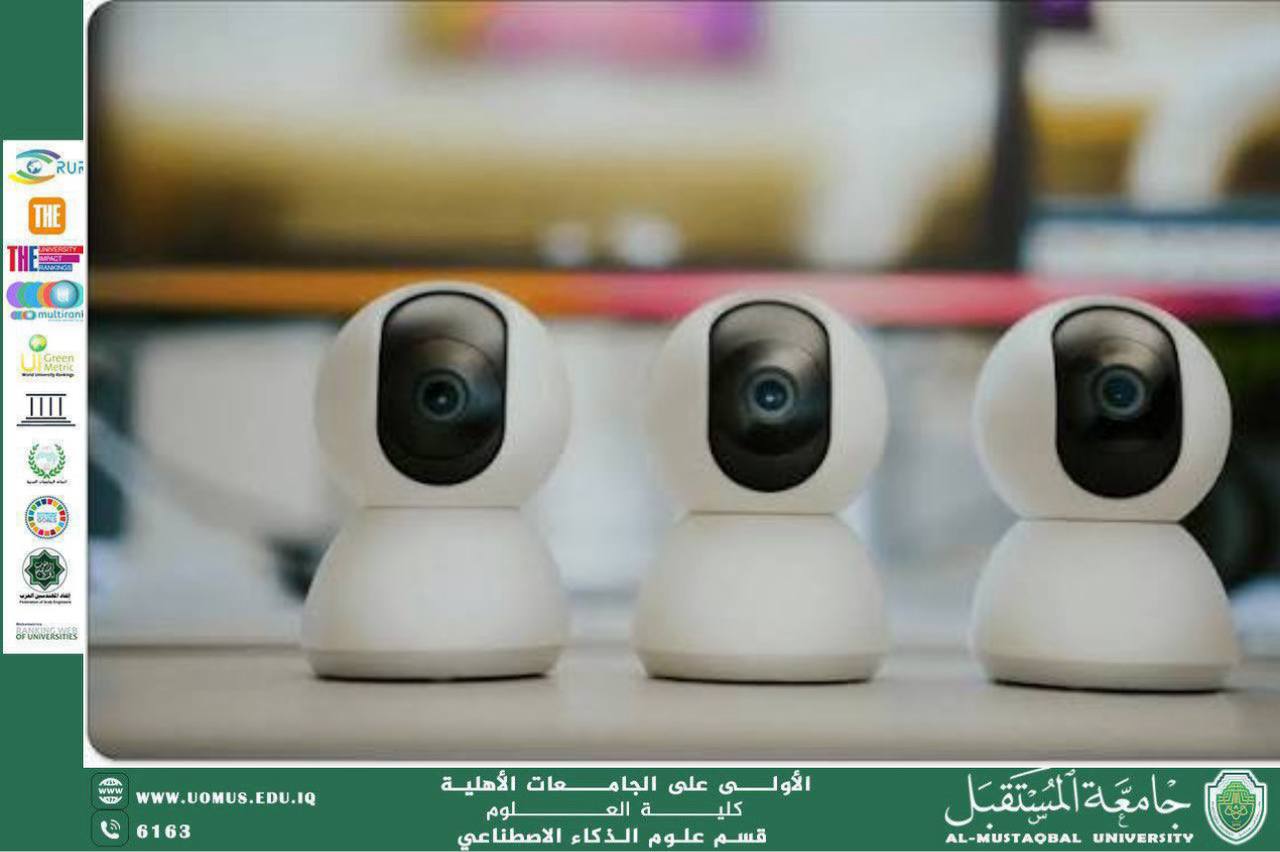
A scientific article titled "The Use of Computer Vision in Intelligent Surveillance Systems" by researcher Banin Nazim.
Using Computer Vision in Smart Surveillance Systems
Surveillance technologies have witnessed significant advancements in recent years, particularly with the integration of artificial intelligence and computer vision into traditional monitoring systems. Computer vision is a branch of artificial intelligence that enables computers to interpret images and videos in a way similar to how humans understand their surrounding environment. Through this integration, smart surveillance systems have become capable of recognizing individuals and vehicles, detecting suspicious behaviors, and monitoring events in real time with high accuracy.
Smart surveillance systems rely on analyzing videos and images using advanced pattern recognition algorithms, allowing automatic detection of incidents or abnormal behaviors without continuous human intervention. This capability reduces the likelihood of human error and enhances immediate response when emergencies occur. Additionally, these systems can record and analyze data for later use, extracting critical information about the movement of people and vehicles, which supports more precise security decision-making.
Computer vision also enables the application of facial recognition and license plate recognition, significantly increasing the efficiency of surveillance systems in crowded and high-risk areas. Furthermore, these systems can predict certain future behaviors by analyzing previous patterns, enhancing preventive security measures and reducing potential risks.
On the other hand, smart surveillance systems have improved the management of both public and private spaces by monitoring discipline, controlling crowd density, and enhancing the quality of services provided. These systems can also be integrated with Internet of Things (IoT) devices and other sensors to create a comprehensive and accurate overview of the surrounding environment.
Despite their many benefits, smart surveillance systems face important challenges, including protecting individuals’ privacy, securing stored data, and efficiently processing large volumes of video and image data. Developing these systems also requires substantial investment in infrastructure and modern technologies, along with continuous updates to algorithms to keep pace with emerging developments and security challenges.
In conclusion, the use of computer vision in smart surveillance systems represents a qualitative leap toward enhancing security and improving monitoring quality. These technologies provide the ability to analyze visual data accurately and in real time, support more effective security decision-making, and contribute to predicting and preventing risks, making them an essential part of the future of smart surveillance and security management.