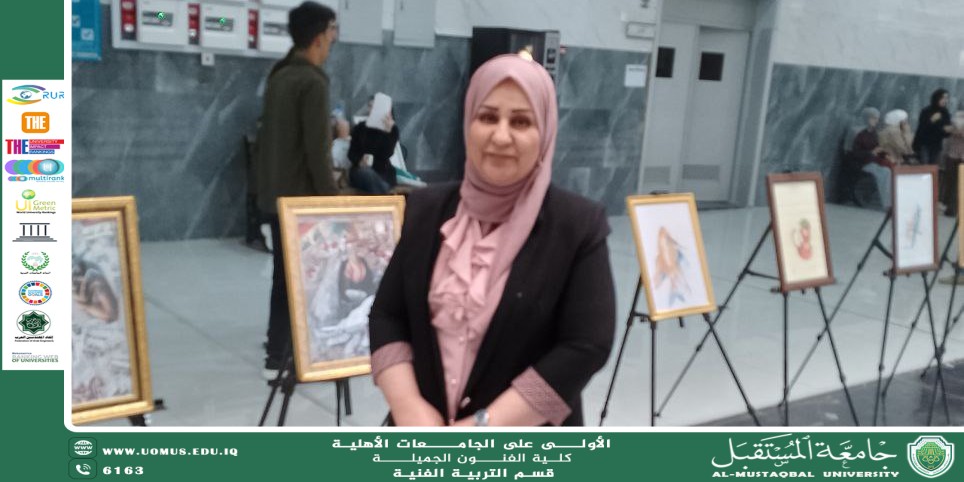
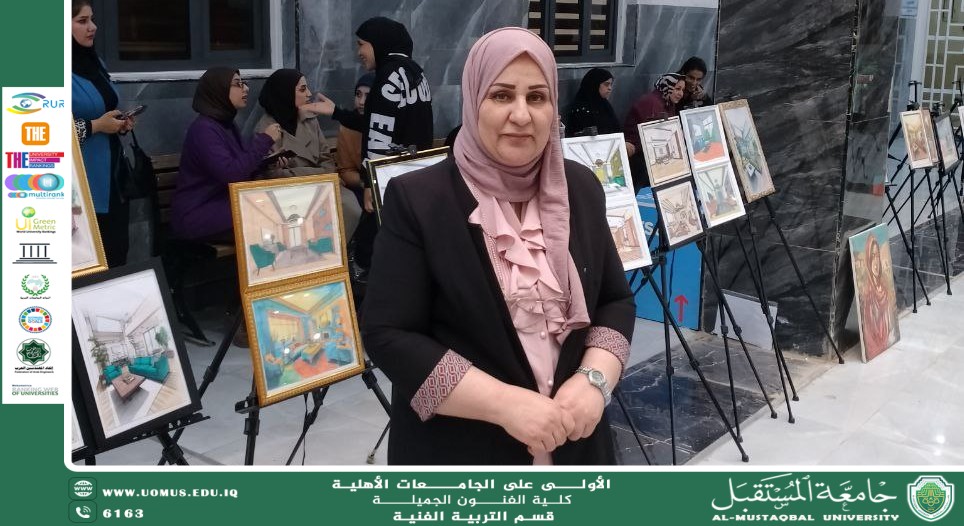
Article titled: “Art Education and Its Role in Building the Student’s Personality” By Dr. Huda Hashim Al-Rubaie.
Art education is considered one of the fundamental pillars of the modern educational system. It is no longer viewed as a supplementary subject or a marginal activity; rather, it has become an educational field that actively contributes to building a student’s personality in an integrated manner—cognitively, emotionally, and behaviorally. Art is a universal human language that expresses feelings and ideas, enabling individuals to communicate with themselves and with others in a refined and creative way.
First: Developing the Psychological and Emotional Aspect
Art education contributes to achieving students’ psychological balance by providing opportunities for free expression of feelings and emotions. When a student draws, sculpts, or designs an artwork, they release inner energies in a positive way, reducing stress and anxiety while enhancing self-confidence. The sense of accomplishment after completing an artwork also generates satisfaction and strengthens self-esteem.
Second: Enhancing Creative and Critical Thinking
Art education develops creative thinking skills by encouraging students to innovate, experiment, and search for unconventional solutions. It also refines critical thinking through analyzing, interpreting, and discussing artworks, which enhances careful observation and the ability to make objective judgments.
Third: Developing Social and Human Values
Through group activities and art exhibitions, students learn cooperation, teamwork, respect for others’ opinions, and acceptance of differences. Art education also reinforces values of beauty, order, and cultural belonging, especially when studying the works of prominent artists such as Jawad Saleem and Faeq Hassan. This strengthens national identity and deepens awareness of local artistic heritage.
Fourth: Building an Integrated Personality
Art education contributes to achieving integration between the intellectual, sensory, and motor aspects of the student. It develops manual skills, trains patience and precision, and enhances initiative and independence. It also helps students discover their inclinations and abilities, guiding them toward future paths aligned with their potential.
Fifth: Promoting Aesthetic Taste and Civilized Behavior
Developing students’ aesthetic sense is reflected in their daily behavior, making them more inclined toward order, cleanliness, and respect for the environment. Art is not limited to paintings or sculptures; it extends to ways of thinking and living, contributing to the formation of a balanced and conscious personality.
Conclusion:
Art education is not merely an academic subject; it is a comprehensive educational process that contributes to building the student’s personality from various dimensions. It nourishes the mind, refines emotions, develops skills, and instills values. Therefore, supporting art education in schools and universities represents a true investment in building a creative individual capable of positively engaging with society and contributing to its cultural advancement.....Almustaqbal University, The First University in Iraq.