
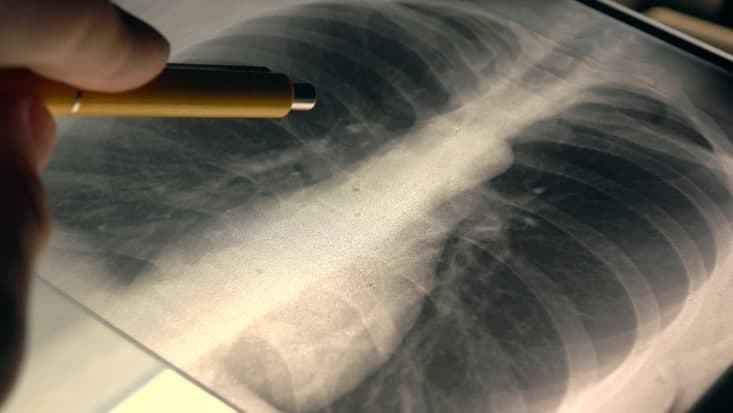
م.د محمد جوادWhat is an x-ray?
An x-ray is a type of radiation used to create a picture of the inside of the body. As x-ray beams pass through your body they are absorbed differently by various structures in the body, such as bones and soft tissues, and this is used to create an image. X-ray imaging is also known as radiography.<br />What are the types of x-rays?<br />There are several types of x-ray:<br />• plain radiography, or plain x-ray<br />• computed tomography, known as CT scanning<br />• fluoroscopy — which produces moving images of an organ<br />• mammography — an x-ray of the breasts<br />• angiography — an x-ray of the blood vessels<br />When is an x-ray done?<br />X-rays can be used to diagnose disease and injury, including:<br />• bone conditions — such as fractures, dislocations, bone infections or arthritis, and also osteoporosis and bone density<br />• lung conditions — such as pneumonia, collapsed lung and lung cancer<br />• congestive heart failure<br />• blood vessel problems, such as an aortic aneurysm — a bulge in the aorta<br />• cancer, e.g. lung cancer, bone cancer, breast cancer<br />• blockages of the bowel<br />• tooth decay<br />• detection of foreign objects, such as when a child accidentally swallows an item<br />• to check the position of wires, leads and tubes after surgical procedures<br />How do I prepare for an x-ray?<br />Preparing for an x-ray is simple:<br />• bring the referral that your doctor gave you<br />• bring along any x-rays you’ve had before of similar areas<br />• tell the radiographer if you might be pregnant<br />• tell the radiographer if you have kidney problems or have allergies to contrast material<br />• be prepared to remove your jewellery and change into a hospital gown if needed<br />• follow any instructions given to you by your doctor or radiographer<br />What should I tell my doctor before the x-ray?<br />You should tell the doctor if you are or may be pregnant. X-rays should be avoided in pregnancy.<br />Some types of x-ray use injected or swallowed contrast dye (contrast media) to improve the images so it is important that you tell the doctor if you have any kidney disease or if you have previously had any allergic reaction to contrast media. Also, tell the doctor if you have difficulty taking a deep breath and holding it.<br />What is contrast dye?<br />Contrast dye (also known as contrast medium) is a substance that is sometimes used during plain x-ray, CT scanning, angiography or other tests. It helps to improve the contrast in x-ray images, making it easier to distinguish between normal and diseased or damaged areas. It may be given to you orally (by mouth) or by injection.<br />Commonly used contrast dyes are iodine-containing contrast medium and gadolinium contrast medium.<br />Patients with kidney problems face greater risks when having contrast medium than other people. If you have kidney problems and need an x-ray with contrast medium, talk to your doctor first.<br />Some people have an allergic reaction to iodine-containing contrast dye. Reactions can be mild, moderate or severe. Anyone can have an allergic reaction, even if previously they have not had problems.<br />It’s normal to feel a warm feeling that spreads through the body for around 20 seconds after an injection of iodine-containing contrast medium. You may even feel like you have wet yourself, but you won’t have.<br />Gadolinium contrast medium is generally very safe and reactions are uncommon. You may be aware of a cold feeling in your arm during the injection.<br />