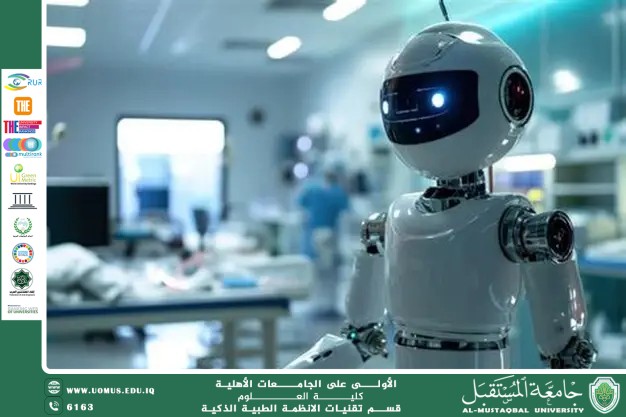
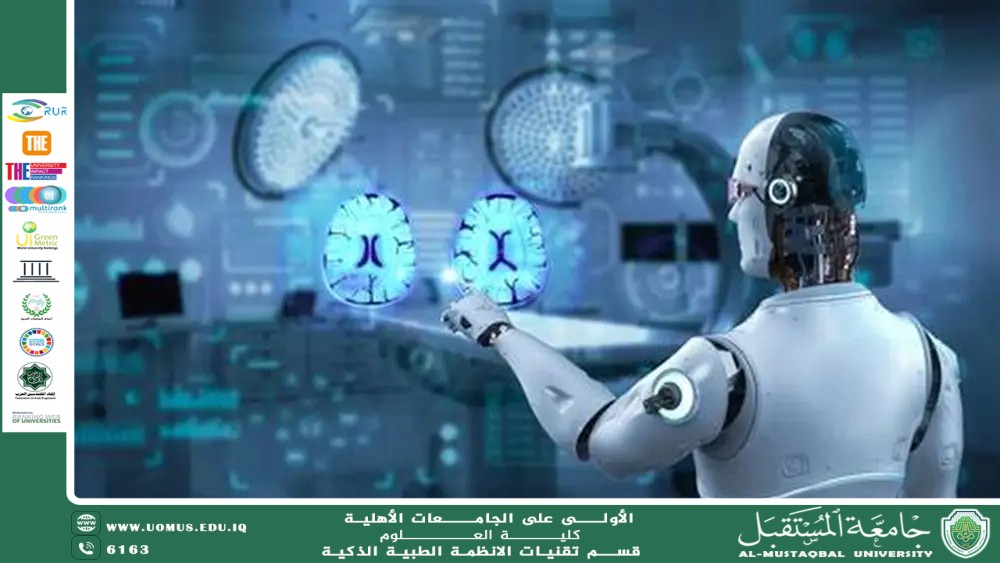
The Role of Robots in Precision Surgeries Such as Brain Tumor Removal (by M. Programmer Aya Jamal Heidy)
Neurosurgery is one of the most precise and complex medical specialties due to the sensitivity of the central nervous system and the complexity of its anatomical structure and vital functions. Even a minor error during surgery can lead to serious complications affecting movement, sensation, or cognition. In this context, intelligent robots have emerged as one of the most important technological innovations, creating a qualitative transformation in the level of accuracy and safety in brain and spinal surgeries by integrating artificial intelligence, surgical navigation systems, and advanced medical imaging.
Intelligent surgical robots rely on precise data derived from MRI and CT scans, enabling the creation of a 3D model of the brain that pinpoints the exact location of the tumor or neurological lesion. This allows the surgeon to pre-plan the trajectory of surgical tools in a way that minimizes contact with surrounding healthy tissues. Through integrated navigation systems, robots can guide instruments along pre-determined coordinates while correcting any deviations in real time during the operation.
Intelligent robots enhance the accuracy of neurosurgery by reducing the impact of human factors such as hand tremors or fatigue from long procedures. Robotic systems stabilize surgical instruments with high precision and execute extremely fine movements that are difficult to achieve manually. Some systems also provide visual magnification of the surgical field and immediate feedback to the surgeon regarding the position of the instrument relative to sensitive neural structures, increasing surgical safety and reducing the risk of complications.
In delicate procedures such as brain tumor removal, robots play a crucial role in achieving complete tumor excision while preserving vital neurological functions. Artificial intelligence can analyze tumor tissue properties and distinguish it from healthy tissue based on imaging data or neural electrical signals, assisting the surgeon in defining the precise boundaries of the tumor. Neuro-monitoring techniques can also be integrated during surgery to track the response of areas responsible for movement or speech, minimizing the risk of post-operative disability.
Additionally, robots contribute to smaller surgical incisions, meaning less invasive procedures and faster patient recovery. This advancement improves short- and long-term treatment outcomes, reduces infection rates and blood loss, and shortens hospital stays. Some systems also enable highly precise surgeries in deep brain regions that are difficult to reach with traditional methods.
Despite the significant advantages, using intelligent robots in neurosurgery requires specialized training and precise coordination between the surgical team and the technological system, as well as considerations regarding cost and technical infrastructure. With ongoing advancements in algorithms and sensory systems, robots are expected to become even more autonomous and precise, reinforcing the concept of data-driven surgery and redefining standards of safety and efficiency in complex neurological interventions.
Intelligent robots do not replace the surgeon; rather, they serve as advanced tools that enhance the surgeon’s ability to make precise decisions and perform highly sensitive procedures with greater confidence and safety, marking a pivotal step toward a more technologically advanced surgical future that integrates human expertise with artificial intelligence.
Al-Mustaqbal University is the first one university in Iraq.