Scientific Article by Asst. Lecturer Zeinab Nazem Aziz Entitled :The Relationship between Chlorophyll Content and Light Intensity
Chlorophyll is the primary pigment responsible for light absorption during photosynthesis. Light intensity directly affects the amount of chlorophyll in leaves and the efficiency of photosynthesis. Plants strive to maintain a balance between absorbing light and avoiding damage from excessive exposure.
Chlorophyll Concept
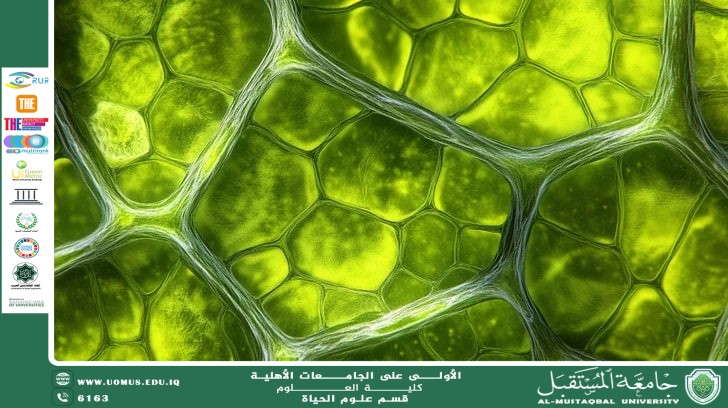
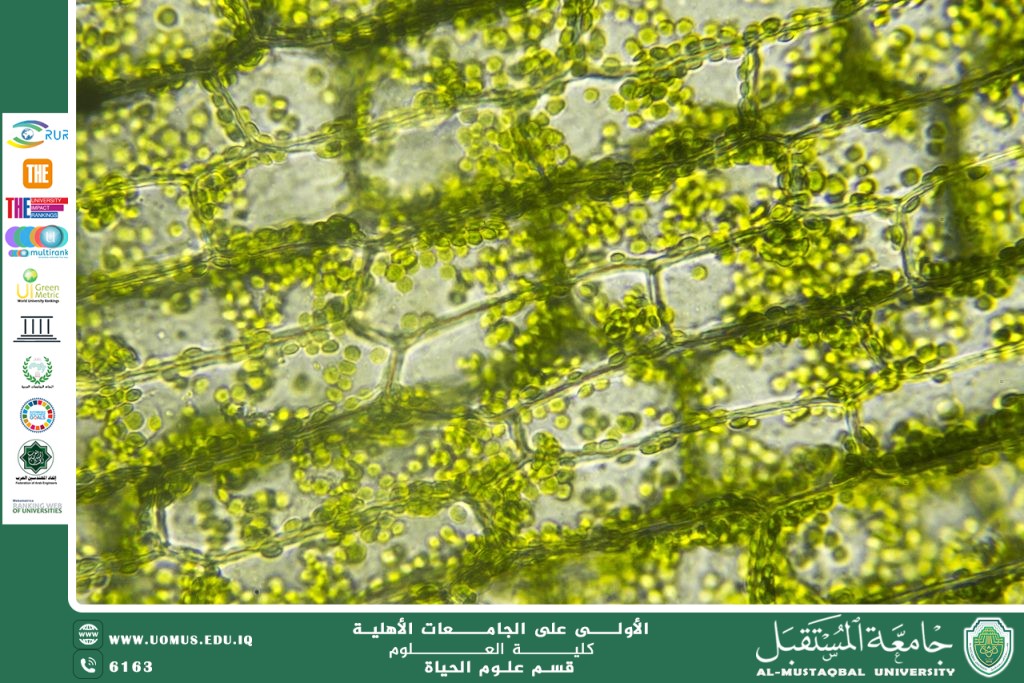
Chlorophyll is a green pigment located within chloroplasts. It absorbs light mainly in the red and blue spectra and converts light energy into chemical energy. There are two main types:
Chlorophyll a
Chlorophyll b
Their concentration varies depending on environmental conditions, especially light intensity.
Light Intensity Concept
Light intensity refers to the amount of light falling on a unit area over a certain period, often measured in μmol photons/m²/s.
Relationship between Chlorophyll Content and Light Intensity
Under Low Light:
Plants increase chlorophyll production to compensate for low light.
Chlorophyll b increases relative to chlorophyll a.
Leaves become larger and darker.
Goal: Maximize light absorption.
Under High Light:
Total chlorophyll content may decrease.
Chlorophyll b proportion decreases.
Leaves become smaller and thicker.
Goal: Reduce excess light absorption and protect cells.
Under Very High Light (Light Stress):
Chlorophyll degradation occurs.
Reactive oxygen species (ROS) production increases.
Photosynthetic efficiency declines due to damage to Photosystem II (PSII).
Physiological Adaptation
Plants exhibit a physiological flexibility called “photoplasticity,” adjusting:
Chlorophyll levels
Chlorophyll a/b ratio
Number of chloroplasts
Activity of photosynthesis-related enzymes
Agricultural Importance
Determining optimal light intensity in greenhouses
Improving crop productivity
Managing shading in intensive farming
Selecting crop varieties suitable for varying environmental conditions
Conclusion
Chlorophyll content in plants is closely linked to light intensity. It increases under low light to enhance absorption, while under high light its content or composition changes to minimize damage. Understanding this relationship helps optimize crop management and improve photosynthetic efficiency.