
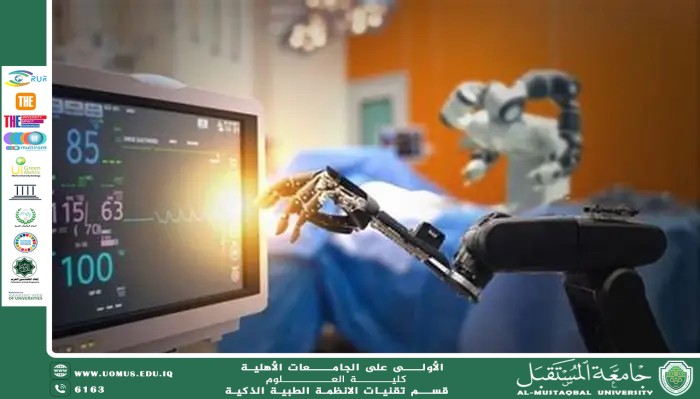
The Role of Artificial Intelligence in Improving Disease Prevention Strategies (Programmer Huda Khudair Hani)
The public health sector is witnessing a qualitative transformation driven by the rapid advancement of artificial intelligence (AI) technologies. It has become possible to analyze vast amounts of health, environmental, and demographic data in real time with high accuracy, creating unprecedented opportunities to monitor changes in disease patterns and predict health risks before they escalate. AI relies on machine learning algorithms and big data analytics to extract hidden patterns from multiple sources, including electronic medical records, laboratory reports, social media platforms, travel data, and even environmental and climate indicators, thereby contributing to the development of effective early warning systems for detecting potential outbreaks.
Artificial intelligence enhances public health surveillance through its ability to process data at speeds far beyond traditional human capabilities. It can track subtle changes in infection rates or symptom patterns, linking them geographically and temporally to identify potential hotspots. The significance of these technologies became particularly evident during the COVID-19 pandemic, when predictive models were used to analyze transmission trajectories, estimate future case numbers, and support decision-makers in implementing appropriate containment measures. Additionally, AI-powered global data analysis tools contributed to issuing early alerts regarding the spread of the disease, highlighting the strategic value of AI in rapid health crisis response.
Moreover, AI contributes to improving disease prevention strategies by developing predictive models that identify populations at higher risk based on individual, social, and environmental risk factors. Through integrated population-level data analysis, awareness campaigns and vaccination programs can be more precisely targeted, enhancing the efficient allocation of healthcare resources and minimizing waste. Predictive analytics also enable continuous evaluation of preventive interventions, allowing public health authorities to adjust strategies according to emerging outcomes.
The role of AI further extends to supporting digital epidemiological surveillance systems through the integration of remote sensing technologies and the Internet of Things, enabling real-time collection of data on vital indicators and environmental conditions that may contribute to the spread of infectious diseases. Intelligent analytical systems can also explore the relationship between climate change and shifting disease patterns, thereby strengthening preparedness and reinforcing early response mechanisms.
In light of the ongoing global digital transformation, artificial intelligence represents a fundamental pillar in building more proactive and resilient health systems—systems capable of moving from reactive crisis management to predictive and preventive public health strategies. Investing in digital infrastructure, strengthening data governance frameworks, and developing skilled professionals capable of leveraging these technologies constitute essential steps toward achieving sustainable health security grounded in scientific innovation and advanced analytics.
Al-Mustaqbal University – The First University in Iraq.
الهدف الرابع(التعليم الجيد).