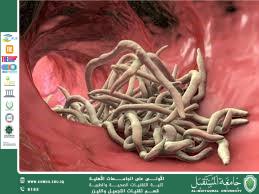
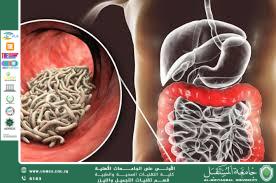
A Scientific Article by the Head of the Department, Asst. Prof. Dr. Fatima Hashim Abbas Title: Intestinal Parasites: Silent Enemies in the Digestive System
**Translation into English:**
Intestinal parasites are considered among the common health problems worldwide, especially in regions with high population density and poor health services. These organisms live inside the human intestine, benefiting from the host’s food, and may cause health disorders ranging from mild symptoms to serious complications if not properly diagnosed and treated.
### Types of Intestinal Parasites
Intestinal parasites are mainly classified into:
1. **Protozoa:** Single-celled organisms such as *Entamoeba histolytica* and *Giardia lamblia*.
2. **Helminths:** Multicellular organisms such as *Ascaris lumbricoides* and *Taenia saginata*.
### Modes of Transmission
* Consumption of water or food contaminated with parasite eggs or cysts.
* Poor hand hygiene before eating.
* Eating inadequately washed vegetables.
* Direct transmission from an infected person.
### Clinical Symptoms
* Diarrhea (which may be accompanied by blood or mucus).
* Abdominal pain and cramps.
* Nausea and loss of appetite.
* Weight loss.
* Anemia in some chronic infections.
* Malabsorption, especially in cases of giardiasis.
### Diagnosis
Diagnosis depends on microscopic examination of stool samples to detect eggs, cysts, or motile stages, and the use of special stains such as iodine or trichrome stain. In some cases, immunological or molecular tests are used.
### Treatment
Treatment depends on the type of parasite, such as the use of metronidazole for the treatment of amoebiasis and giardiasis, and albendazole or mebendazole for the treatment of roundworm infections.
### Prevention
* Drinking clean, treated water.
* Washing hands thoroughly with soap and water.
* Washing vegetables and fruits well.
* Cooking meat thoroughly.
* Improving sanitation services.
AL_mustaqbal University is the first university in Iraq