دور السونار في الكشف المبكر عن سرطان الثدي…مقالة للدكتورة الاختصاص هند خالد عبد
Breast cancer is one of the most common malignancies among women worldwide and represents a major cause of cancer-related mortality. Early detection significantly improves survival rates and treatment outcomes. Among available diagnostic tools, breast ultrasound plays a crucial role, particularly when used alongside mammography in early screening programs.
Principle and Mechanism of Ultrasound
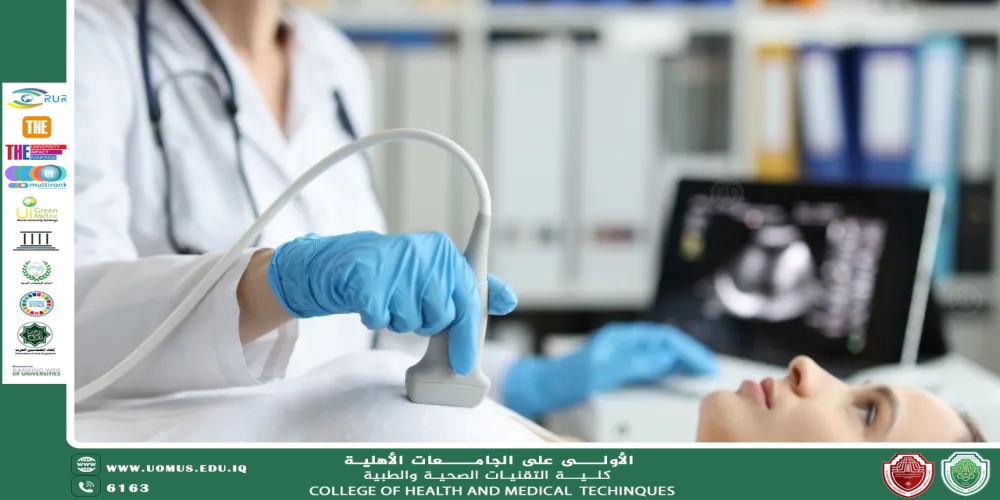
Ultrasound imaging is a non-invasive diagnostic technique that uses high-frequency sound waves to produce real-time images of internal tissues without exposing patients to ionizing radiation. A transducer is placed over the breast with a conductive gel, and sound waves are transmitted and reflected back to create detailed images.
Role of Ultrasound in Early Breast Cancer Detection
. Complementary to Mammography-1
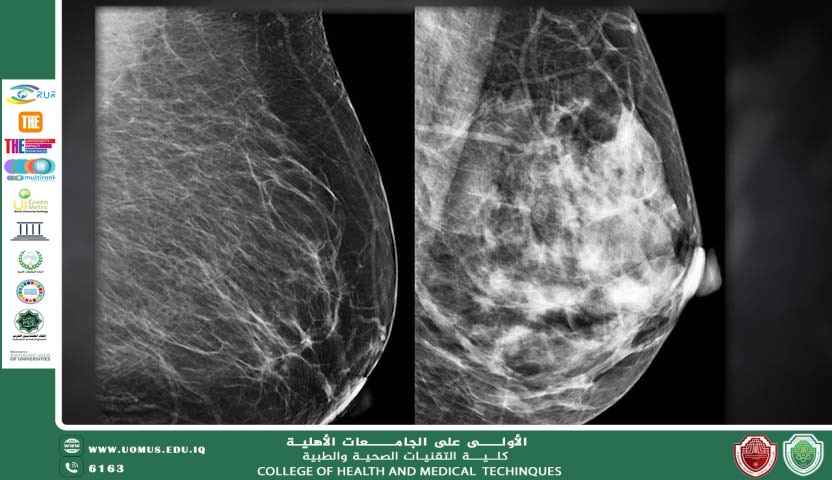
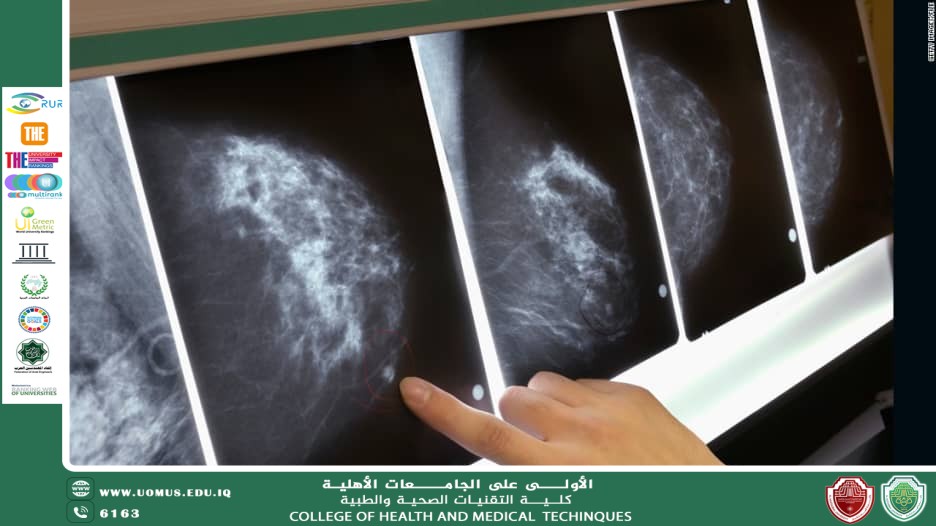
Ultrasound is not typically used as a standalone screening tool but serves as a valuable adjunct to mammography, especially in women with dense breast tissue where mammographic sensitivity may be reduced.
. Differentiation of Solid and Cystic Lesions-2
Ultrasound effectively distinguishes:
Fluid-filled cysts (usually benign)
Solid masses that may require biopsy
. 3-Evaluation of Suspicious Lesions-
When abnormalities are detected during clinical examination or mammography, ultrasound helps assess lesion size, margins, vascularity, and extent.
4. 4-Guidance for Interventional Procedures
Ultrasound is widely used to guide needle biopsies, increasing procedural accuracy and reducing complications.
Advantages of Ultrasound
No radiation exposure
Safe and painless
Suitable for pregnant women
Effective in evaluating dense breasts
Limitations of Ultrasound
Operator-dependent
Less sensitive for detecting microcalcifications
May result in false-positive findings
Recent Advances
Recent technological advancements include:
D Ultrasound imaging
Elastography, which measures tissue stiffness
These innovations have improved diagnostic accuracy and early cancer detection.
Conclusion
Breast ultrasound is a valuable and effective tool in the early detection of breast cancer. When integrated with other imaging modalities, it enhances diagnostic precision and supports timely intervention, ultimately improving patient outcomes.
References
American Cancer Society – Breast Cancer Early Detection Guidelines.
National Cancer Institute – Breast Imaging and Diagnosis Resources.
World Health Organization – Breast Cancer Fact Sheets and Early Diagnosis.
Radiological Society of North America – RadiologyInfo: Breast Ultrasound Overview