Artificial intelligence and facilitating scientific life: How smart programs accelerate academic and research achievement. Researcher: (Baneen Nazem Sarhan)
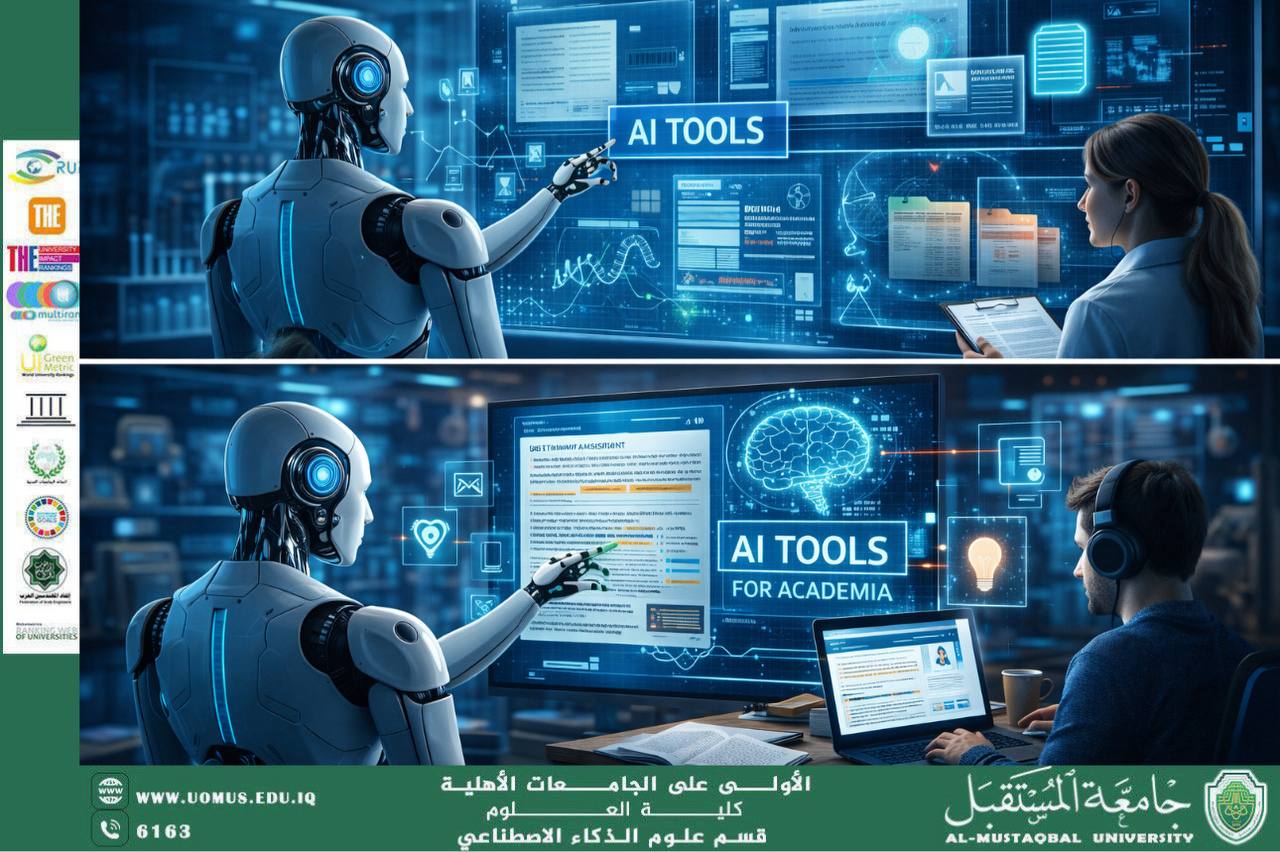
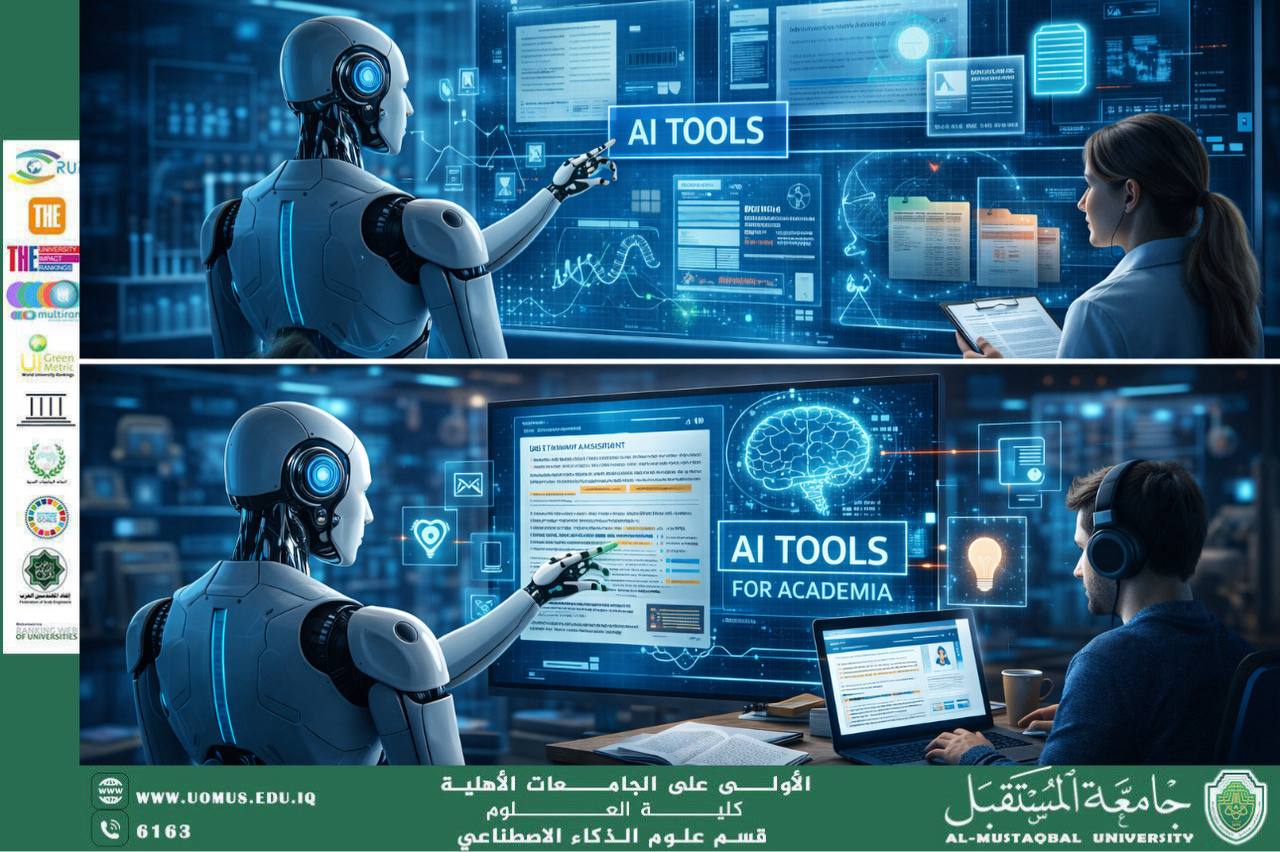
In recent years, the academic environment has undergone a significant transformation driven by advancements in Artificial Intelligence technologies. Smart applications have become supportive tools for researchers and students alike, reducing time and effort while improving the quality of scientific outputs.
AI systems provide advanced tools for analyzing large datasets and extracting patterns with remarkable speed and accuracy, enabling researchers to obtain reliable results in shorter timeframes compared to traditional methods. Natural Language Processing (NLP) applications assist in summarizing previous studies, proofreading academic texts, and enhancing scientific writing according to international standards.
In education, intelligent platforms create adaptive learning environments that respond to individual student needs by analyzing performance levels and recommending suitable learning resources. Additionally, AI-powered reference management tools automatically organize and format citations, minimizing errors and saving valuable research time.
Moreover, AI-based simulation and modeling tools allow researchers to test scientific hypotheses in virtual environments before practical implementation, enhancing result accuracy and reducing costs. Nevertheless, responsible and ethical use of these technologies remains essential to preserve academic integrity and prevent overreliance on automated systems.
Integrating AI into scientific life does not replace human intelligence; rather, it empowers it to achieve greater accomplishments with higher efficiency, contributing to the advancement of research and strengthening academic institutions in an increasingly competitive landscape.