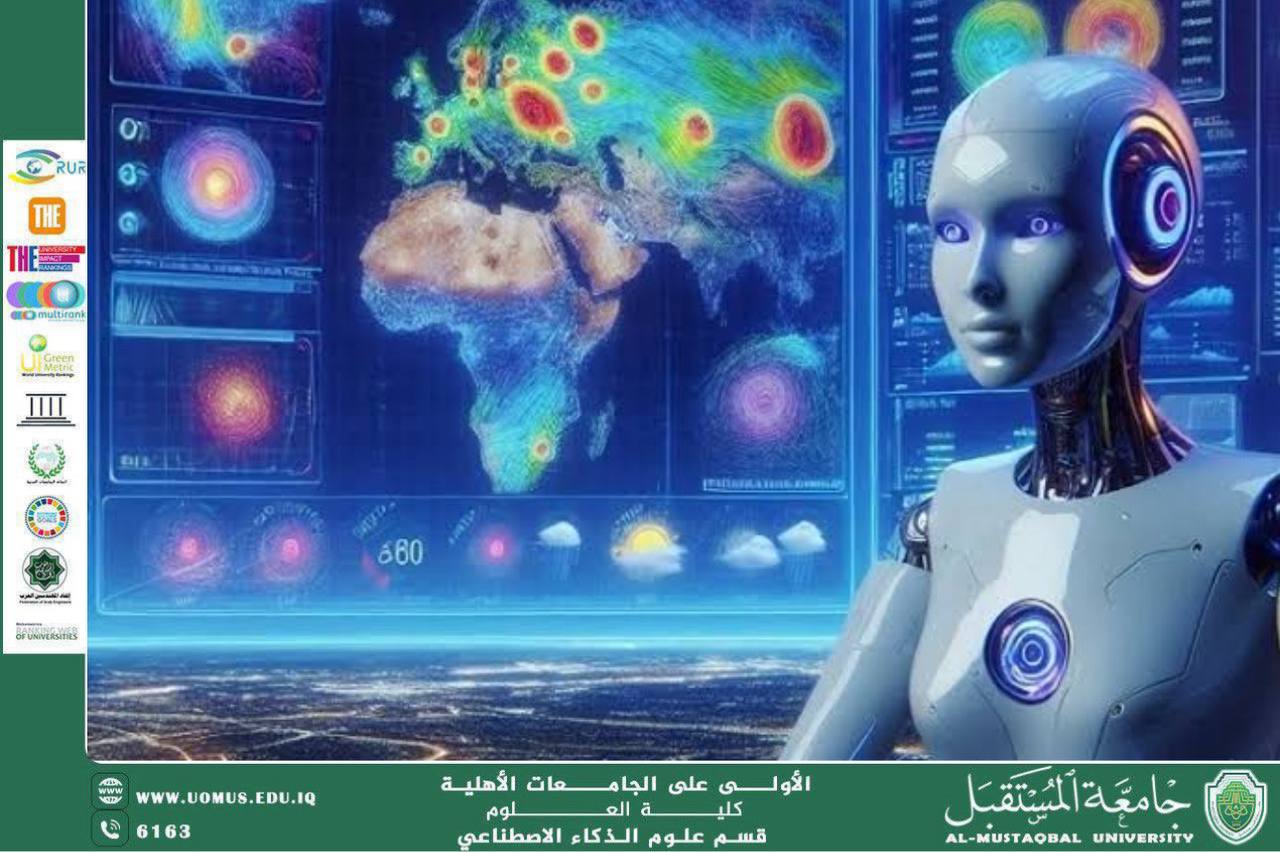
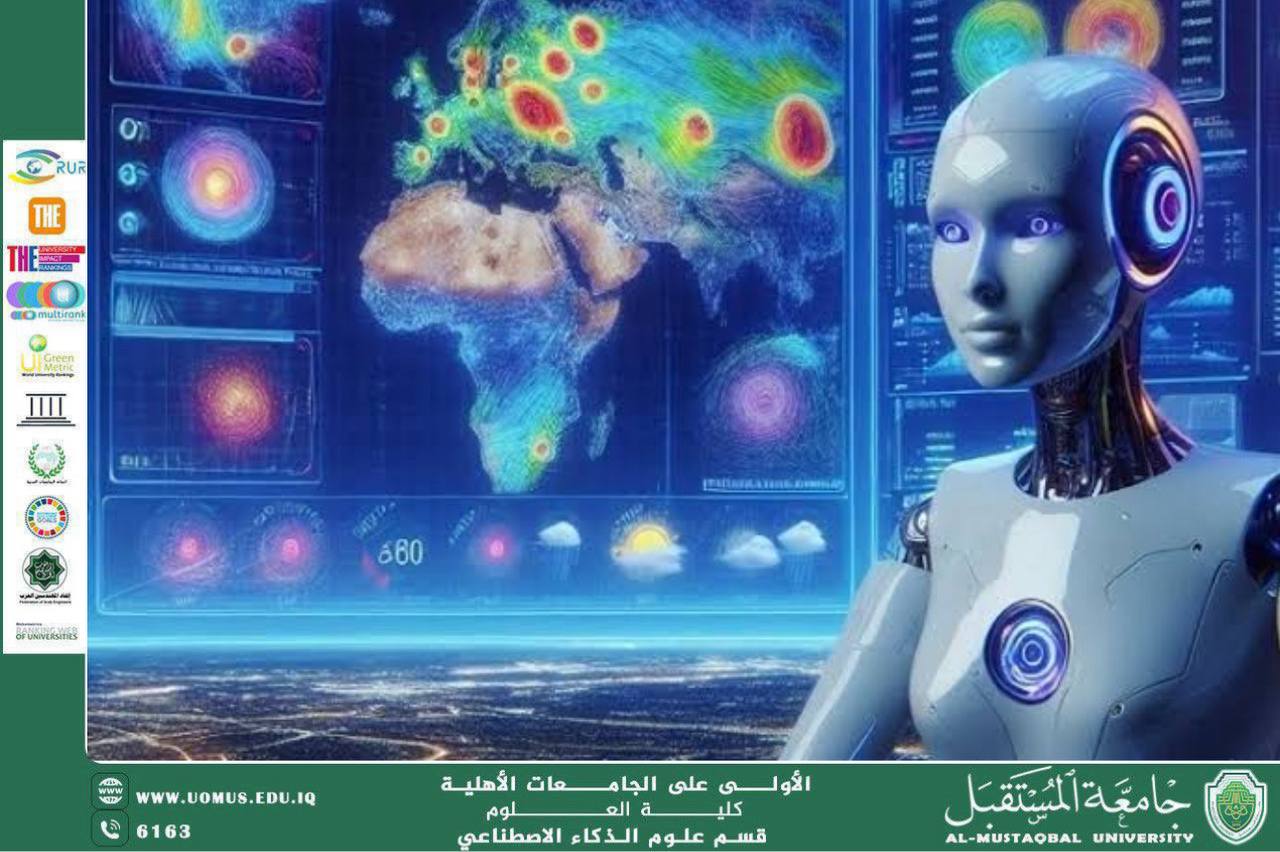
A scientific article titled "Machine Learning Applications in Weather Forecasting and Improving Natural Disaster Management," by researcher Banin Nazem Sarhan.
The world is witnessing a significant increase in extreme weather events, creating an urgent need for accurate forecasting systems capable of reducing human and material losses. In this context, machine learning technologies have emerged as powerful tools for analyzing large-scale climate data and improving weather prediction accuracy compared to traditional models.
Machine learning applications rely on advanced algorithms such as artificial neural networks, regression models, and decision trees to analyze satellite imagery, meteorological station data, and historical weather records. By training these models on vast datasets, they can identify complex patterns and subtle variations in temperature, atmospheric pressure, and humidity levels.
This advancement enables early warning systems for natural disasters such as hurricanes, floods, and sandstorms, providing authorities with sufficient time to implement preventive measures. Intelligent forecasting systems also support evacuation planning, resource allocation, and economic loss reduction.
Moreover, integrating machine learning with Geographic Information Systems (GIS) enhances spatial risk analysis and helps identify areas most vulnerable to disasters. Despite significant progress, model accuracy still depends on data quality and continuous updates.
In conclusion, applying machine learning in weather forecasting represents a strategic step toward building efficient early warning systems and strengthening sustainable disaster management frameworks.