Cholecystitis
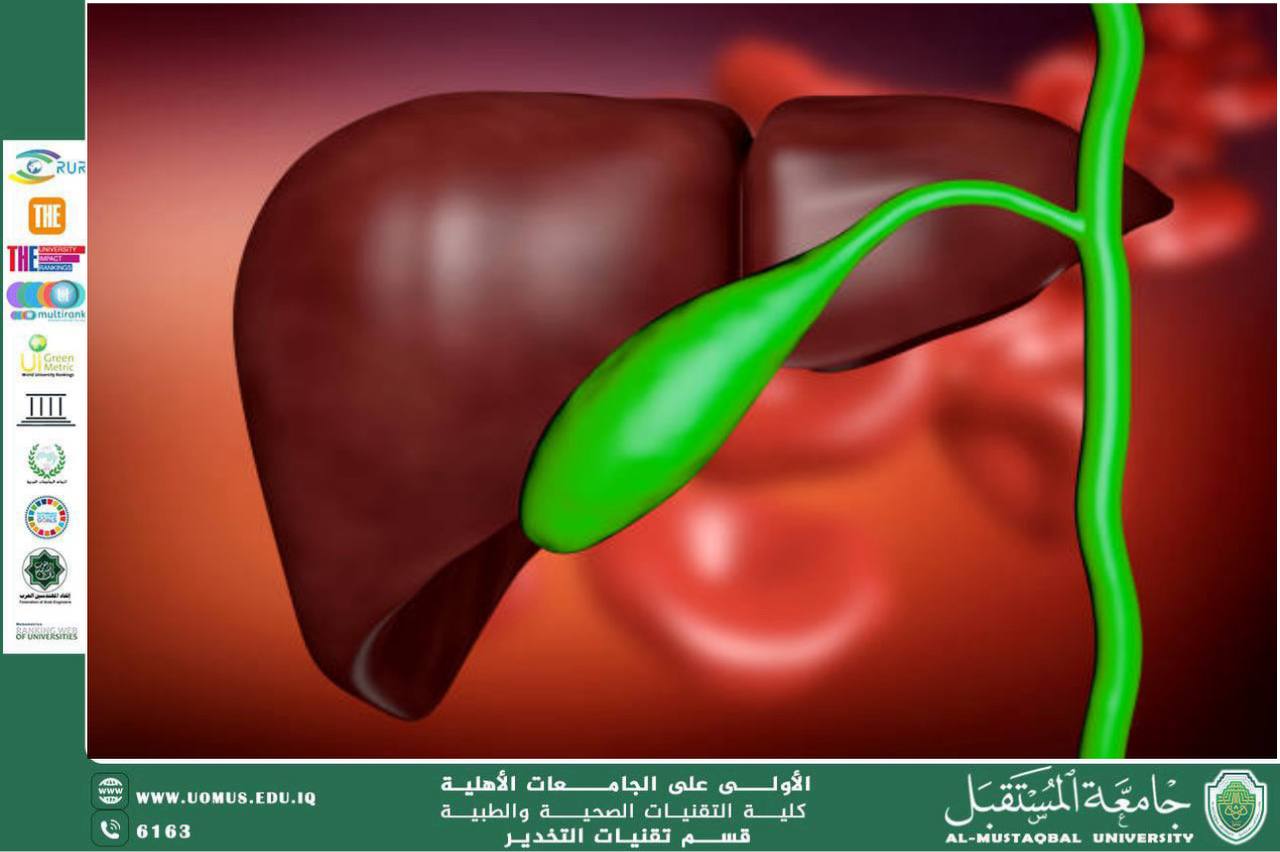
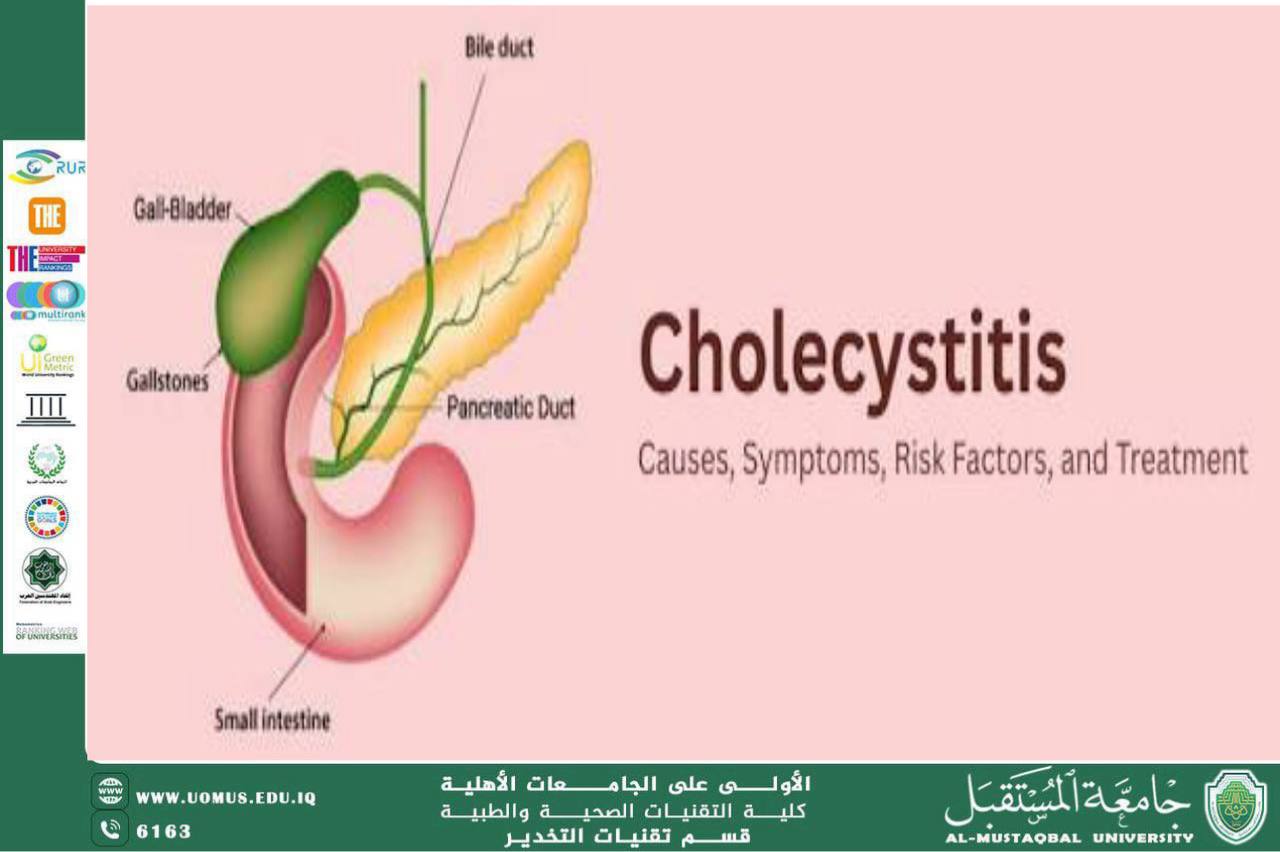
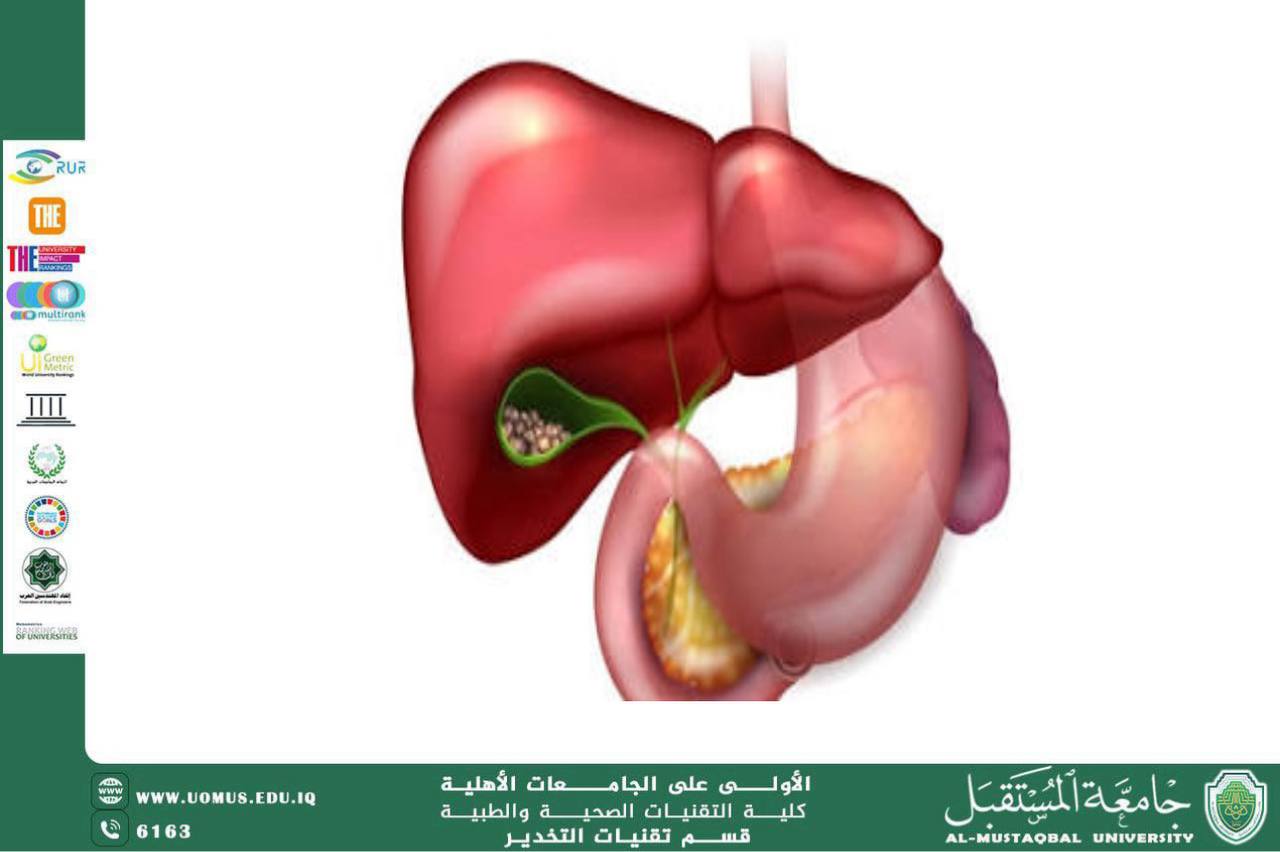
Cholecystitis is inflammation of the gallbladder, a small organ located beneath the liver that stores bile to aid in fat digestion. It most commonly occurs due to obstruction of the cystic duct by gallstones, leading to bile accumulation and inflammation. The condition may be acute or chronic.
Causes
The most common causes include:
• Gallstones (accounting for over 90% of cases)
• Bacterial infection
• Tumors obstructing bile flow
• Prolonged fasting or rapid weight loss
• Severe illness (acalculous cholecystitis)
Types
1. Acute Cholecystitis:
Sudden onset with severe right upper quadrant pain.
2. Chronic Cholecystitis:
Repeated inflammation leading to thickened gallbladder wall and fibrosis.
Symptoms
• Severe right upper abdominal pain (may radiate to right shoulder)
• Nausea and vomiting
• Fever
• Abdominal bloating
• Pain worsening after fatty meals
Risk Factors
• Female gender
• Obesity
• Pregnancy
• Diabetes
• Hyperlipidemia
• Age over 40
Complications
• Gallbladder rupture
• Abscess formation
• Peritonitis
• Sepsis
Diagnosis
• Physical examination (Murphy’s sign)
• Blood tests (elevated WBC)
• Ultrasound (first-line imaging)
• CT or MRI if needed
Treatment
Conservative management:
• Fasting
• IV fluids
• Antibiotics
• Pain control
Surgical treatment:
• Laparoscopic cholecystectomy (definitive treatment)
Prevention
• Maintain healthy body weight
• Reduce saturated fat intake
• Avoid rapid weight loss
• Regular physical activity
Roaa Nashat
Al-Mustaqbal University
The First University in Iraq.