Adaptive Learning
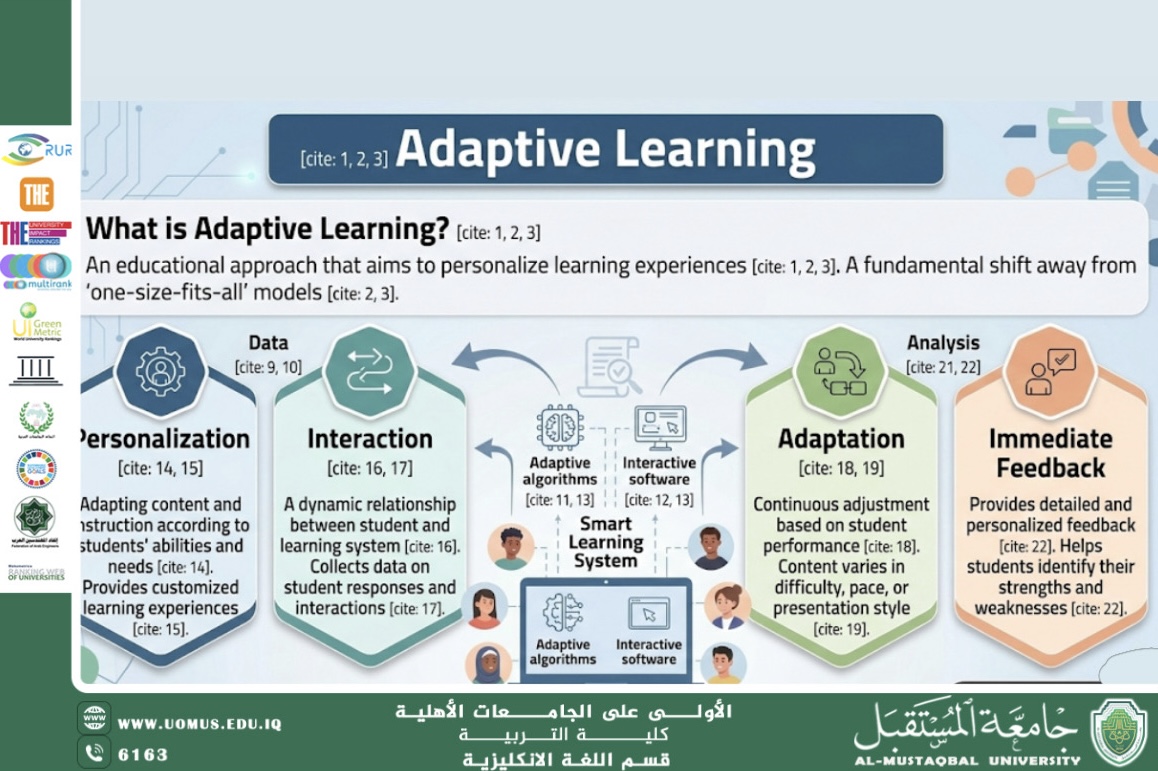
Adaptive learning is an educational approach that aims to personalize learning experiences to suit the unique needs and abilities of each student. It represents a fundamental shift in education, moving away from the traditional “one-size-fits-all” model toward a more individualized and effective approach. From the perspective of adaptive learning, it is recognized that each student learns differently and possesses distinct strengths, interests, and challenges. By adapting content and teaching methods to match learners’ needs, engagement can be improved and learning outcomes enhanced.
Adaptive learning is considered one of the key concepts in modern education, as it provides a learning experience specifically designed for each learner, based on their strengths, weaknesses, goals, and pace of learning. This approach seeks to maximize each student’s individual potential by delivering educational content, activities, and exercises tailored to their specific needs.
In the modern classroom, it is no longer acceptable to provide all students with the same instruction in the same way (Ehlers & Kellermann, 2019: 3). Teachers and researchers alike have recognized that every student enters the classroom with a unique set of skills, experiences, abilities, and interests. Adaptive learning seeks to take advantage of these individual differences by designing customized educational content that enhances learning for each student.
Adaptive learning is characterized by its ability to adjust educational content, teaching methods, and the learning environment according to each individual student. This means that every learner’s experience is unique, as students are appropriately challenged while receiving support when needed. This can be achieved through a variety of strategies and tools, including online platforms, interactive software, and project-based learning.
For example, an adaptive learning system may use advanced algorithms to analyze a student’s performance and automatically recommend lessons and materials designed to fill knowledge gaps or strengthen specific skills. The same system may also allow advanced students to accelerate their learning pace and move on to more challenging concepts.
Educational programs and technologies in adaptive learning aim to meet the needs of both teachers and learners. Adaptive learning is closely linked to interactive learning, where learners engage with on-screen programs and lessons and integrate various communication features that align with diverse learning styles (Al-Mandlawi, 2024: 13–14).
Key Principles of Adaptive Learning
1. Personalization: Adapting content and instruction according to students’ abilities and needs is a fundamental principle of adaptive learning. This approach aims to provide customized learning experiences that maximize comprehension and achievement.
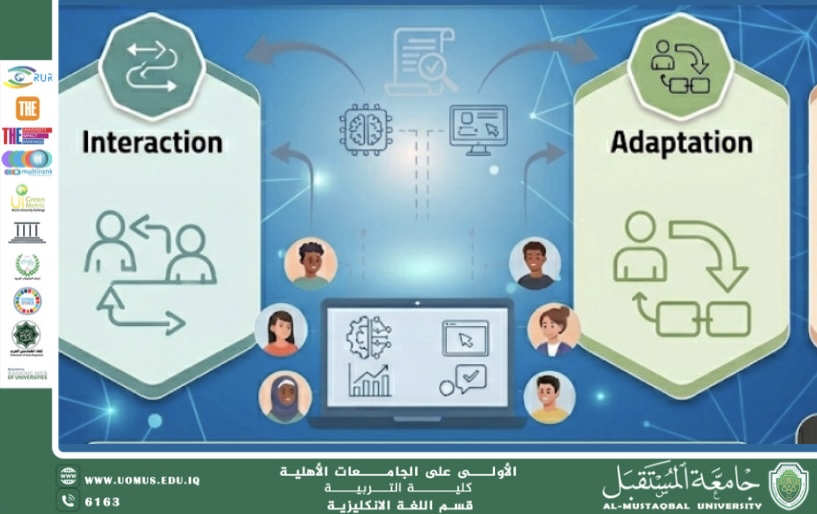
2. Interaction: Adaptive learning relies heavily on interaction between the student and the learning system. By collecting data about student responses and interactions, the adaptive system can adjust in real time and provide tailored content, feedback, and guidance.
3. Adaptation: Adaptive learning is distinguished by its continuous adjustment based on student performance. Content may vary in difficulty, pace, or presentation style to ensure that each learner’s unique needs are met. For instance, if a student struggles with a particular concept, the system can provide additional explanations and learning materials.
4. Immediate Feedback: Providing immediate feedback plays a crucial role in adaptive learning systems. By analyzing learners’ responses in real time, the system can offer detailed and personalized feedback, helping students identify their strengths and weaknesses and adjust their learning path accordingly (Lazaro, 2015: 122).
Prepared by:
Assistant Lecturer Ayat Khalil Abbas
جامعه المستقبل كليه التربيه قسم اللغه الانجليزيه
جامعه المستقبل كليه التربيه قسم اللغه الانجليزيه