مقال أكاديمي بعنوان الجراحة الروبوتية المدعومة بالذكاء الاصطناعي: مستقبل العمليات الجراح للتدريسية م.م سمر حسين هلال ُ
AI-powered robotic surgery: the future of surgical operations
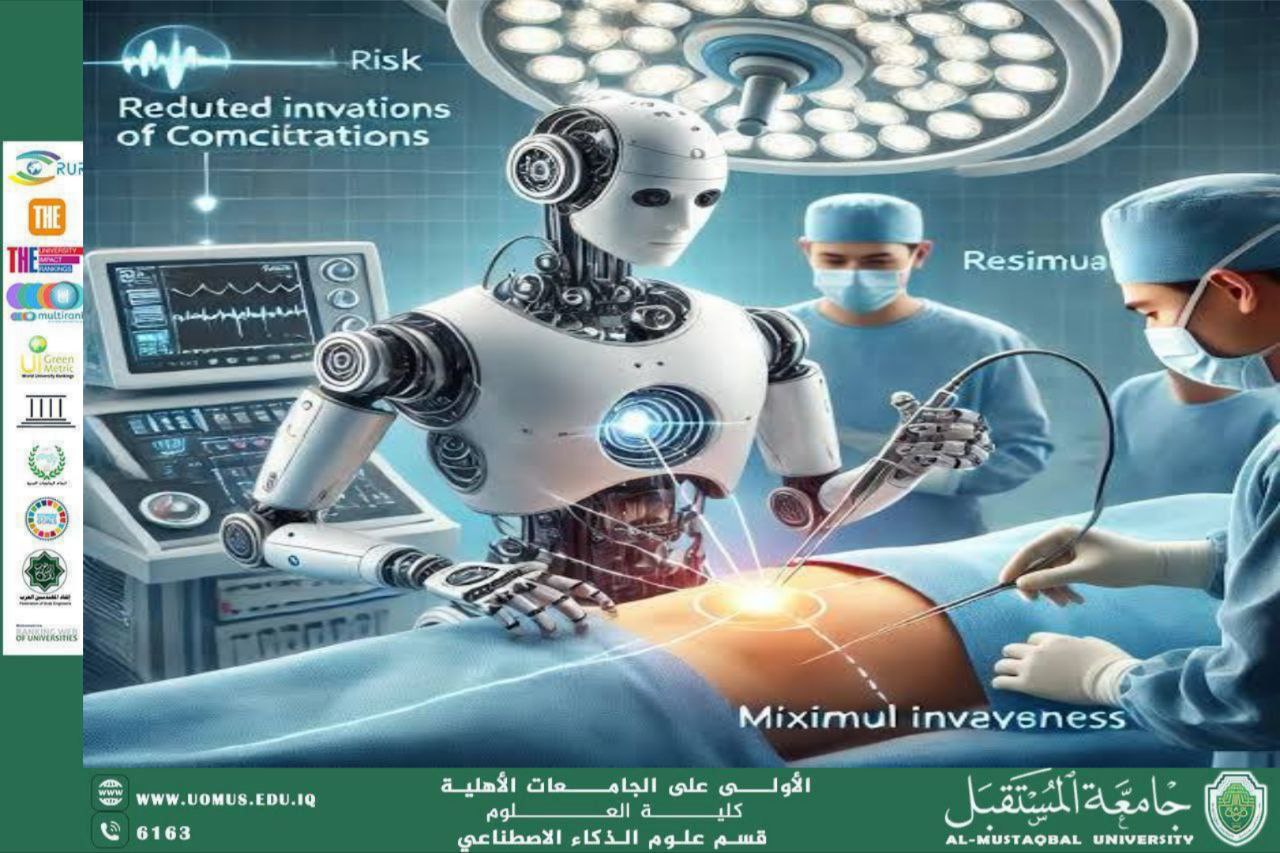
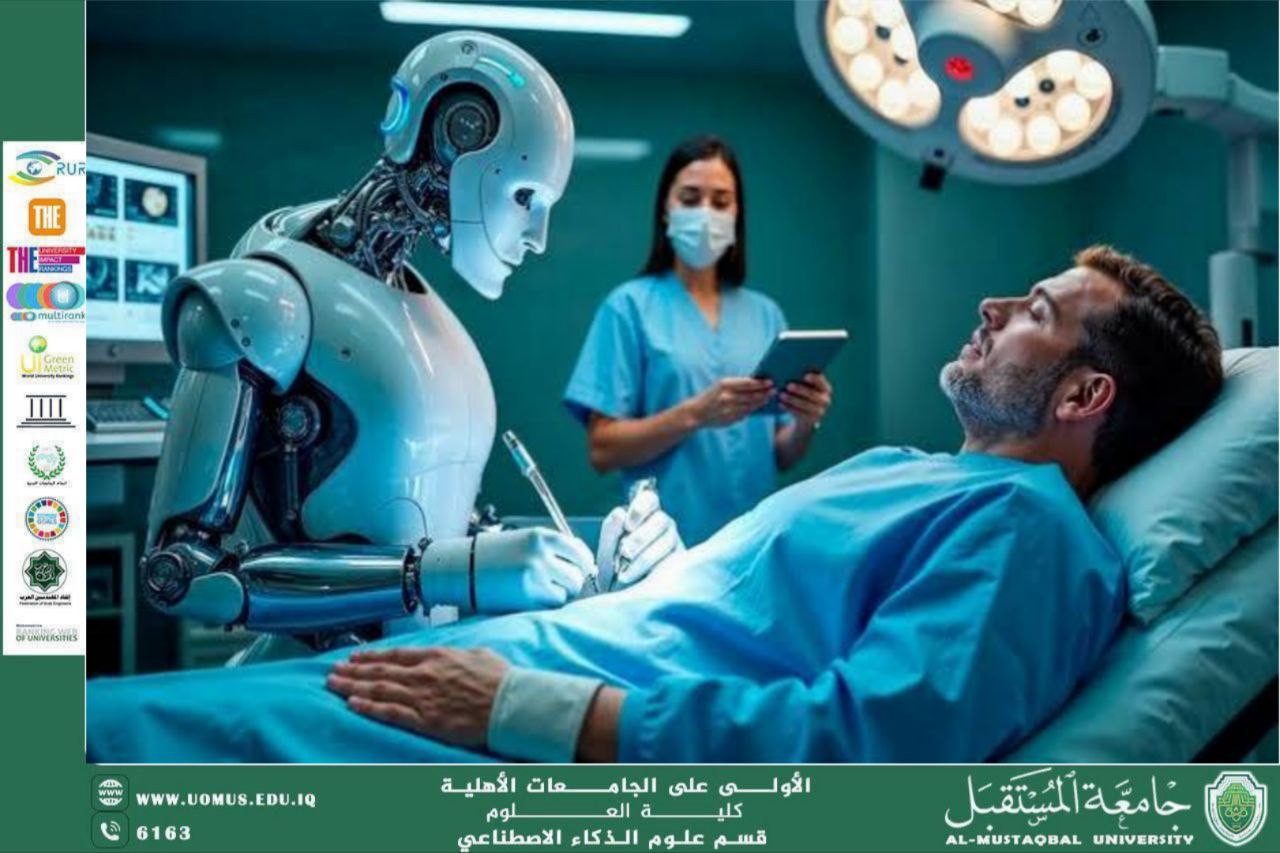
AI-assisted robotic surgery represents one of the most significant technological advances in modern medicine, combining robotic precision with advanced algorithmic analytics to enhance surgical outcomes and reduce complications. Robotic platforms such as the Da Vinci Surgical System have enabled surgeons to perform complex minimally invasive procedures through small incisions, resulting in reduced blood loss and faster recovery compared with conventional open surgery. With the integration of artificial intelligence, real-time image analysis, tissue recognition, and intraoperative decision support are becoming increasingly feasible, allowing surgeons to avoid critical anatomical structures and optimize procedural accuracy. The World Health Organization emphasizes that the safe adoption of digital health technologies can significantly improve healthcare quality when implemented under appropriate governance frameworks. Similarly, the U.S. Food and Drug Administration regulates robotic surgical systems to ensure safety and clinical effectiveness before market approval. Evidence published in leading medical journals such as The Lancet suggests that minimally invasive robotic approaches may be associated with shorter hospital stays and improved functional outcomes in selected specialties. Looking ahead, AI integration is expected to enhance predictive analytics, enable complication forecasting, and provide advanced intraoperative guidance, supporting the evolution toward precision and personalized surgery. Despite challenges including high costs, training requirements, and ethical considerations, the convergence of artificial intelligence and robotic surgery is poised to redefine surgical practice and establish a new paradigm in the future of operative care