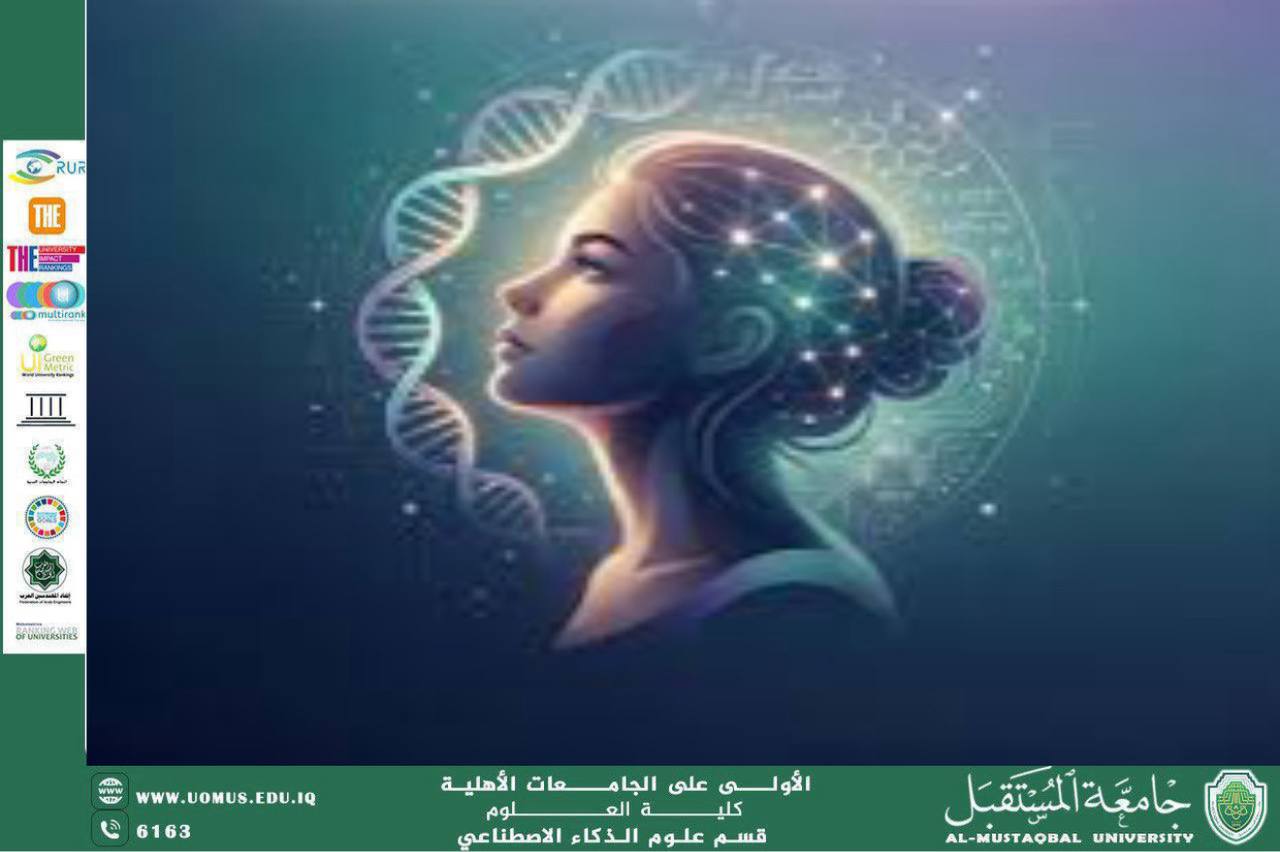

A scientific article entitled: Women and Innovation in STEM Fields (M.M. Aya Muhammad Hussein Muhammad Ali)
Scientific Article: Women and Innovation in STEM (Asst. Lec. Aya Mohammed Hussein Mohammed Ali)
Women’s participation in Science, Technology, Engineering, and Mathematics (STEM) has become a fundamental pillar in achieving sustainable development and technological advancement in the twenty-first century. Innovation within STEM fields drives economic growth, digital transformation, and scientific progress worldwide, and women play a critical role in enriching these domains through creativity, analytical thinking, and interdisciplinary collaboration. Increasing female representation in STEM does not merely fulfill equality principles; it significantly enhances research quality by introducing diverse perspectives that foster more comprehensive problem-solving approaches. Studies indicate that diverse research teams often outperform homogeneous groups in innovation, productivity, and critical thinking, particularly in complex areas such as artificial intelligence, biotechnology, renewable energy, and data science. Despite notable progress in recent years, women still face structural and social challenges, including gender stereotypes, limited mentorship opportunities, underrepresentation in leadership roles, and unequal access to funding and research resources. Addressing these barriers requires integrated educational policies that encourage girls’ engagement in mathematics and science from early schooling stages, in addition to institutional support systems that provide mentorship programs, leadership training, and innovation incubators tailored to female researchers. Universities and research institutions have a strategic responsibility to create inclusive academic environments that value merit, promote equal opportunities, and highlight successful female role models in STEM disciplines. Furthermore, digital transformation and online learning platforms have expanded access to specialized education and professional development, empowering women to participate in global scientific communities regardless of geographical constraints. Investment in women’s STEM education is not only a social necessity but also an economic and scientific imperative, as societies that effectively integrate women into innovation ecosystems experience accelerated technological growth and stronger knowledge-based economies. Ultimately, empowering women in STEM ensures sustainable scientific advancement, strengthens national competitiveness, and contributes to building a future where innovation is shaped by the collective intelligence of all members of society.
Al-Mustaqbal University is the leading private university among Iraqi universities