Cellular Senescence and Rejuvenation Therapies: Can AI Stop the Biological Clock? A scientific article by the Head of Department, Dr. Anis Ali
Aging has been the greatest challenge facing humanity throughout the ages. Today, however, we live in an era where science no longer views aging as an inevitable destiny, but rather as a "biological condition" that can be understood, measured, and potentially reversed. Thanks to the convergence of biotechnology and Artificial Intelligence (AI), we are shifting from treating diseases as they appear to "re-engineering biology" to extend the human healthspan.
1. Understanding the Language of Cells: What is Aging Biologically?
Aging is not just wrinkles or muscle weakness; it is the accumulation of damage at the cellular level. Over time, cells enter a state known as Cellular Senescence. In this state, cells stop dividing but do not die; instead, they linger and secrete inflammatory substances that damage neighboring tissues, leading to age-related diseases like Alzheimer’s and heart disease.
This is where AI acts as a high-speed "translator." Algorithms analyze billions of data points from the Epigenetic Clock—biological markers that determine a person's true biological age, which can differ significantly from their chronological age (the number of years they have lived).
2. Rejuvenation Therapies
With the help of AI, a new class of drugs called Senolytics is currently being developed. Their function is to identify senescent cells and "flush" them from the body without harming healthy cells.
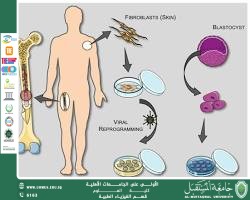
Cellular Reprogramming: Scientists have used techniques inspired by stem cells to revert aged cells to a youthful state. AI helps identify the precise "factors" a cell needs to travel back in time without losing its identity (ensuring a liver cell remains a liver cell, but with youthful activity).
Telomere Extension: Telomeres are the protective caps at the ends of chromosomes that shorten with each cell division. Computational models are being used to develop enzymes that can maintain the length of these caps, effectively granting cells a longer lifespan.
3D Bioprinted Organs: The Ultimate Solution to Transplant Waiting Lists
While scientists work on extending the life of cells, a major problem remains: What if an entire organ fails? This is where 3D Bioprinting emerges as one of the most ambitious solutions in medical history.
1. How Does Bioprinting Work?
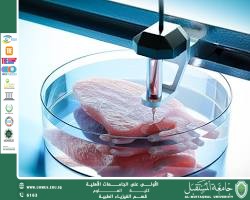
Instead of using plastic or metal, these printers use Bio-ink, a mixture of living cells and nutrient-rich materials.
The Patient’s Own Cells: The greatest advantage is taking stem cells from the patient, growing them in a lab, and using them as "ink." This means the printed organ will be genetically identical to the patient’s body, completely eliminating the risk of organ rejection.
Structural Precision: AI creates a highly accurate map of the target organ (such as a kidney or liver) based on CT scans. It then guides the printer head to place cells in their exact positions, micrometer by micrometer.
2. From Lab to Reality
We are already using this technology today to print skin tissue for burn victims and cartilage for ears and noses. The current challenge that scientists are tackling—with the help of computer simulations—is printing the intricate micro-blood vessels within larger organs to ensure oxygen reaches every cell in the printed structure.
Conclusion: Will We Live Forever?
The goal of these technologies is not necessarily "immortality," but rather increasing the Healthspan. We look forward to a future where humans do not spend their final years struggling with disease, but instead remain in full physical and mental vigor, thanks to continuous cellular maintenance and replacement organs when needed.
"AL_mustaqbal University is the first university in Iraq"