Wearable Medical Devices: A Revolution in Remote Vital Monitoring (Assist. Lecturer Ali Salim Halim)
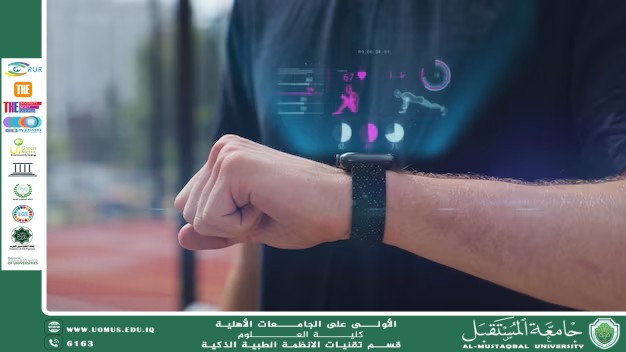
Wearable medical devices have brought about a true revolution in patient monitoring, shifting healthcare from hospitals and clinics to continuous observation within patients’ daily environments. These devices include smartwatches, monitoring bands, biosensors, and internet-connected measuring devices that continuously track vital indicators such as heart rate, oxygen levels, sleep quality, physical activity, and even glucose levels for patients with diabetes.
What distinguishes these devices is their ability to transmit data directly to smart medical systems, allowing physicians to monitor a patient’s condition in real time and intervene quickly when abnormal changes occur. This transformation represents a qualitative shift in healthcare, providing proactive care rather than traditional care that depends on hospital visits after a problem arises.
Wearable devices also contribute to improving patients’ quality of life by providing a constant sense of safety, reducing unnecessary medical visits, and lowering the burden on hospitals. Big data analytics and artificial intelligence technologies enable the effective use of this data to identify health patterns, predict diseases, and develop personalized treatment plans that match each individual’s health condition.
With continuous development, these devices will become a fundamental pillar of modern medicine and a vital supporter of the concept of patient-centered healthcare.
Al-Mustaqbal University – The First University in Iraq.