Scientific Article about Psoriasis: Causes, Symptoms, and Treatment Options
Psoriasis is a chronic, non-contagious skin condition characterized by red patches covered with white or silvery scales, often accompanied by itching and sometimes pain. Psoriasis can affect people of all ages, but it most commonly appears in young adults or middle-aged individuals, persisting over long periods in recurrent episodes.
Causes of Psoriasis:
Psoriasis occurs due to an immune system disorder that accelerates skin cell growth abnormally, leading to their accumulation on the skin surface and the formation of scales. Key factors include:
• Genetic Factors: Genetics play a significant role in susceptibility to the disease.
• Environmental and Psychological Triggers: Stress, infections, skin injuries, climate changes, and certain medications can trigger or worsen psoriasis.
Symptoms of Psoriasis:
Symptoms vary depending on the type and severity of the condition and may include:
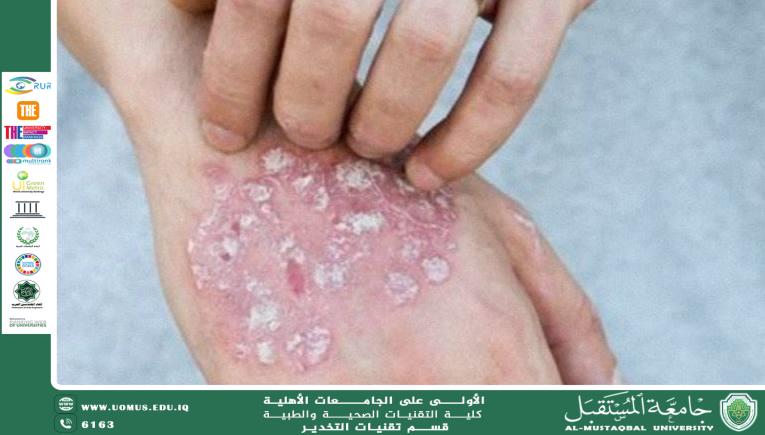
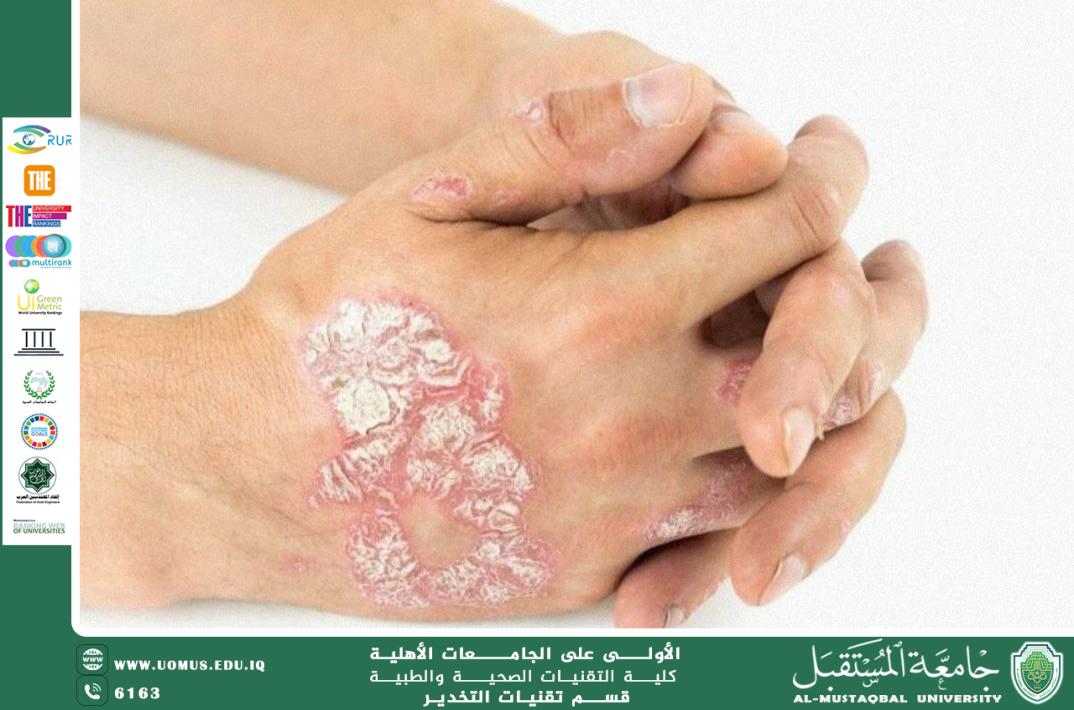
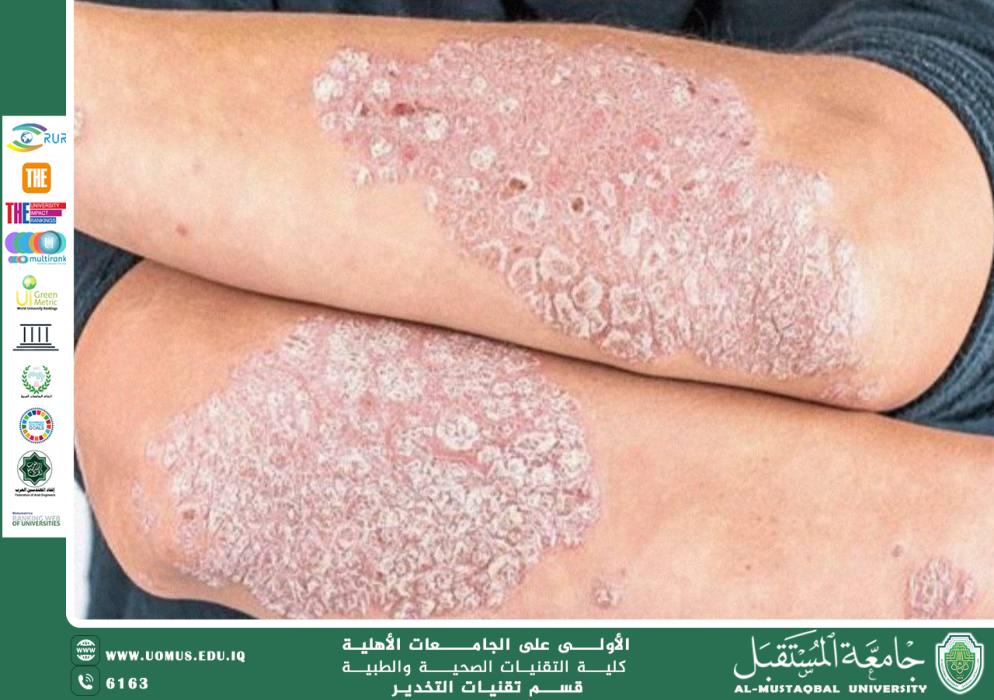
• Thick red patches of skin covered with white scales.
• Dry, cracked skin, often accompanied by itching or burning.
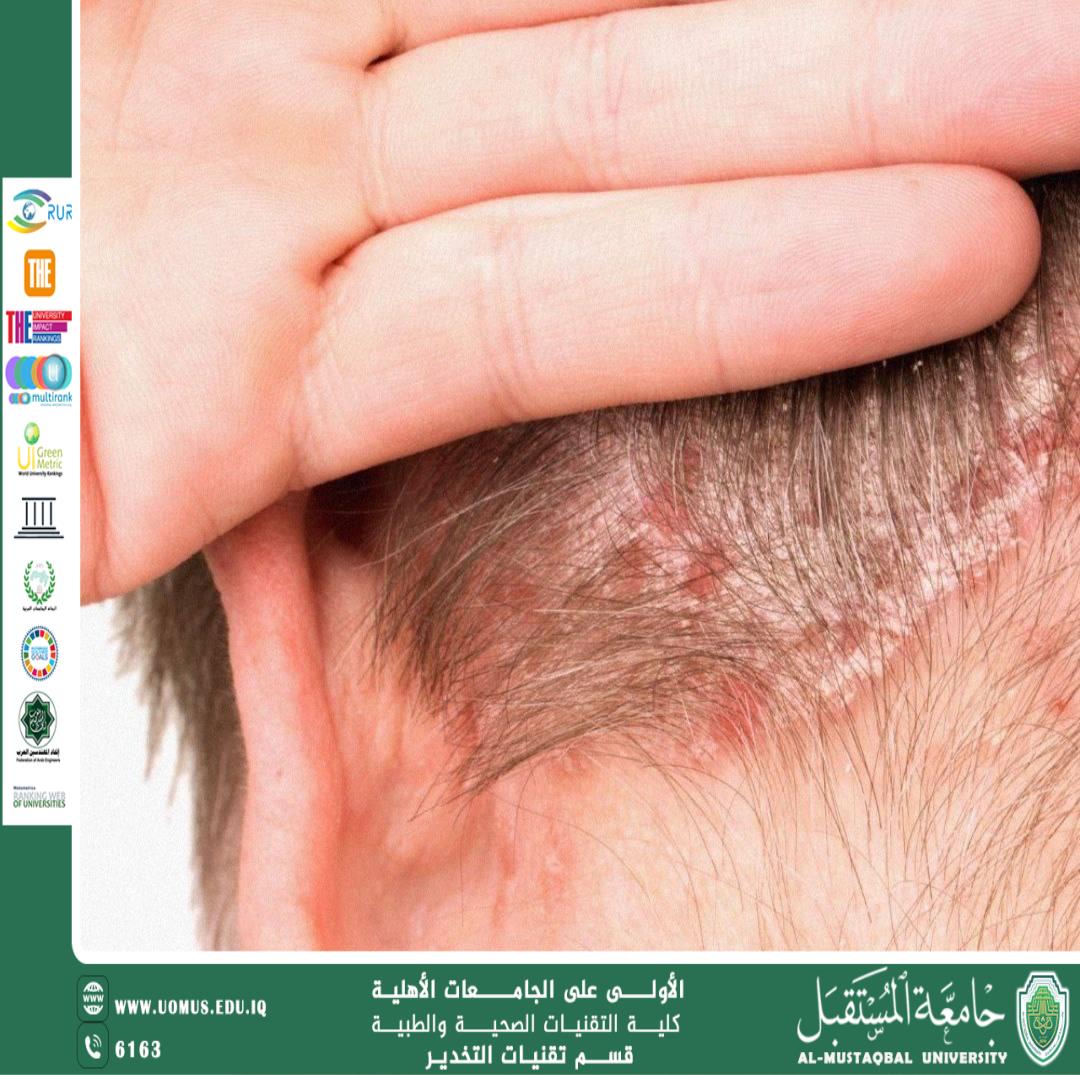
• Commonly affected areas: scalp, elbows, knees, lower back, and sometimes nails and joints.
Treatment of Psoriasis:
Treatment aims to relieve symptoms and control the disease and may include:
• Topical Treatments: Creams and medical ointments applied directly to the affected skin.
• Phototherapy: Exposure to ultraviolet light under medical supervision.
• Systemic Medications: Oral or injectable drugs in advanced cases.
Additionally, maintaining skin hydration, avoiding triggers, and following a healthy lifestyle are recommended to help manage the condition effectively.
Conclusion:
Psoriasis is a chronic skin disease that requires ongoing management. However, adherence to treatment and medical guidance significantly helps in controlling the disease and improving the patient’s quality of life.
Yasmin Mouad
Al-Mustaqbal University
The First University in Iraq