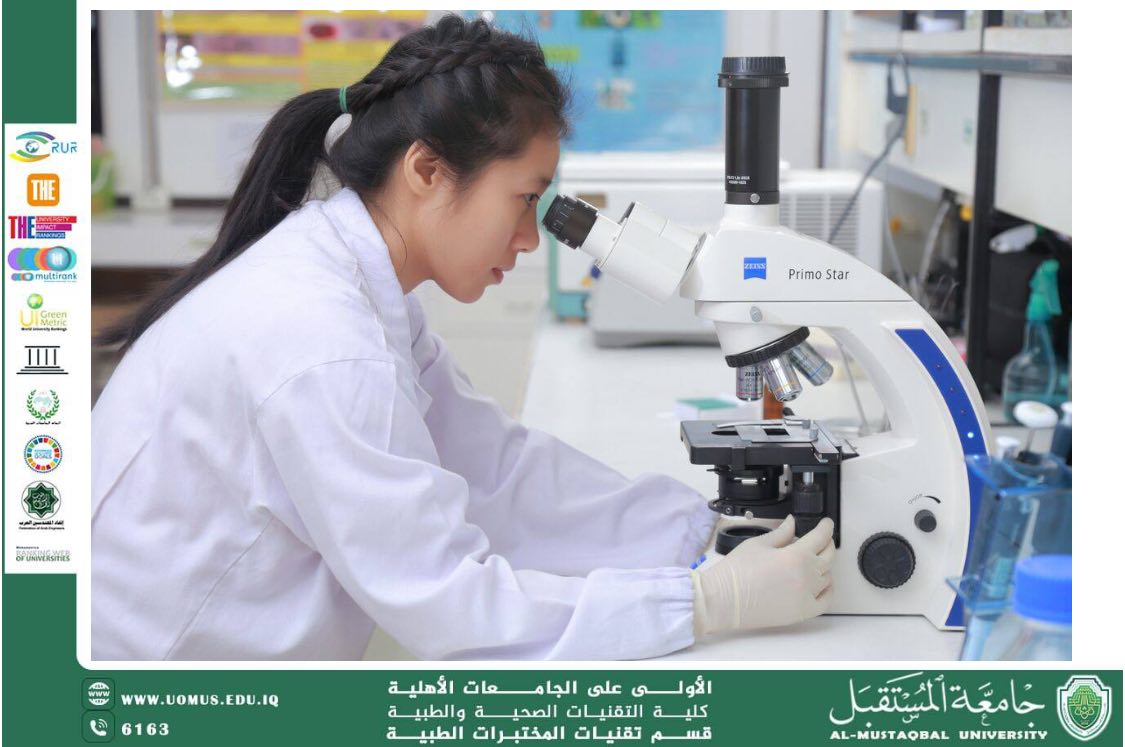
A Scientific Article by Mr. Ali Adnan Title: University Report: The Use of Microscopes in University Laboratories
Introduction
Microscopes are among the most important scientific instruments used in university laboratories. They
allow students and researchers to observe microscopic structures that cannot be seen with the naked eye.
The development of microscopy has greatly contributed to the progress of many scientific fields such as
biology, medicine, chemistry, and materials science. Learning how to properly use a microscope is
therefore an essential part of practical laboratory education at universities.
Importance of Microscopes in University Laboratories
Microscopes play a significant role in both education and scientific research. They help students
understand scientific concepts through direct observation of specimens rather than relying only on
theoretical explanations. Researchers also use microscopes to study cells, microorganisms, and material
structures, which can lead to new scientific discoveries and a deeper understanding of biological and
chemical processes.
Types of Microscopes Used in Laboratories
There are several types of microscopes commonly used in university laboratories. The most common is
the light microscope, which uses visible light and lenses to magnify specimens. Another important type is
the electron microscope, which uses a beam of electrons instead of light and provides much higher
magnification and resolution. In addition, stereoscopic or dissecting microscopes are used to observe
larger specimens such as insects or plant parts.
Steps for Using a Microscope
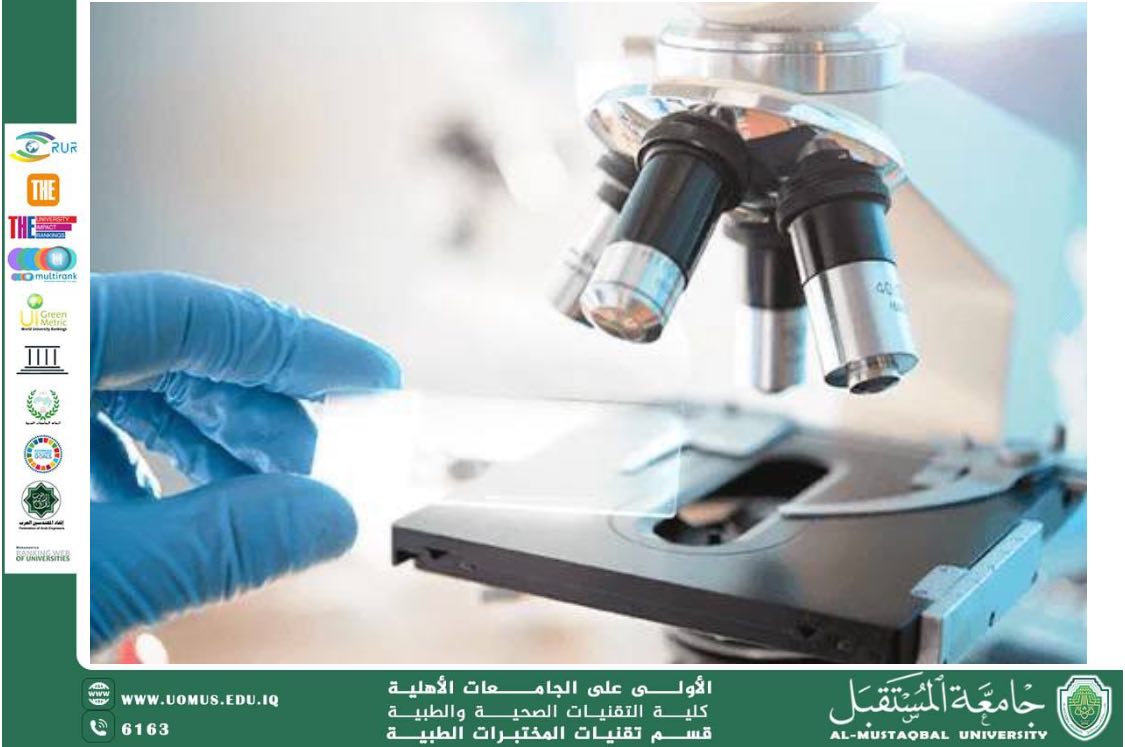
• Place the prepared slide containing the specimen on the microscope stage.
• Secure the slide using the stage clips.
• Turn on and adjust the light source for proper illumination.
• Start with the lowest magnification objective lens.
• Focus the image using the coarse and fine adjustment knobs.
• Switch gradually to higher magnification to observe more detailed structures.
Safety Rules When Using a Microscope
Proper handling of microscopes is important to protect both the equipment and the user. Students should
always carry the microscope with both hands, avoid touching the lenses with their fingers, and clean the lenses only with special lens paper. After finishing the experiment, the microscope should be turned off,
cleaned if necessary, and returned carefully to its designated storage place.
Conclusion
In conclusion, microscopes are essential tools in university laboratories. They allow students and
researchers to explore microscopic structures and gain practical scientific knowledge. By learning how to
use microscopes correctly, students develop observation and analytical skills that are important for
scientific study and research
Al-Mustaqbal University is the first university in Iraq
Department of Medical Laboratory Techniques – First in the Iraqi National Ranking.