Scientific Article on the World of Smart Nanorobots Invading the Bloodstream to Fight Cancer Prepared by: Prof. Dr. Younis Abdul-Ridha Al-Khafaji
Innovation 1: California Smart Bubbles (Bubble Bots)
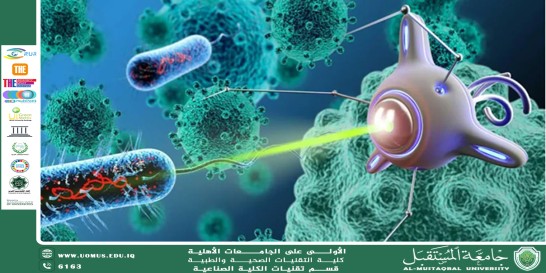
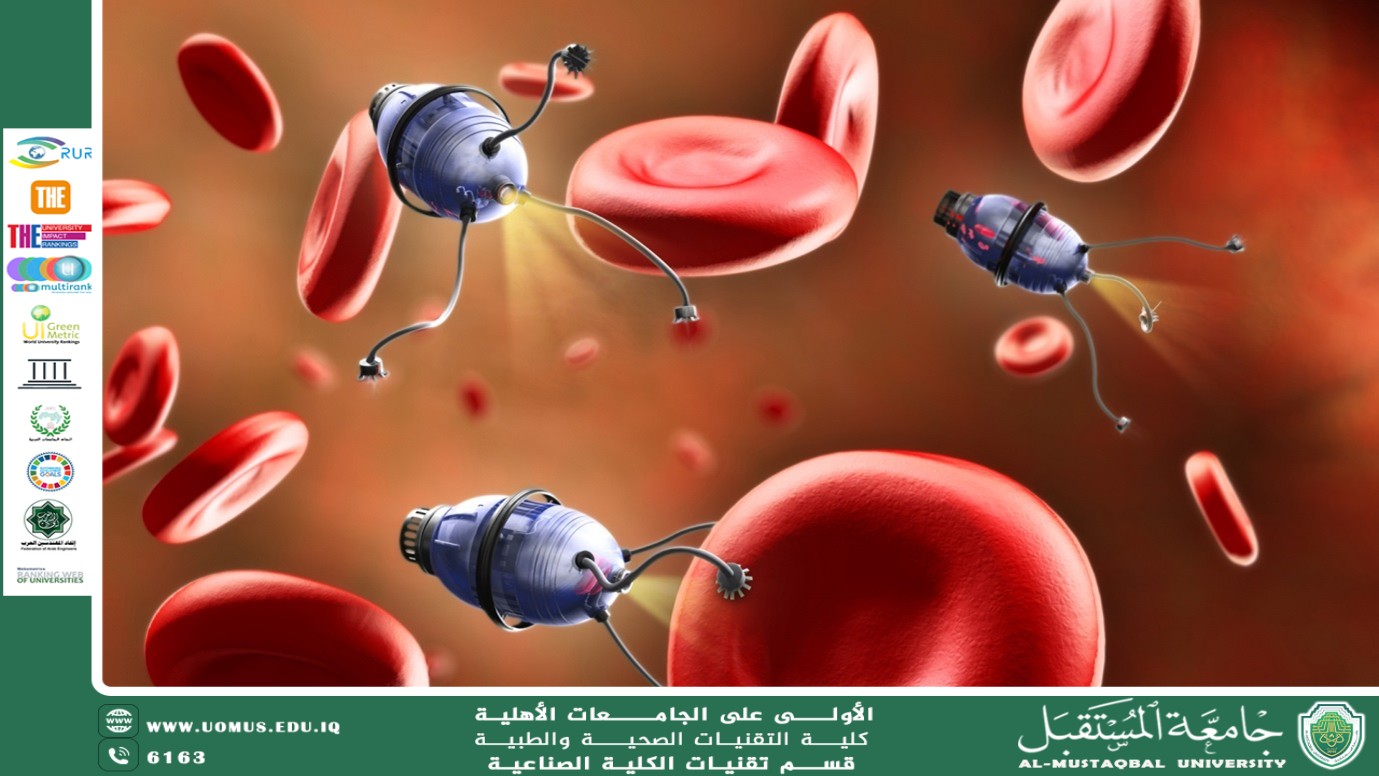
Researchers at the California Institute of Technology (Caltech) developed an ultra-microscopic robot in the form of a protein bubble that can be injected into the bloodstream. These bubbles are characterized by the following features:
Internal fuel:
They are equipped with the enzyme urease, which converts urea naturally present in the body into propulsion energy.
Self-targeting:
The researchers incorporated the enzyme catalase, enabling the bubble to swim against the chemical gradient toward regions with higher concentrations of hydrogen peroxide, a compound abundantly secreted by tumors. This eliminates the need for radiation or external control, as the robot can autonomously locate the tumor.
Explosive release:
Upon reaching the target site, physicians apply focused ultrasound waves to rupture the bubbles, causing an explosive release of the drug within the tumor.
Result:
In experiments conducted on mice, this approach reduced bladder tumor size by 60% compared with conventional therapy.
Innovation 2: Ultra-Sensitive Chinese Nanorobots (Wuhan Tech)
If the California robots resemble “bubbles,” the robots developed at Wuhan University of Technology function more like intelligent vehicles constructed as Janus particles with two distinct faces.
Acceleration (gas pedal):
The enzyme urease provides strong propulsion.
Steering mechanism:
The enzyme catalase detects tumor signals and guides the robot along the correct trajectory, even from relatively long distances.
Key figures:
209-fold higher targeting efficiency compared with conventional particles.
12-fold deeper penetration into tissues.
A drug dose equal to only 1% of the conventional dose was sufficient to achieve 92.7% tumor inhibition, with recorded cases of complete tumor disappearance.
Innovation 3: Breaching the Fortress (Crossing the Blood–Brain Barrier)
In an unprecedented achievement, Chinese research teams successfully employed nanorobots coated with immune cell membranes to evade the blood–brain barrier and create openings within it. This allows chemotherapy drugs to enter brain tumor tissues directly, particularly glioblastoma, which had long been considered highly resistant to treatment.
Another approach: The Magnetic Fleet
Researchers from the Chinese Academy of Sciences developed nanorobots that behave like a swarm of fish. They are guided by a three-dimensional external magnetic field, allowing them to swim against the bloodstream, penetrate deep into tumors, and increase drug concentration tenfold compared with conventional methods. Additionally, they stimulate the immune system to attack the tumor.
Why is this different?
This technology does not merely develop a “treatment”; rather, it creates an intelligent therapeutic agent with the following properties:
Self-guidance: navigation through chemical or enzymatic signals.
Self-propulsion: independent movement powered by energy derived from urea.
Traceability: visibility through medical imaging such as ultrasound or magnetic resonance imaging (MRI).
Safety: constructed from biocompatible materials that naturally degrade within the body.
Al-Mustaqbal University the First in Iraq