
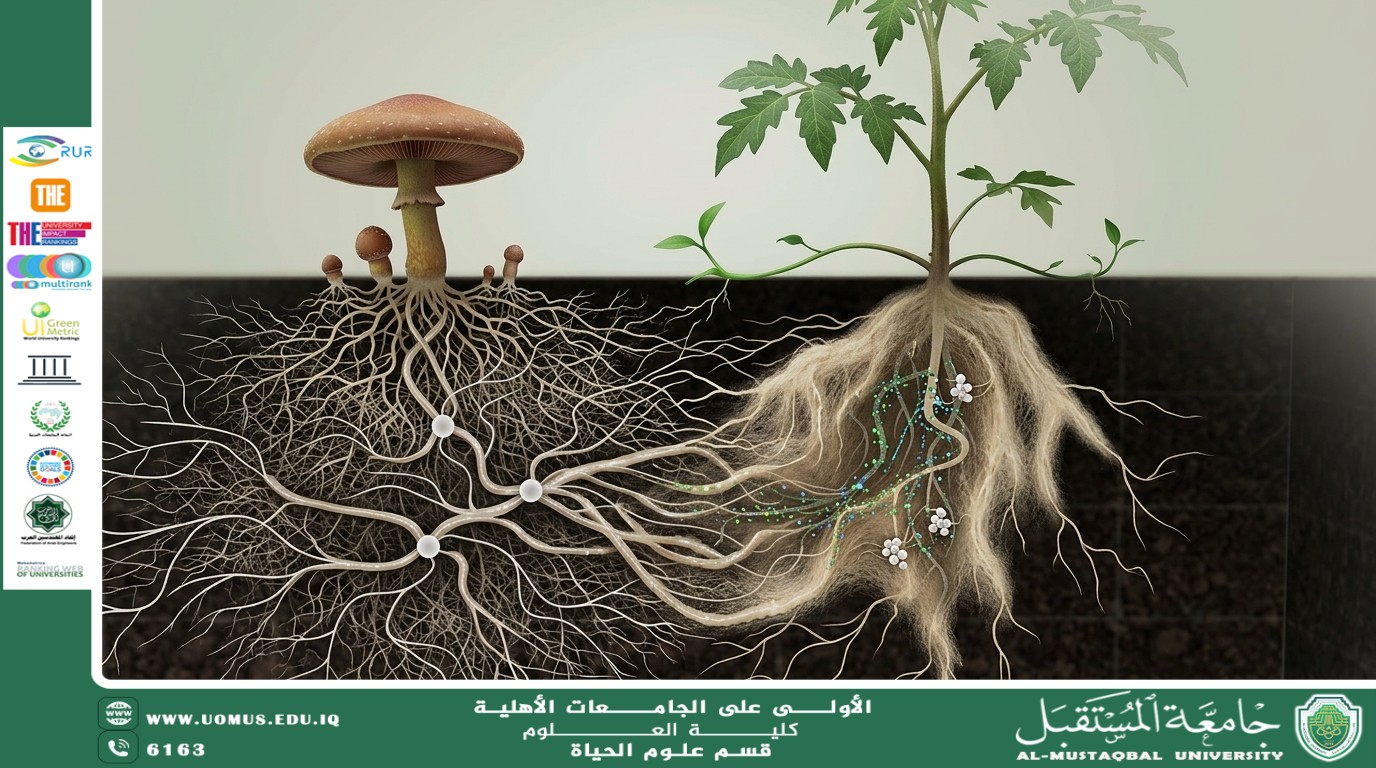
A Scientific Article by Asst. Lect. Duha Salah Sahib Entitled:: The Interaction Between Bacteria and Fungi in the Soil Ecosystem.
Soil is considered a rich ecosystem filled with various microorganisms. Among the most important of these organisms are bacteria and fungi, which play a fundamental role in maintaining the balance of the soil ecosystem. Many biological interactions occur between these two types of microorganisms, influencing soil fertility, the decomposition of organic matter, and nutrient cycling.
First, bacteria and fungi participate together in the decomposition of organic materials found in soil, such as plant and animal remains. Fungi often break down complex organic compounds such as cellulose and lignin, while bacteria decompose the simpler compounds produced from this process. In this way, both organisms work in an integrated manner to convert organic matter into nutrients available for plants.
Second, there is sometimes a symbiotic or cooperative interaction between bacteria and fungi. Bacteria benefit from the substances released by fungi during the decomposition of organic matter. Some bacteria may also live near fungal hyphae, benefiting from the moist and nutrient-rich environment created by fungi.
Third, competition may occur between bacteria and fungi for available resources in the soil, such as food and space. In environments where organic matter is limited, microorganisms compete to obtain these resources, which affects their diversity and density within the soil.
Fourth, antagonistic or inhibitory interactions may occur between some types of bacteria and fungi. Certain bacteria produce antifungal substances that limit fungal growth, while some fungi release compounds that inhibit the growth of certain bacteria. These interactions help maintain the balance of microbial communities in the soil.
In addition, the interaction between bacteria and fungi contributes to improving soil fertility and structure. It helps increase the decomposition of organic matter and the release of nutrients such as nitrogen, phosphorus, and potassium, which enhances plant growth and increases soil productivity.
In conclusion, the interaction between bacteria and fungi represents an important component of the soil ecosystem. It contributes to regulating various biological processes in soil and maintaining its fertility and sustainability. Therefore, studying these interactions helps achieve a better understanding of how to manage soil and improve agricultural production.
الهدف الرابع : التعليم الجيد