
The Importance of Good Sleep for Mental and Physical Health (Asst. Prof. Sarab Abbas Jasim)
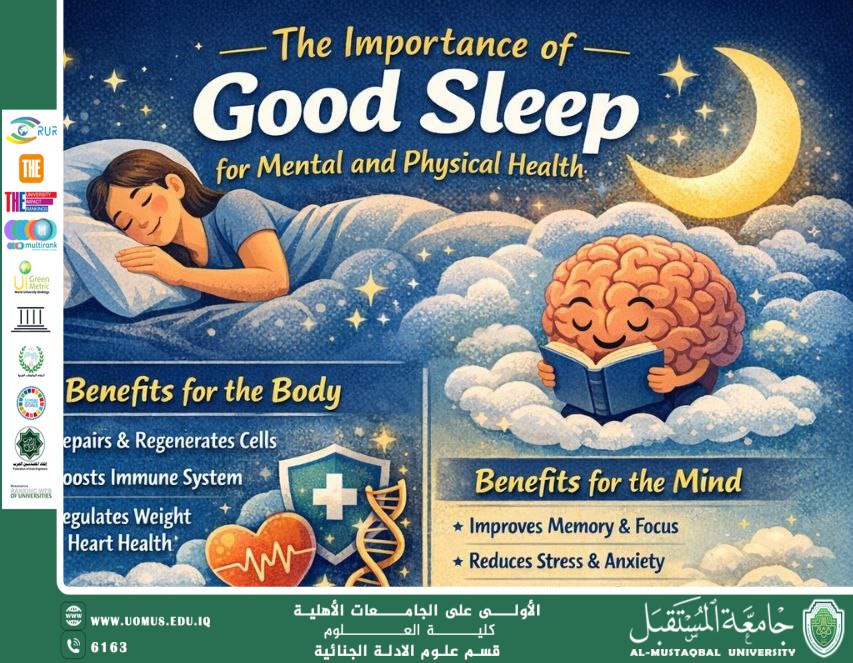
Good sleep is one of the most essential elements for maintaining human health. It is not merely a period of rest for the body but a vital process that affects all bodily and mental functions. During sleep, the body repairs and regenerates cells and strengthens the immune system, making a person more capable of fighting diseases and boosting overall vitality. In addition, regular sleep helps regulate weight and maintain heart health, as lack of sleep affects appetite hormones and increases the risk of chronic health problems.
Regarding mental health, adequate sleep enhances concentration and memory, allowing the brain to process and store information efficiently, which contributes to improved cognitive performance and learning. Sleep also plays a significant role in mood regulation, as insufficient sleep may lead to anxiety, stress, and even depression, whereas regular sleep supports emotional stability and a sense of well-being. Sleep also gives the brain a chance to eliminate toxins and recharge its energy, reducing mental fatigue and leaving a person feeling refreshed and alert upon waking.
To achieve good sleep, it is important to maintain healthy habits, such as setting a consistent bedtime and wake-up time, creating a quiet and dark sleeping environment with a moderate temperature, avoiding electronic devices right before bedtime, and limiting stimulants like caffeine. Regular exercise also improves sleep quality, provided it is not performed immediately before sleeping.
In conclusion, good sleep is not a luxury but a vital health necessity. By adopting healthy sleep habits, individuals can enhance their physical health, strengthen their minds, improve their mood, and become more active and productive while reducing the risk of physical and mental illnesses.
Al-Mustaqbal University – the first university in Iraq.