
Bioindicators and Their Role in Assessing Water Quality(Assistant Lecturer Mais Uday Mohammed)
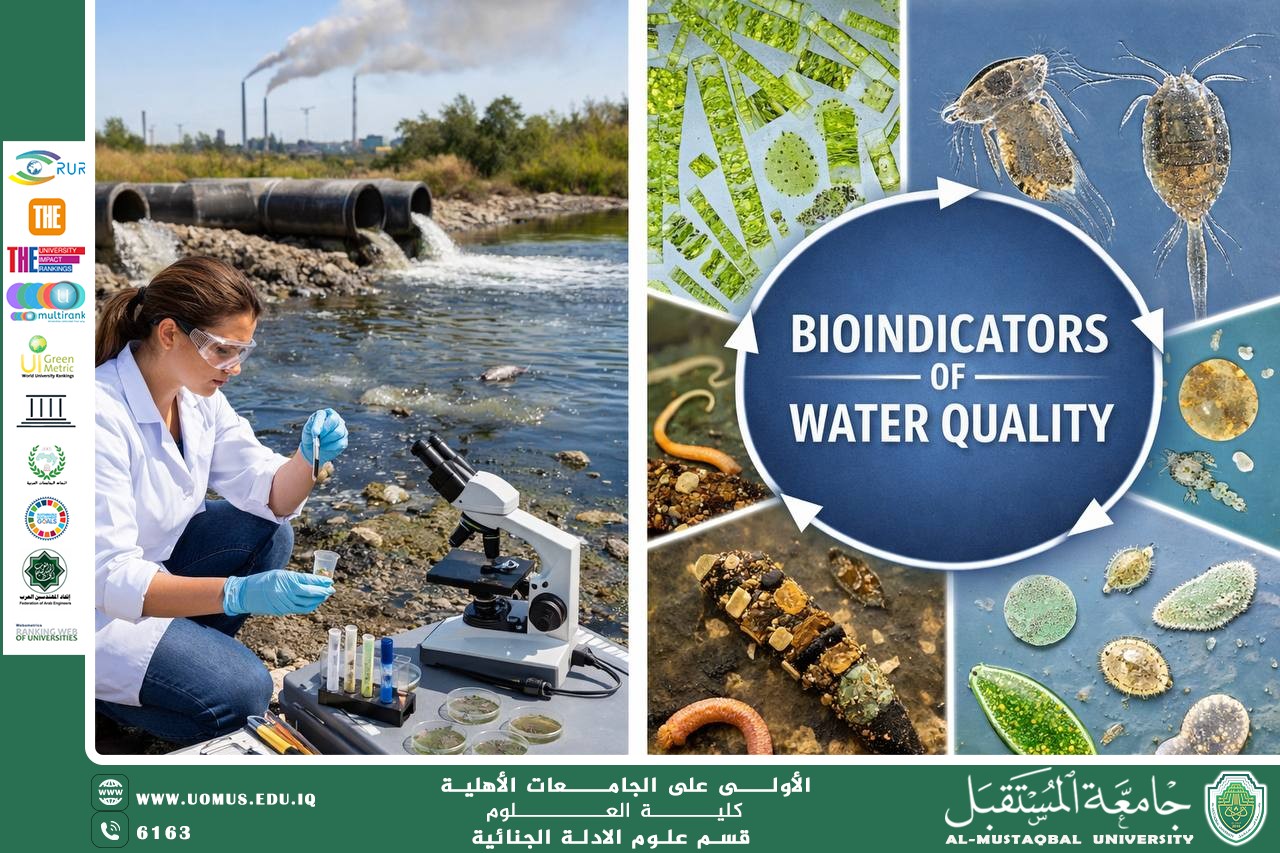
Aquatic environments are among the most sensitive ecosystems to natural changes and anthropogenic pressures, making the monitoring of their quality a scientific and environmental necessity. One of the most important approaches used in this field is the application of bioindicators, which are living organisms employed to determine the level of pollution or environmental change through their physiological, structural, or behavioral responses to contaminants.
Bioindicators are distinguished by their ability to provide an integrated picture of environmental conditions. Unlike chemical measurements that reflect pollutant concentrations at a specific moment in time, bioindicators reveal the cumulative effects of physical, chemical, and biological factors. Algae, particularly diatoms, are among the most widely used bioindicators in freshwater systems due to their sensitivity to changes in pH, salinity, nutrient concentrations, and organic matter.
The application of bioindicators relies on analyzing the structure and diversity of biological communities. High biodiversity generally indicates a relatively stable environment, whereas reduced diversity or the dominance of pollution-tolerant species suggests environmental stress. Certain sensitive species are also utilized for early detection of pollution before it reaches critical levels, thereby providing authorities with the opportunity to implement appropriate preventive measures.
The importance of this approach is further emphasized by the increasing sources of pollution resulting from industrial activities, agricultural runoff, and wastewater discharge, all of which directly affect water quality and its suitability for human and agricultural use. Therefore, integrating conventional chemical analyses with biological assessments enhances the accuracy of water quality evaluation and contributes to the development of sustainable environmental management strategies.
In conclusion, bioindicators represent an effective scientific tool for monitoring environmental changes and assessing the quality of aquatic ecosystems. They also reflect the integration of various branches of life sciences in addressing environmental and sustainable development challenges, highlighting the importance of specialized scientific research in this field.
Al-Mustaqbal University – the first university in Iraq.