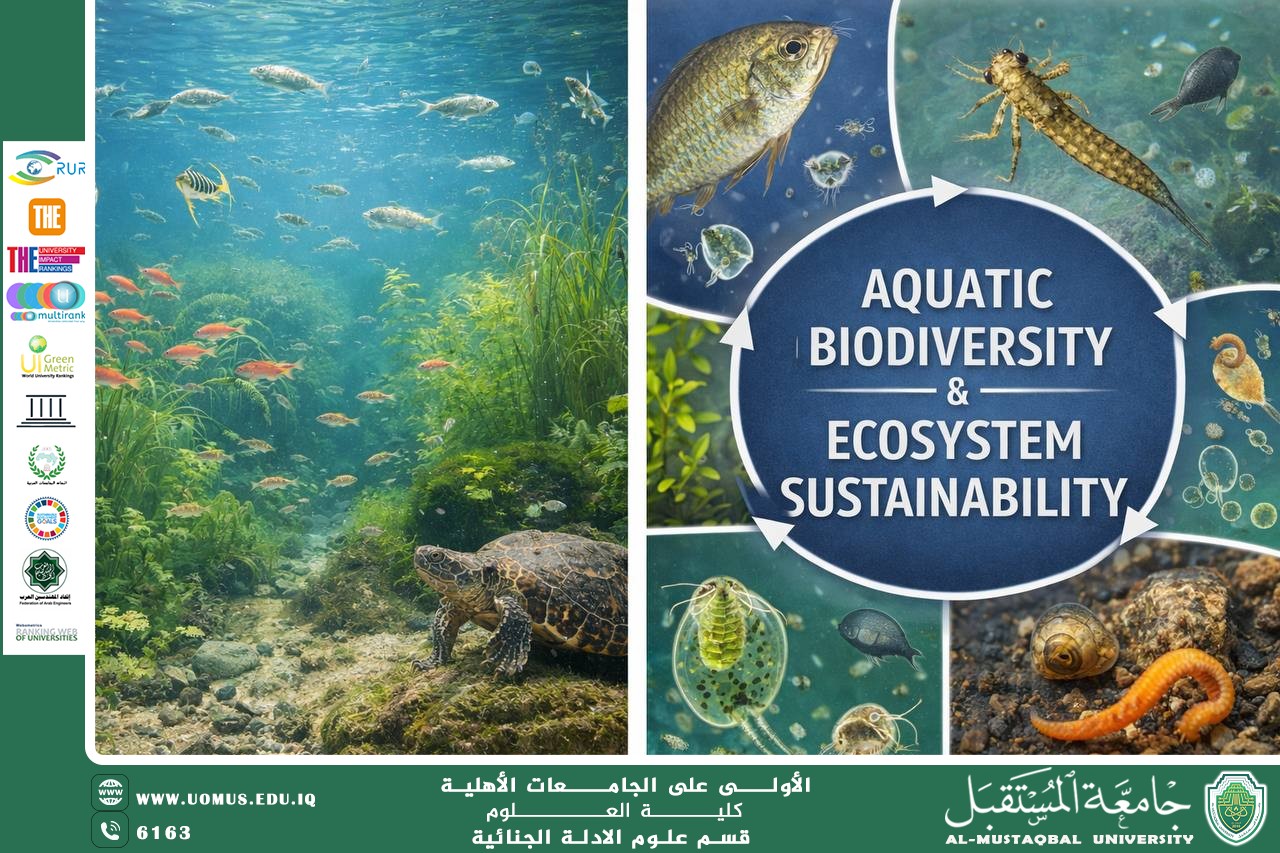

Aquatic Biodiversity and Its Impact on Ecosystem Sustainability (Assistant Lecturer Mais Uday Mohammed)
Aquatic ecosystems represent one of the fundamental pillars supporting life on Earth, as they serve as primary sources of freshwater and food, in addition to playing a vital role in regulating climate and biogeochemical cycles. Aquatic biodiversity is considered an important indicator of the health and stability of these ecosystems, as it reflects their capacity to withstand environmental changes and anthropogenic pressures.
Aquatic biodiversity encompasses the wide variety of living organisms inhabiting water bodies, including algae, phytoplankton, zooplankton, aquatic plants, invertebrates, and fish. These organisms perform complementary roles within the food web, contributing to energy transfer and maintaining ecological balance. For instance, algae act as primary producers in many aquatic systems, carrying out photosynthesis and providing organic matter for higher trophic levels.
A decline in biodiversity is often associated with pollution or physical and chemical alterations in water bodies, such as rising temperatures, increased nutrient concentrations, or the accumulation of toxic substances. Such changes may lead to shifts in community structure, where pollution-tolerant species dominate while sensitive species decline. Therefore, environmental studies play a crucial role in monitoring these changes and identifying their causes in order to mitigate negative impacts.
Furthermore, the conservation of aquatic biodiversity is essential for achieving sustainable development, given its direct connection to food security, public health, and local economies, particularly in regions that rely on water resources for agriculture and fisheries.
In conclusion, aquatic biodiversity constitutes a natural asset that requires informed scientific management based on continuous research and monitoring to ensure the sustainability of water resources and the protection of ecological balance for present and future generations.
Al-Mustaqbal University – the first university in Iraq.